Updates

  1. Person pages list letters, writing, profiles and links as sortable tables with filters, and show each person's companies as links; Fund letters show each letter's description in its own column.
  2. Experts show a checked job title and a short description of each person; 30 more people have photographs.
  3. Every company, fund, university and publication the experts work for has a page listing the people there.
  4. Fund letters show each letter's thesis and filter by it; 225 person pages list the essays, columns and newsletter issues the person wrote.
  5. Person pages list every essay and newsletter issue a person wrote, and their own books as a table in List view.
  6. Recommends shows the five largest kinds of book and the rest under More; browse pictures load sooner.
  7. Podcasts and talks link the original episode, filter by Audio and video or Press, and list each publisher once.
  8. Pages are wider, Recommends has List and Grid, and a filter clicked again turns off.
  9. Book cards sit in a ruled grid with Open Library and Goodreads links and each book's one-line note.
  10. Funds is now Investors; each investor's styles are buttons that filter the table.
  11. Podcasts and talks on a person's page filter by year and publisher and show as a list or a grid of pictures.
  12. Quotes show only people's own words: 472 summaries written by list sites are gone.
  13. Country pages open from Browse again, and every link on the shelf lands on a page.
  14. Subject and person pages show their sections as tabs, and each book appears once on a person's page.
  15. Book cards show the quote, who said it and the source; grids show five cards to a row.
  16. On a phone, a menu holds the sections, search, Updates, Feedback and dark mode.
  17. Feedback takes a screenshot of the page with no browser prompt, opens a screenshot full size when you click it, and clears itself once sent.
  18. Book cards are centred, search names the topic each book sits in, and any text cut short shows whole on hover.
  19. Search groups its results by kind: people, companies, geographies, subjects, topics, books, funds, fund letters and papers.
  20. The Books table lists who recommended each book by name, and the browser tab names the section you are in.
  21. Feedback can take a screenshot of the page, or one you paste or choose, and opens in the corner beside Updates.
  22. Each rail button reopens its section where you left it, and Browse, Table and People show on every book and subject page.
  23. Filters grey out choices that hold nothing instead of hiding them, and Books › People filters by authors or recommenders.
  24. Feedback takes a subject line and up to three screenshots.
  25. Biographies are grouped by the person they are about: 41 new pages, from Abraham Lincoln to Lee Kuan Yew.
  26. Sport splits into 23 sports, and Religion into one topic per faith.
  27. Book lists show as cards: the cover, one recommendation quote and every recommender by name.
  28. Seventeen subjects that had two or three pages under different names now have one page each.
  29. Every page lists its Experts as authors and recommenders, with a link to them on the Experts tab.
  30. Economics, Financial history, Financial panics and Accounting are subjects of their own, with one page per financial crisis.
  31. Book, person and subject pages open inside the app, so the tabs stay in view.
  32. 996 more book covers, and photographs or logos for 227 more people and companies.
  33. Books › Browse shows every subject as cards, and the rail holds Fund letters, Papers, Experts, Books and Funds.
  34. Every topic over 150 books splits into narrower topics, each with a page of its own.

Send feedback

What is it?
Screenshots, up to 3 (optional)
or paste one with Ctrl+V

We use your email only to reply to you.

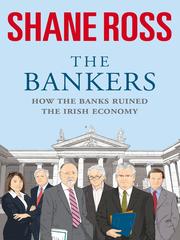
The Bankers: How the Banks Brought Ireland t

The Bankers: How the Banks Brought Ireland to Its Knees

Shane Ross
2009
T4 Open Librarygoodreads

Board-level reporting on the Irish banks and their regulators.

Summary

Shane Ross was a financial journalist and an Irish senator, and he wrote this immediately after the Irish banking collapse. It is an attack on the individuals and institutions he holds responsible.

The substance concerns the banks and their boards. Ross covers Anglo Irish Bank and its concentration in property development lending, its funding through interbank markets rather than deposits, the loans to its own directors that were concealed by moving them between institutions at reporting dates, and the transactions with a group of investors to unwind Sean Quinn's contract for difference position in the bank's own shares. He covers Allied Irish Banks and Bank of Ireland, their competitive response to Anglo's growth, and the board memberships that connected bankers, developers, regulators and politicians.

His argument is that the Irish financial establishment was a closed group whose members sat on each other's boards and on state bodies, and that regulation failed because the regulator was part of the same group. He also attacks the September 2008 blanket guarantee of bank liabilities, which he treats as a decision made on the banks' own information. Ross is a polemicist and a participant in Irish politics, and the book was written before the criminal investigations concluded. Its account of Anglo's practices has been substantially confirmed by the subsequent legal record.

Key takeaways 7

  1. Anglo Irish Bank concentrated its lending in property development and funded itself through interbank markets rather than deposits.
  2. Loans to Anglo directors were concealed by temporarily moving them to another institution at reporting dates.
  3. Anglo arranged for a group of investors to buy shares to unwind a large contract for difference position in its own stock.
  4. Competitive pressure from Anglo's growth drove the larger Irish banks into the same property lending.
  5. Irish bank boards, state bodies and the regulator were populated by a closed group with overlapping memberships.
  6. The September 2008 blanket guarantee committed the state to liabilities whose size nobody had established.
  7. Ross writes as a political participant and polemicist, though the Anglo allegations were substantially confirmed later.

Who should read it

Readers wanting a contemporaneous account of the Irish banking collapse and of the institutional relationships behind it.

Similar books 6

Chosen by shared topics, the entries that hold them, and the people who recommended both.

Fintan O'Toole · 2009

Ireland's crash was the product of its political culture, not global finance.

Gudrun Johnsen · 2014

By an investigator on the Special Investigation Commission; connected lending and cross-ownership.

Simon Carswell · 2011

The best forensic account: Anglo Irish Bank's loan book, the Quinn stake and the guarantee night.
Michael Lewis · 2011

How Iceland, Greece, Ireland, Germany and California each spent cheap credit.

Donal Donovan, Antoin E. Murphy · 2013

Sober macro account by a former IMF official; the counterweight to the journalism.
Tom Lyons, Brian Carey · 2011

Anglo Irish Bank's chairman in his own words, from recorded interviews.

Where it sits in the reference 2

Geographies
Financial panics

Topics

Finance and MarketsPolitics and GovernmentFinancial HistoryEurope, Britain and Russia