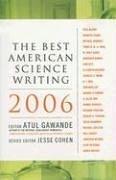
The Best American Science & Nature Writing 2001
An anthology of the year's best American writing on science and nature.
Summary
Edward O. Wilson, the naturalist and Pulitzer Prize-winning author, edited the second annual volume of The Best American Science and Nature Writing. The series editor's foreword explains the case for the anthology: there is more good writing than ever, but the best science and nature essays are scattered across literary and general-interest magazines, since journals such as Nature, Science and Cell are not sources of literary journalism. The editors admitted only nonfiction published in the previous calendar year, with no fiction, poetry, plays or book chapters unless published as stand-alone articles.
The contents include David Berlinski on immortality, Gregg Easterbrook on abortion and brain waves, Malcolm Gladwell's Baby Steps, Jane Goodall in the forests of Gombe, Jerome Groopman on the doubting disease, Bernd Heinrich's Endurance Predator, Edward Hoagland on harpy eagles, Bill Joy's Why the Future Doesn't Need Us, Barbara Kingsolver and Steven Hopp's Seeing Scarlet and Verlyn Klinkenborg on the best clock in the world, among others.
Key takeaways 4
- Good science writing appears mostly in general magazines rather than scientific journals.
- The volume spans medicine, ecology, technology and animal behaviour.
- Bill Joy's essay on the risks of new technology is among the pieces collected.
- Wilson chose the pieces from a year's published nonfiction.
Who should read it
Readers who want a sampler of strong science and nature journalism from 2000.
Who recommended it 1 · 1 direct
Similar books 6
Chosen by shared topics, the entries that hold them, and the people who recommended both.
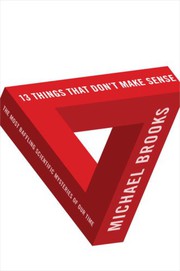
Thirteen scientific anomalies, from the missing universe to the placebo effect.
Recommended by: Mohnish Pabrai, Bill Gates
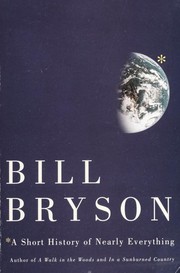
How scientists came to know what they know, from cosmology and geology to biology.
“Fun read of everything from the big bang to tectonic plates to the evolution of early man.” — Derek Sivers
Source: Derek Sivers book notes (primary, rated list) · Rating: 6/10
Recommended by: Balaji S. Srinivasan, Derek Sivers and 6 others
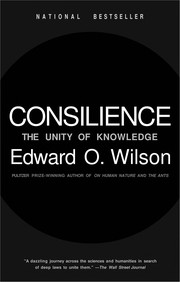
How the sciences and humanities can be unified by causal links from physics up.
“I was inspired by E. O. Wilson's book Consilience, which came out in 1998 and is a book I'd recommend.” — Michael Mauboussin
Source: MOI Global interview with Michael Mauboussin
Recommended by: Michael Mauboussin, Mohnish Pabrai
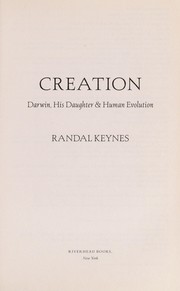
Charles Darwin's family life, his daughter's death and his ideas on evolution.
Recommended by: Mohnish Pabrai, Li Lu