Updates

  1. Person pages list letters, writing, profiles and links as sortable tables with filters, and show each person's companies as links; Fund letters show each letter's description in its own column.
  2. Experts show a checked job title and a short description of each person; 30 more people have photographs.
  3. Every company, fund, university and publication the experts work for has a page listing the people there.
  4. Fund letters show each letter's thesis and filter by it; 225 person pages list the essays, columns and newsletter issues the person wrote.
  5. Person pages list every essay and newsletter issue a person wrote, and their own books as a table in List view.
  6. Recommends shows the five largest kinds of book and the rest under More; browse pictures load sooner.
  7. Podcasts and talks link the original episode, filter by Audio and video or Press, and list each publisher once.
  8. Pages are wider, Recommends has List and Grid, and a filter clicked again turns off.
  9. Book cards sit in a ruled grid with Open Library and Goodreads links and each book's one-line note.
  10. Funds is now Investors; each investor's styles are buttons that filter the table.
  11. Podcasts and talks on a person's page filter by year and publisher and show as a list or a grid of pictures.
  12. Quotes show only people's own words: 472 summaries written by list sites are gone.
  13. Country pages open from Browse again, and every link on the shelf lands on a page.
  14. Subject and person pages show their sections as tabs, and each book appears once on a person's page.
  15. Book cards show the quote, who said it and the source; grids show five cards to a row.
  16. On a phone, a menu holds the sections, search, Updates, Feedback and dark mode.
  17. Feedback takes a screenshot of the page with no browser prompt, opens a screenshot full size when you click it, and clears itself once sent.
  18. Book cards are centred, search names the topic each book sits in, and any text cut short shows whole on hover.
  19. Search groups its results by kind: people, companies, geographies, subjects, topics, books, funds, fund letters and papers.
  20. The Books table lists who recommended each book by name, and the browser tab names the section you are in.
  21. Feedback can take a screenshot of the page, or one you paste or choose, and opens in the corner beside Updates.
  22. Each rail button reopens its section where you left it, and Browse, Table and People show on every book and subject page.
  23. Filters grey out choices that hold nothing instead of hiding them, and Books › People filters by authors or recommenders.
  24. Feedback takes a subject line and up to three screenshots.
  25. Biographies are grouped by the person they are about: 41 new pages, from Abraham Lincoln to Lee Kuan Yew.
  26. Sport splits into 23 sports, and Religion into one topic per faith.
  27. Book lists show as cards: the cover, one recommendation quote and every recommender by name.
  28. Seventeen subjects that had two or three pages under different names now have one page each.
  29. Every page lists its Experts as authors and recommenders, with a link to them on the Experts tab.
  30. Economics, Financial history, Financial panics and Accounting are subjects of their own, with one page per financial crisis.
  31. Book, person and subject pages open inside the app, so the tabs stay in view.
  32. 996 more book covers, and photographs or logos for 227 more people and companies.
  33. Books › Browse shows every subject as cards, and the rail holds Fund letters, Papers, Experts, Books and Funds.
  34. Every topic over 150 books splits into narrower topics, each with a page of its own.

Send feedback

What is it?
Screenshots, up to 3 (optional)
or paste one with Ctrl+V

We use your email only to reply to you.

The Billionaire and the Mechanic

The Billionaire and the Mechanic

Julian Guthrie
2013
T3 330 pages · about 5h 30m to read Open Librarygoodreads

His America's Cup campaign; the only book covering the later Ellison.

Summary

Guthrie, a San Francisco journalist, tells the story of how the Golden Gate Yacht Club, a small and nearly bankrupt club, partnered with Larry Ellison to win the America's Cup, focusing on the relationship between Ellison and Norbert Bajurin, a radiator repair shop owner who was the club's commodore.

The narrative covers Ellison's earlier failed attempts through the larger St Francis Yacht Club, the arrangement with Golden Gate, the litigation against the Swiss defender Alinghi over the terms of the challenge, the 2010 victory in Valencia with a trimaran, and the 2013 defence in San Francisco in which the American team recovered from an eight to one deficit to win.

The business content is incidental but present: the America's Cup is a contest in which the defender writes the rules, which makes legal and organisational manoeuvring as consequential as sailing; the technology spending required is enormous and the returns are entirely reputational; and the arrangement between a wealthy individual and a small institution gave each something they could not obtain otherwise, which is a structure that recurs in sponsorship and in philanthropy.

The reference has not verified the specific claims in this account. The book is a sports narrative with a human-interest frame, written with the participants' cooperation, and it is not a business book. Its interest for the reader of this reference is the account of how competitive rules are contested by whoever controls them, and the unusual partnership structure.

Key takeaways 7

  1. The America's Cup defender writes the rules for the next contest, which makes legal and organisational manoeuvring as consequential as sailing performance.
  2. Litigation over the terms of a challenge determined the format and the boats used, before any racing occurred.
  3. A wealthy individual and a small institution each supplied something the other could not obtain, which is the structure of most sponsorship arrangements.
  4. Technology spending in the competition is enormous and the returns are entirely reputational, which means the participants are buying something other than a financial outcome.
  5. Controlling the rules of a contest is worth more than superiority within them, which applies wherever an incumbent sets the terms.
  6. The 2013 defence involved a recovery from an eight to one deficit, which turned on in-competition technical and tactical changes.
  7. The reference has not verified the specific claims in this account.

Who should read it

Readers wanting a sports narrative with incidental lessons about who controls competitive rules, rather than a business book.

Who recommended it 1 · 1 direct

Similar books 6

Chosen by shared topics, the entries that hold them, and the people who recommended both.
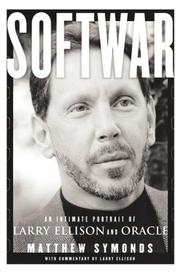
Matthew Symonds · 2003

Authorised; Ellison's rebuttals run in footnotes throughout.

Recommended by: Andrew Wilkinson, Aaron Levie

Karen Southwick · 2003

Hostile counterweight to Symonds's authorised Softwar, published the same year.
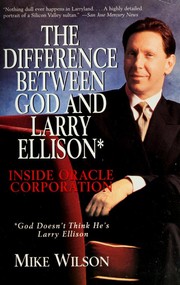
William Finnegan · 2015

“I'd been gifted this book like three times but had zero interest in reading it. I don't care about surfing. God was I wrong. Beautiful stuff.” — Andrew Wilkinson

Source: Newsletter

Recommended by: Andrew Wilkinson, Paul Graham, Sahil Bloom
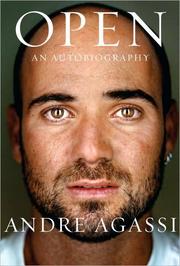
T4 Open
Andre Agassi · 2009

A tennis champion's life story, built around the fact that he hated tennis.

Where it sits in the reference 2

Companies
Biographies

Topics

SportBiography and MemoirSporting LivesSailing and rowing