Updates

  1. Person pages list letters, writing, profiles and links as sortable tables with filters, and show each person's companies as links; Fund letters show each letter's description in its own column.
  2. Experts show a checked job title and a short description of each person; 30 more people have photographs.
  3. Every company, fund, university and publication the experts work for has a page listing the people there.
  4. Fund letters show each letter's thesis and filter by it; 225 person pages list the essays, columns and newsletter issues the person wrote.
  5. Person pages list every essay and newsletter issue a person wrote, and their own books as a table in List view.
  6. Recommends shows the five largest kinds of book and the rest under More; browse pictures load sooner.
  7. Podcasts and talks link the original episode, filter by Audio and video or Press, and list each publisher once.
  8. Pages are wider, Recommends has List and Grid, and a filter clicked again turns off.
  9. Book cards sit in a ruled grid with Open Library and Goodreads links and each book's one-line note.
  10. Funds is now Investors; each investor's styles are buttons that filter the table.
  11. Podcasts and talks on a person's page filter by year and publisher and show as a list or a grid of pictures.
  12. Quotes show only people's own words: 472 summaries written by list sites are gone.
  13. Country pages open from Browse again, and every link on the shelf lands on a page.
  14. Subject and person pages show their sections as tabs, and each book appears once on a person's page.
  15. Book cards show the quote, who said it and the source; grids show five cards to a row.
  16. On a phone, a menu holds the sections, search, Updates, Feedback and dark mode.
  17. Feedback takes a screenshot of the page with no browser prompt, opens a screenshot full size when you click it, and clears itself once sent.
  18. Book cards are centred, search names the topic each book sits in, and any text cut short shows whole on hover.
  19. Search groups its results by kind: people, companies, geographies, subjects, topics, books, funds, fund letters and papers.
  20. The Books table lists who recommended each book by name, and the browser tab names the section you are in.
  21. Feedback can take a screenshot of the page, or one you paste or choose, and opens in the corner beside Updates.
  22. Each rail button reopens its section where you left it, and Browse, Table and People show on every book and subject page.
  23. Filters grey out choices that hold nothing instead of hiding them, and Books › People filters by authors or recommenders.
  24. Feedback takes a subject line and up to three screenshots.
  25. Biographies are grouped by the person they are about: 41 new pages, from Abraham Lincoln to Lee Kuan Yew.
  26. Sport splits into 23 sports, and Religion into one topic per faith.
  27. Book lists show as cards: the cover, one recommendation quote and every recommender by name.
  28. Seventeen subjects that had two or three pages under different names now have one page each.
  29. Every page lists its Experts as authors and recommenders, with a link to them on the Experts tab.
  30. Economics, Financial history, Financial panics and Accounting are subjects of their own, with one page per financial crisis.
  31. Book, person and subject pages open inside the app, so the tabs stay in view.
  32. 996 more book covers, and photographs or logos for 227 more people and companies.
  33. Books › Browse shows every subject as cards, and the rail holds Fund letters, Papers, Experts, Books and Funds.
  34. Every topic over 150 books splits into narrower topics, each with a page of its own.

Send feedback

What is it?
Screenshots, up to 3 (optional)
or paste one with Ctrl+V

We use your email only to reply to you.

Everyone Else Must Fail: The Unvarnished Tru

Everyone Else Must Fail: The Unvarnished Truth About Oracle and Larry Ellison

Karen Southwick
2003
T3 306 pages · about 5h 6m to read Open Librarygoodreads

Hostile counterweight to Symonds's authorised Softwar, published the same year.

Summary

Southwick, a technology journalist, wrote a critical account of Oracle and Larry Ellison, published in 2003 without the company's cooperation.

The business content covers Oracle's rise: the founding after Ellison read the IBM paper describing relational databases, the decision to build a commercial product on that basis before IBM did, the aggressive sales culture, the 1990 crisis when revenue recognition practices were corrected and the company nearly failed, the recovery, and the move into applications software competing with SAP.

The argument concerns the culture. Southwick documents a sales organisation compensated and managed to close deals at any cost, including selling products before they worked and recognising revenue before it was earned, which is what produced the 1990 restatement. She documents extremely high executive turnover, with a long sequence of presidents and senior executives who departed after conflict with Ellison, and argues that the company was structurally unable to develop a successor because Ellison would not tolerate anyone who might become one. She covers the competitive practices, the litigation, the public attacks on competitors and the corporate espionage episode in which investigators hired on Oracle's behalf sought Microsoft-related documents from waste.

The title states her thesis: that Ellison's motivation was defeating competitors rather than building anything, and that this produced both the aggression that made the company successful and the internal damage that recurred.

The book is hostile and one-sided, and Oracle disputed it. Its predictions about the company's prospects were wrong, since Oracle grew substantially afterward through the PeopleSoft, Siebel and Sun acquisitions and remained one of the largest software companies. The account of the sales culture and the executive turnover is corroborated by other sources.

Key takeaways 7

  1. Oracle built a commercial relational database on the basis of a published IBM paper before IBM commercialised the idea itself.
  2. A sales organisation compensated purely on closing produced deals for products that did not yet work.
  3. Revenue recognised before it was earned produced the 1990 restatement that nearly destroyed the company.
  4. Extremely high executive turnover followed from a founder who would not tolerate anyone who might succeed him.
  5. Competitive aggression directed at named rivals was a management method rather than only a public posture.
  6. The company's culture produced both its commercial success and the internal instability that recurred for decades.
  7. The book's predictions about the company's prospects were wrong, since Oracle grew substantially in the following two decades.

Who should read it

Readers interested in a critical account of Oracle's sales culture and succession problems, treating the predictions as having failed.

Similar books 6

Chosen by shared topics, the entries that hold them, and the people who recommended both.
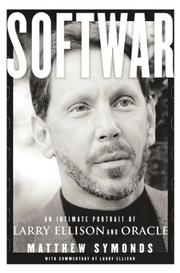
Matthew Symonds · 2003

Authorised; Ellison's rebuttals run in footnotes throughout.

Recommended by: Andrew Wilkinson, Aaron Levie
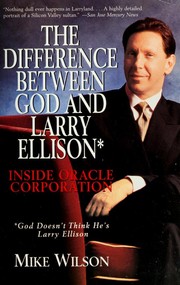
Julian Guthrie · 2013

His America's Cup campaign; the only book covering the later Ellison.

Recommended by: Andrew Wilkinson
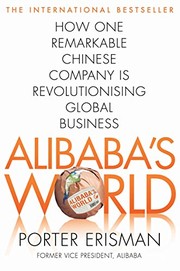
Porter Erisman · 2015

Insider account: an early Western executive on the eBay fight.
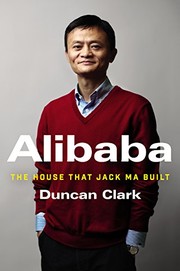
Duncan Clark · 2016

Alibaba from Jack Ma's Hangzhou apartment to its 2014 New York listing.

Recommended by: Patrick Collison

Where it sits in the reference 2

Companies
Biographies

Topics

Company HistoriesBiography and MemoirFounders and Entrepreneurs