Updates

  1. Person pages list letters, writing, profiles and links as sortable tables with filters, and show each person's companies as links; Fund letters show each letter's description in its own column.
  2. Experts show a checked job title and a short description of each person; 30 more people have photographs.
  3. Every company, fund, university and publication the experts work for has a page listing the people there.
  4. Fund letters show each letter's thesis and filter by it; 225 person pages list the essays, columns and newsletter issues the person wrote.
  5. Person pages list every essay and newsletter issue a person wrote, and their own books as a table in List view.
  6. Recommends shows the five largest kinds of book and the rest under More; browse pictures load sooner.
  7. Podcasts and talks link the original episode, filter by Audio and video or Press, and list each publisher once.
  8. Pages are wider, Recommends has List and Grid, and a filter clicked again turns off.
  9. Book cards sit in a ruled grid with Open Library and Goodreads links and each book's one-line note.
  10. Funds is now Investors; each investor's styles are buttons that filter the table.
  11. Podcasts and talks on a person's page filter by year and publisher and show as a list or a grid of pictures.
  12. Quotes show only people's own words: 472 summaries written by list sites are gone.
  13. Country pages open from Browse again, and every link on the shelf lands on a page.
  14. Subject and person pages show their sections as tabs, and each book appears once on a person's page.
  15. Book cards show the quote, who said it and the source; grids show five cards to a row.
  16. On a phone, a menu holds the sections, search, Updates, Feedback and dark mode.
  17. Feedback takes a screenshot of the page with no browser prompt, opens a screenshot full size when you click it, and clears itself once sent.
  18. Book cards are centred, search names the topic each book sits in, and any text cut short shows whole on hover.
  19. Search groups its results by kind: people, companies, geographies, subjects, topics, books, funds, fund letters and papers.
  20. The Books table lists who recommended each book by name, and the browser tab names the section you are in.
  21. Feedback can take a screenshot of the page, or one you paste or choose, and opens in the corner beside Updates.
  22. Each rail button reopens its section where you left it, and Browse, Table and People show on every book and subject page.
  23. Filters grey out choices that hold nothing instead of hiding them, and Books › People filters by authors or recommenders.
  24. Feedback takes a subject line and up to three screenshots.
  25. Biographies are grouped by the person they are about: 41 new pages, from Abraham Lincoln to Lee Kuan Yew.
  26. Sport splits into 23 sports, and Religion into one topic per faith.
  27. Book lists show as cards: the cover, one recommendation quote and every recommender by name.
  28. Seventeen subjects that had two or three pages under different names now have one page each.
  29. Every page lists its Experts as authors and recommenders, with a link to them on the Experts tab.
  30. Economics, Financial history, Financial panics and Accounting are subjects of their own, with one page per financial crisis.
  31. Book, person and subject pages open inside the app, so the tabs stay in view.
  32. 996 more book covers, and photographs or logos for 227 more people and companies.
  33. Books › Browse shows every subject as cards, and the rail holds Fund letters, Papers, Experts, Books and Funds.
  34. Every topic over 150 books splits into narrower topics, each with a page of its own.

Send feedback

What is it?
Screenshots, up to 3 (optional)
or paste one with Ctrl+V

We use your email only to reply to you.

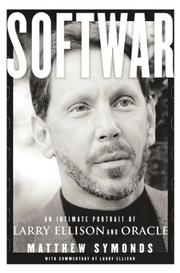
Softwar: An Intimate Portrait of Larry Ellis

Softwar: An Intimate Portrait of Larry Ellison and Oracle

Matthew Symonds
2003
T3 512 pages · about 8h 32m to read Open Librarygoodreads

Authorised; Ellison's rebuttals run in footnotes throughout.

Summary

Symonds, an Economist journalist, wrote this with Ellison's cooperation under an unusual arrangement: Ellison could not change the text but could annotate it, and his footnotes appear throughout disputing the author's characterisations. The result is a biography with its subject arguing against it in the margins.

The business material covers Oracle's founding, the decision to build a commercial relational database based on the IBM research paper that IBM itself had not commercialised, the sales culture that produced both the growth and the 1990 accounting problems when revenue was recognised on contracts that had not closed, and the near-death that followed.

The strategic material covers Ellison's early argument that computing would move to a network model with applications delivered from central servers, which he pursued through the network computer initiative that failed and which describes what eventually happened; the shift to internet architecture in the late 1990s; the application suite strategy against SAP; and the hostile acquisition of PeopleSoft, which was in progress during the writing.

The internal material covers Oracle's own use of its software to consolidate its global operations, which Ellison presents as a demonstration and which required removing the autonomy of country managers. The cooperation arrangement makes the book unusual and also limits it, since Symonds had access on terms that shaped what he could establish. Ellison's footnotes are frequently the most revealing content. It covers a specific period and ends before the cloud transition and the hardware acquisitions.

Key takeaways 8

  1. Oracle built a commercial relational database from an IBM research paper that IBM had published and not commercialised.
  2. The sales culture produced both the growth and the 1990 accounting problems, when revenue was recognised on contracts that had not closed.
  3. Recognising revenue before contracts close produces reported growth that reverses, and the correction nearly destroyed the company.
  4. Ellison argued early that computing would move to a network model with applications delivered from central servers, which failed at the time and describes what happened later.
  5. Consolidating global operations onto a single system required removing the autonomy of country managers, which was the actual difficulty rather than the technology.
  6. An application suite from a single vendor competes against best-of-breed products on integration cost rather than on individual product quality.
  7. Hostile acquisition of a competitor removes a rival and acquires its customer base, which is the logic Ellison applied repeatedly.
  8. The book was written under an arrangement allowing Ellison to annotate but not change the text, and his footnotes disputing the author are frequently the most revealing content.

Who should read it

Readers interested in enterprise software strategy and in an unusual biographical format where the subject argues with the author throughout.

Who recommended it 2 · 1 direct

Aaron Leviereported

Similar books 6

Chosen by shared topics, the entries that hold them, and the people who recommended both.

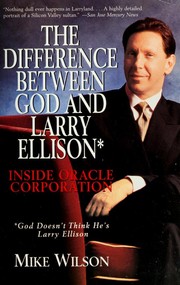
Karen Southwick · 2003

Hostile counterweight to Symonds's authorised Softwar, published the same year.
Julian Guthrie · 2013

His America's Cup campaign; the only book covering the later Ellison.

Recommended by: Andrew Wilkinson
Marc Benioff, Carlye Adler · 2009

How Salesforce was built, set out as 111 plays on marketing, sales and growth.

Where it sits in the reference 3

Companies
Biographies
Industries

Topics

Biography and MemoirCompany HistoriesFounders and Entrepreneurs