Updates

  1. Person pages list letters, writing, profiles and links as sortable tables with filters, and show each person's companies as links; Fund letters show each letter's description in its own column.
  2. Experts show a checked job title and a short description of each person; 30 more people have photographs.
  3. Every company, fund, university and publication the experts work for has a page listing the people there.
  4. Fund letters show each letter's thesis and filter by it; 225 person pages list the essays, columns and newsletter issues the person wrote.
  5. Person pages list every essay and newsletter issue a person wrote, and their own books as a table in List view.
  6. Recommends shows the five largest kinds of book and the rest under More; browse pictures load sooner.
  7. Podcasts and talks link the original episode, filter by Audio and video or Press, and list each publisher once.
  8. Pages are wider, Recommends has List and Grid, and a filter clicked again turns off.
  9. Book cards sit in a ruled grid with Open Library and Goodreads links and each book's one-line note.
  10. Funds is now Investors; each investor's styles are buttons that filter the table.
  11. Podcasts and talks on a person's page filter by year and publisher and show as a list or a grid of pictures.
  12. Quotes show only people's own words: 472 summaries written by list sites are gone.
  13. Country pages open from Browse again, and every link on the shelf lands on a page.
  14. Subject and person pages show their sections as tabs, and each book appears once on a person's page.
  15. Book cards show the quote, who said it and the source; grids show five cards to a row.
  16. On a phone, a menu holds the sections, search, Updates, Feedback and dark mode.
  17. Feedback takes a screenshot of the page with no browser prompt, opens a screenshot full size when you click it, and clears itself once sent.
  18. Book cards are centred, search names the topic each book sits in, and any text cut short shows whole on hover.
  19. Search groups its results by kind: people, companies, geographies, subjects, topics, books, funds, fund letters and papers.
  20. The Books table lists who recommended each book by name, and the browser tab names the section you are in.
  21. Feedback can take a screenshot of the page, or one you paste or choose, and opens in the corner beside Updates.
  22. Each rail button reopens its section where you left it, and Browse, Table and People show on every book and subject page.
  23. Filters grey out choices that hold nothing instead of hiding them, and Books › People filters by authors or recommenders.
  24. Feedback takes a subject line and up to three screenshots.
  25. Biographies are grouped by the person they are about: 41 new pages, from Abraham Lincoln to Lee Kuan Yew.
  26. Sport splits into 23 sports, and Religion into one topic per faith.
  27. Book lists show as cards: the cover, one recommendation quote and every recommender by name.
  28. Seventeen subjects that had two or three pages under different names now have one page each.
  29. Every page lists its Experts as authors and recommenders, with a link to them on the Experts tab.
  30. Economics, Financial history, Financial panics and Accounting are subjects of their own, with one page per financial crisis.
  31. Book, person and subject pages open inside the app, so the tabs stay in view.
  32. 996 more book covers, and photographs or logos for 227 more people and companies.
  33. Books › Browse shows every subject as cards, and the rail holds Fund letters, Papers, Experts, Books and Funds.
  34. Every topic over 150 books splits into narrower topics, each with a page of its own.

Send feedback

What is it?
Screenshots, up to 3 (optional)
or paste one with Ctrl+V

We use your email only to reply to you.

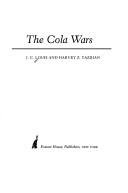
The Cola Wars

The Cola Wars

J. C. Louis, Harvey Z. Yazijian
1980
T3 386 pages · about 6h 26m to read Open Librarygoodreads

The classic account of the Coke-Pepsi rivalry.

Summary

J. C. Louis and Harvey Yazijian wrote this history of the competition between Coca-Cola and Pepsi-Cola, covering the industry from its patent medicine origins through the marketing battles of the 1970s.

The business history covers the founding of both companies, Coca-Cola's early distribution decision to sell bottling rights in perpetuity at a fixed syrup price, which built national distribution rapidly and created a structural problem the company spent decades resolving; Pepsi's bankruptcies and its Depression-era positioning on price with a larger bottle; the wartime allocation of sugar and Coca-Cola's arrangement to supply American forces overseas, which built its international position; and the postwar competition in which Pepsi positioned itself generationally against Coca-Cola's incumbency.

The marketing material covers the campaigns, the Pepsi Challenge blind taste tests, and the bottler and fountain distribution systems that determined where each brand could be bought. The authors also cover the industry's political and regulatory dealings, including the sugar and corn syrup lobbying and the international expansion arrangements. The book was published in 1980, so it precedes New Coke, the bottler consolidations, the diversification of both companies into other categories and the decline of carbonated soft drink volumes. It is a period business history rather than an analysis.

Key takeaways 7

  1. Coca-Cola sold perpetual bottling rights at a fixed syrup price, which built national distribution fast and constrained the company for decades.
  2. Pepsi established itself during the Depression by offering twice the volume at the same price, which positioned it permanently as the value option.
  3. Coca-Cola's arrangement to supply American forces during the war built its international bottling network at government expense.
  4. The Pepsi Challenge attacked Coca-Cola's core claim by testing the product without the brand attached.
  5. Distribution through bottlers and fountain accounts determined availability, which mattered more than advertising in most markets.
  6. Both companies depended on relationships with sugar and later corn syrup suppliers whose costs determined their margins.
  7. Brand competition in the category operated through positioning against the incumbent rather than through product differences.

Who should read it

Operators and investors in consumer brands who want the origin of a durable duopoly and of the franchise bottling structure.

Similar books 6

Chosen by shared topics, the entries that hold them, and the people who recommended both.
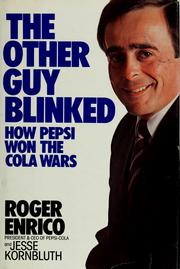
Roger Enrico, Jesse Kornbluth · 1986

Pepsi's president on the cola wars and Coca-Cola's New Coke blunder.

Bartow J. Elmore · 2014

Coca-Cola's supply chain of water, sugar and caffeine as environmental history.
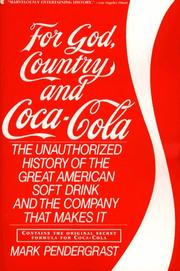
Mark Pendergrast · 1993

A cultural and business history of America told through Coca-Cola.
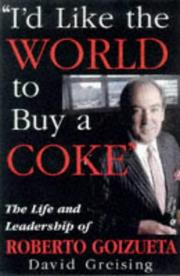
David Greising · 1998

Biography of Roberto Goizueta and the 1980s-90s value creation.

Recommended by: Mohnish Pabrai

Neville Isdell, David Beasley · 2011

Insider memoir by the CEO who ran the 2004 turnaround.

Recommended by: Mohnish Pabrai
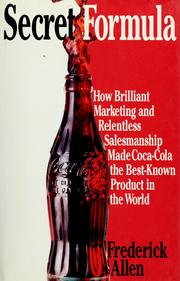
Frederick Lewis Allen, Frederick Allen · 1994

How Asa Candler built Coca-Cola and Robert Woodruff made it a global brand.

Where it sits in the reference 2

Companies
Companies

Topics

Company HistoriesSales and MarketingBrands, positioning and luxury