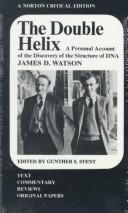
The Double Helix
A first-hand account of the race against Linus Pauling to find DNA's structure.
Watson's insider account of the race to DNA's structure
Summary
Watson gives a first-person account of how he and Francis Crick found the structure of DNA in 1953, when he was 24, in a race against Linus Pauling and other laboratories. He describes the work as a contest of ambitions and rivalries among gifted scientists, and records his impressions as they were at the time rather than as he later revised them. Harvard University Press dropped the book after objections from Crick and Maurice Wilkins, and Atheneum published it in 1968.
The memoir was unusual for its time in showing science as personal competition. Critics charged that Watson cared only about priority and that he and Crick used Rosalind Franklin's data without adequate credit; his portrait of Franklin, who had died before he wrote, drew charges of sexism, and Anne Sayre's book answered it. Watson's epilogue concedes that his early impressions of her were often wrong. The 1980 Norton Critical Edition collects reviews and the 1953 papers, and a 2012 annotated edition adds over three hundred notes and a dropped chapter. The Modern Library ranked it seventh among the twentieth century's best nonfiction.
Key takeaways 4
- The structure of DNA was found in 1953 through a race between laboratories, not through a single isolated insight.
- Scientific credit depends on who publishes first, which shapes how scientists treat one another's data.
- Rosalind Franklin's results were central to the discovery, and the credit given to her remains disputed.
- Personal accounts of discovery record ambition and rivalry that formal papers leave out.
Who should read it
Readers who want an insider's view of how a major discovery happened, read alongside its critics on the question of Franklin's credit.
Who recommended it 3 · 1 direct
“The most vivid example of fierce nerds in action may be James Watson's The Double Helix.”
Similar books 6
Chosen by shared topics, the entries that hold them, and the people who recommended both.
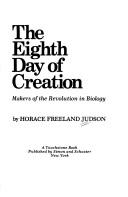
The history of molecular biology from the 1930s to the 1970s, told by its makers.
Recommended by: Naval Ravikant
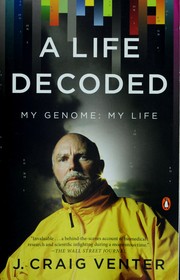
An insider's account of the private race to sequence the human genome.
Recommended by: Sam Altman
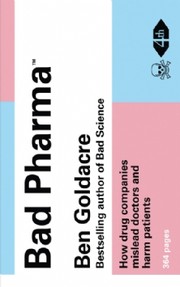
How drug companies distort medical evidence, starting with unpublished trials.
Recommended by: Tim Ferriss
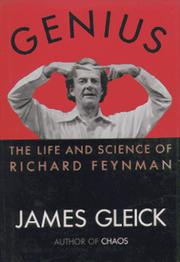
A biography of the physicist Richard Feynman and his work.
“I've also been reading Perfectly Reasonable Deviations from the Beaten Track by Feynman and re-reading Genius: The Life and Science of Richard Feynman, a biography about him.” — Naval Ravikant
Source: Naval's Recommended Reading — The Almanack of Naval Ravikant
Recommended by: Jim Collins, Mohnish Pabrai, Naval Ravikant and 1 other
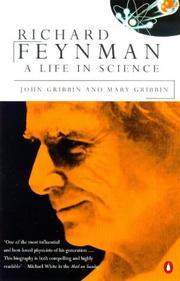
The life and science of Richard Feynman, physicist and teacher.
Recommended by: Mohnish Pabrai, Paul Graham
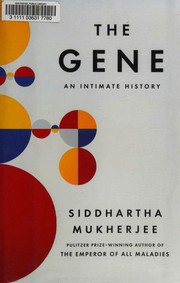
The gene from Mendel and Darwin to genome editing, beside a family's mental illness.
Recommended by: Bill Gates, Daniel Petre, James Cameron and 1 other
Where it sits in the reference 1
Topics 3
As an Amazon Associate I earn from qualifying purchases.