Updates

  1. Person pages list letters, writing, profiles and links as sortable tables with filters, and show each person's companies as links; Fund letters show each letter's description in its own column.
  2. Experts show a checked job title and a short description of each person; 30 more people have photographs.
  3. Every company, fund, university and publication the experts work for has a page listing the people there.
  4. Fund letters show each letter's thesis and filter by it; 225 person pages list the essays, columns and newsletter issues the person wrote.
  5. Person pages list every essay and newsletter issue a person wrote, and their own books as a table in List view.
  6. Recommends shows the five largest kinds of book and the rest under More; browse pictures load sooner.
  7. Podcasts and talks link the original episode, filter by Audio and video or Press, and list each publisher once.
  8. Pages are wider, Recommends has List and Grid, and a filter clicked again turns off.
  9. Book cards sit in a ruled grid with Open Library and Goodreads links and each book's one-line note.
  10. Funds is now Investors; each investor's styles are buttons that filter the table.
  11. Podcasts and talks on a person's page filter by year and publisher and show as a list or a grid of pictures.
  12. Quotes show only people's own words: 472 summaries written by list sites are gone.
  13. Country pages open from Browse again, and every link on the shelf lands on a page.
  14. Subject and person pages show their sections as tabs, and each book appears once on a person's page.
  15. Book cards show the quote, who said it and the source; grids show five cards to a row.
  16. On a phone, a menu holds the sections, search, Updates, Feedback and dark mode.
  17. Feedback takes a screenshot of the page with no browser prompt, opens a screenshot full size when you click it, and clears itself once sent.
  18. Book cards are centred, search names the topic each book sits in, and any text cut short shows whole on hover.
  19. Search groups its results by kind: people, companies, geographies, subjects, topics, books, funds, fund letters and papers.
  20. The Books table lists who recommended each book by name, and the browser tab names the section you are in.
  21. Feedback can take a screenshot of the page, or one you paste or choose, and opens in the corner beside Updates.
  22. Each rail button reopens its section where you left it, and Browse, Table and People show on every book and subject page.
  23. Filters grey out choices that hold nothing instead of hiding them, and Books › People filters by authors or recommenders.
  24. Feedback takes a subject line and up to three screenshots.
  25. Biographies are grouped by the person they are about: 41 new pages, from Abraham Lincoln to Lee Kuan Yew.
  26. Sport splits into 23 sports, and Religion into one topic per faith.
  27. Book lists show as cards: the cover, one recommendation quote and every recommender by name.
  28. Seventeen subjects that had two or three pages under different names now have one page each.
  29. Every page lists its Experts as authors and recommenders, with a link to them on the Experts tab.
  30. Economics, Financial history, Financial panics and Accounting are subjects of their own, with one page per financial crisis.
  31. Book, person and subject pages open inside the app, so the tabs stay in view.
  32. 996 more book covers, and photographs or logos for 227 more people and companies.
  33. Books › Browse shows every subject as cards, and the rail holds Fund letters, Papers, Experts, Books and Funds.
  34. Every topic over 150 books splits into narrower topics, each with a page of its own.

Send feedback

What is it?
Screenshots, up to 3 (optional)
or paste one with Ctrl+V

We use your email only to reply to you.

The Elements of Investing

The Elements of Investing

Burton G. Malkiel, Charles D. Ellis
2009
208 pages · about 3h 28m to read Open Librarygoodreads

Tenth-anniversary edition 2020.

Summary

Burton Malkiel and Charles Ellis wrote this deliberately short book as a distillation of what they both concluded across long careers. Malkiel wrote A Random Walk Down Wall Street and Ellis wrote Winning the Loser's Game, and this compresses both positions into about a hundred pages.

The advice is minimal and consistent. Save regularly and start early, because compounding over decades does more than any investment decision. Index rather than select, because the evidence on active management is conclusive in aggregate and the winners cannot be identified in advance. Diversify across asset classes, geographies and time. Minimise costs and taxes, which are the only certain component of the return equation. Rebalance to a chosen allocation rather than responding to markets. And avoid the specific behavioural errors that destroy returns, principally performance chasing, panic selling and overconfidence.

The book's method is subtraction: it says less than other investment books deliberately, on the argument that the additional content in longer books is either wrong or irrelevant. Its limitations are that it does not help a reader who wants to understand why the recommendations follow from evidence, and that the tax and account material is American. As a book to give someone who needs to start investing and will not read three hundred pages, it is the best available.

Key takeaways 7

  1. Saving regularly and starting early contributes more to outcomes than any investment selection decision.
  2. Index funds win because costs are certain and manager outperformance is neither predictable nor persistent.
  3. Costs and taxes are the only components of return an investor controls, and they compound exactly as returns do.
  4. Rebalancing to a chosen allocation enforces selling what has risen and buying what has fallen without requiring judgement.
  5. Investors destroy returns through performance chasing and panic selling, and both are avoidable by rule.
  6. The authors argue that most investment advice consists of content that is either wrong or irrelevant to the outcome.
  7. Diversification across asset classes, geographies and time is the only protection against being wrong about the future.

Who should read it

Anyone starting to invest, or anyone who needs to give a short and unconflicted book to someone who is.

About Burton G. Malkiel

Chemical Bank Chairman's Professor of Economics Emeritus, Princeton University; Chief Investment Officer, Wealthfront; former Vanguard director

A Random Walk Down Wall Street, now in its thirteenth edition after fifty years, is the primary popular source for the index-fund case.

Princeton University, Wealthfront

Similar books 6

Chosen by shared topics, the entries that hold them, and the people who recommended both.
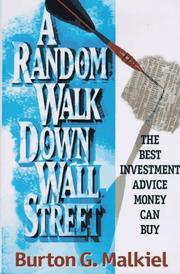
Burton G. Malkiel · 1973

Stock prices follow a random walk, so a low-cost index fund beats stock picking.

Recommended by: Nat Eliason, Mohnish Pabrai
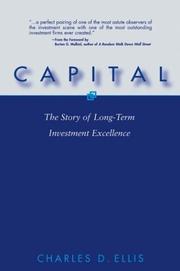
Charles D. Ellis · 2004

How Capital Group built its long-term investing culture.

Recommended by: Mohnish Pabrai

Where it sits in the reference 2

Academics
Investors

Topics

Investing