Falling Short: The Coming Retirement Crisis and What to Do About It
Summary
Munnell, Hou and Webb, of the Center for Retirement Research at Boston College, wrote a short assessment of American retirement preparedness based on the centre's research.
The empirical core is the National Retirement Risk Index, which the centre constructs and updates. It compares projected retirement income against the income each household would need to maintain its pre-retirement standard of living, using the Survey of Consumer Finances and accounting for Social Security, defined benefit pensions, defined contribution balances and housing wealth. The finding is that roughly half of American working-age households are at risk of being unable to maintain their standard of living in retirement.
The causes they identify are structural rather than behavioural. Social Security replacement rates are falling because of the rising full retirement age and rising Medicare premium deductions. Defined benefit pensions have been replaced by defined contribution plans, which shift investment and longevity risk to individuals, have lower participation, allow leakage before retirement and produce balances far below what would be required. Life expectancy has risen while retirement ages have not risen proportionally. Interest rates fell, which raises the cost of converting a given balance into income. Healthcare costs in retirement have risen.
Their prescriptions are modest and specific: work longer, since each additional year adds Social Security benefit, adds savings and removes a year of drawdown; make defined contribution plans automatic in enrolment, escalation and investment; use home equity through downsizing or reverse mortgages; and address Social Security's financing rather than reducing benefits.
The analysis is careful and the index methodology is published and criticised in the literature. Some researchers argue it overstates the problem by using replacement rate targets that exceed what retirees actually need. The book is specific to the United States.
Key takeaways 7
- Roughly half of American working-age households are projected to be unable to maintain their standard of living in retirement.
- Social Security replacement rates are falling because of the rising full retirement age and rising Medicare premium deductions.
- Defined contribution plans shifted investment and longevity risk to individuals who are not equipped to bear either.
- Rising life expectancy without proportionally rising retirement ages extends the drawdown period the same savings must fund.
- Lower interest rates raise the cost of converting a given savings balance into a stream of retirement income.
- Working an additional year adds benefits and savings while removing a year of drawdown, which makes it the highest-leverage response.
- Automatic enrolment, escalation and default investment raise participation and balances far more than education does.
Who should read it
Anyone assessing retirement adequacy, and operators designing retirement plans, who want the research-based measurement rather than industry claims.
About Charles D. Ellis
Founder of Greenwich Associates; chair of the Yale endowment investment committee; author of 'The Loser's Game'
His 1975 essay 'The Loser's Game' is the primary source that reframed active management as a negative-sum contest, and the argument is still cited verbatim.
Similar books 6
Chosen by shared topics, the entries that hold them, and the people who recommended both.

Why America lost the ability to build housing, energy and infrastructure.
Recommended by: Andrew Wilkinson, Bill Gates

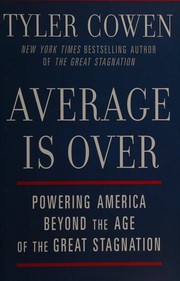
Work is splitting between those who work well with smart machines and the rest.
“Tyler Cowen... dedicates a chapter to freestyle chess in his terrific book, Average Is Over.” — Michael Mauboussin
Source: Lessons from Freestyle Chess: Merging Fundamental and Quantitative Analysis (Credit Suisse)
Recommended by: Michael Mauboussin, Ryan Holiday

Recommended by: Mohnish Pabrai

The long-run dynamics of wealth and inequality, and why capital concentrates.
Recommended by: Bill Gates, Mohnish Pabrai, Satya Nadella
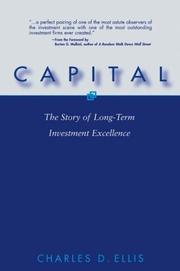
How Capital Group built its long-term investing culture.
Recommended by: Mohnish Pabrai
Where it sits in the reference 2
Topics