Updates

  1. Person pages list letters, writing, profiles and links as sortable tables with filters, and show each person's companies as links; Fund letters show each letter's description in its own column.
  2. Experts show a checked job title and a short description of each person; 30 more people have photographs.
  3. Every company, fund, university and publication the experts work for has a page listing the people there.
  4. Fund letters show each letter's thesis and filter by it; 225 person pages list the essays, columns and newsletter issues the person wrote.
  5. Person pages list every essay and newsletter issue a person wrote, and their own books as a table in List view.
  6. Recommends shows the five largest kinds of book and the rest under More; browse pictures load sooner.
  7. Podcasts and talks link the original episode, filter by Audio and video or Press, and list each publisher once.
  8. Pages are wider, Recommends has List and Grid, and a filter clicked again turns off.
  9. Book cards sit in a ruled grid with Open Library and Goodreads links and each book's one-line note.
  10. Funds is now Investors; each investor's styles are buttons that filter the table.
  11. Podcasts and talks on a person's page filter by year and publisher and show as a list or a grid of pictures.
  12. Quotes show only people's own words: 472 summaries written by list sites are gone.
  13. Country pages open from Browse again, and every link on the shelf lands on a page.
  14. Subject and person pages show their sections as tabs, and each book appears once on a person's page.
  15. Book cards show the quote, who said it and the source; grids show five cards to a row.
  16. On a phone, a menu holds the sections, search, Updates, Feedback and dark mode.
  17. Feedback takes a screenshot of the page with no browser prompt, opens a screenshot full size when you click it, and clears itself once sent.
  18. Book cards are centred, search names the topic each book sits in, and any text cut short shows whole on hover.
  19. Search groups its results by kind: people, companies, geographies, subjects, topics, books, funds, fund letters and papers.
  20. The Books table lists who recommended each book by name, and the browser tab names the section you are in.
  21. Feedback can take a screenshot of the page, or one you paste or choose, and opens in the corner beside Updates.
  22. Each rail button reopens its section where you left it, and Browse, Table and People show on every book and subject page.
  23. Filters grey out choices that hold nothing instead of hiding them, and Books › People filters by authors or recommenders.
  24. Feedback takes a subject line and up to three screenshots.
  25. Biographies are grouped by the person they are about: 41 new pages, from Abraham Lincoln to Lee Kuan Yew.
  26. Sport splits into 23 sports, and Religion into one topic per faith.
  27. Book lists show as cards: the cover, one recommendation quote and every recommender by name.
  28. Seventeen subjects that had two or three pages under different names now have one page each.
  29. Every page lists its Experts as authors and recommenders, with a link to them on the Experts tab.
  30. Economics, Financial history, Financial panics and Accounting are subjects of their own, with one page per financial crisis.
  31. Book, person and subject pages open inside the app, so the tabs stay in view.
  32. 996 more book covers, and photographs or logos for 227 more people and companies.
  33. Books › Browse shows every subject as cards, and the rail holds Fund letters, Papers, Experts, Books and Funds.
  34. Every topic over 150 books splits into narrower topics, each with a page of its own.

Send feedback

What is it?
Screenshots, up to 3 (optional)
or paste one with Ctrl+V

We use your email only to reply to you.

The Euro: The Battle for the New Global Curr

The Euro: The Battle for the New Global Currency

David Marsh
2009
T2 352 pages · about 5h 52m to read Open Librarygoodreads

How the single currency was negotiated, by a reporter who watched it.

Summary

David Marsh, who has written on the Bundesbank and on European monetary affairs for decades, produced this political history of the euro from the early postwar discussions to the currency's first decade.

The narrative traces the successive attempts: the Werner Plan of 1970, the snake and the European Monetary System with its exchange rate mechanism, the crises of 1992 and 1993 that forced sterling and the lira out and widened the bands, the Delors Report, the Maastricht negotiation, and the political decisions that determined membership and design. Marsh's principal source material is interviews and archives, and he documents what the participants actually said to each other rather than what was announced.

His argument is that monetary union was a political project throughout, in which German unification and French anxiety about German power were decisive, and that the economic design problems were known to the participants and set aside because the political imperative was stronger. He documents the Bundesbank's consistent warnings about a currency without a fiscal union, the decisions to admit countries whose convergence was accounting rather than real, and the absence of any mechanism for handling a member state's insolvency. The book was published in 2009, as the crisis began, and reads as a diagnosis of what followed. Marsh is sympathetic to the Bundesbank's position and readers should note that.

Key takeaways 7

  1. Monetary union was a political project in which German unification and French concern about German power were decisive.
  2. The design problems including the absence of fiscal union were identified by participants and set aside for political reasons.
  3. The Bundesbank warned consistently that a currency without fiscal union would face crises it could not resolve.
  4. Membership decisions admitted countries whose convergence was accounting rather than economic.
  5. No mechanism for handling a member state's insolvency was created, because creating one would have acknowledged the possibility.
  6. The 1992 and 1993 exchange rate mechanism crises demonstrated the difficulty of fixed rates without full union, and accelerated rather than deterred the project.
  7. Marsh writes sympathetically to the Bundesbank's position, which shapes his account of the negotiations.

Who should read it

Investors and analysts who want the political negotiation history behind the euro's design and the warnings its architects chose to override.

Similar books 6

Chosen by shared topics, the entries that hold them, and the people who recommended both.

Ben S. Bernanke · 2022

Insider account of the Fed from Burns through the QE era.

Allan H. Meltzer · 2003

The Fed from 1913 to 1951, told from its own minutes and internal memos.
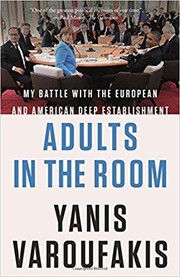
Yanis Varoufakis · 2017

Greece's 2015 debt talks with its creditors, by its finance minister at the time.
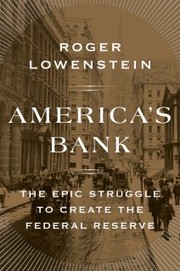
Roger Lowenstein · 2015

How the Federal Reserve was argued into existence, from the 1907 panic to 1913.

Recommended by: Seth Klarman

Adam Tooze · 2018

The 2008 crash, the eurozone crisis and the politics after as one connected story.

Martin Sandbu · 2015

Argues the currency was not the problem, the crisis management was; the best contrarian case.

Where it sits in the reference 2

Geographies
Financial history

Topics

Financial HistoryPolitics and GovernmentEurope, Britain and Russia