
The Great Inflation and Its Aftermath
The 1965-1982 US inflation and the Volcker disinflation.
Summary
Robert Samuelson, a longtime economics columnist, argues that the American inflation of roughly 1965 to 1982 and its defeat were the central economic events of the postwar period, and that their consequences shaped everything that followed.
His account of the causes emphasises ideas rather than shocks. He argues that the inflation resulted from a policy consensus, formed among economists and adopted by governments, that unemployment could be permanently reduced by accepting modest inflation, and that the trade-off would remain stable. When it did not, policymakers responded with wage and price controls and with denial rather than with monetary tightening, because the intellectual framework did not permit them to see what was happening. He treats the oil shocks as amplifiers rather than causes.
The second half concerns consequences. Samuelson argues that Paul Volcker's disinflation, and the deep recession it required, established the credibility that permitted the long expansion, the decline in interest rates and the asset price appreciation of the following decades. He also argues that the same success produced complacency, since a generation of policymakers and investors came to assume that low inflation was the natural state. The book was published in 2008 and its warning about complacency reads differently after 2021. Samuelson is a journalist rather than an economist and his account of the intellectual history is simplified.
Key takeaways 7
- The American inflation resulted from a policy consensus that unemployment could be permanently reduced by accepting modest inflation.
- Policymakers responded to accelerating inflation with controls and denial because their framework did not permit them to see the cause.
- Oil shocks amplified the inflation rather than causing it, since the acceleration began before 1973.
- Volcker's disinflation required a deep recession, and the willingness to accept it is what established credibility.
- The credibility established by disinflation permitted the decline in interest rates and the asset appreciation of the following decades.
- Samuelson argues that success against inflation produced complacency, since a generation assumed low inflation was the natural state.
- Economic policy is shaped by the intellectual framework policymakers hold, which determines what evidence they can interpret.
Who should read it
Investors who want an accessible account of how a major inflation began, why policymakers failed to see it, and what defeating it cost.
Similar books 6
Chosen by shared topics, the entries that hold them, and the people who recommended both.

Insider account of the Fed from Burns through the QE era.

European finance from the Middle Ages on: money, banking, markets and public debt.
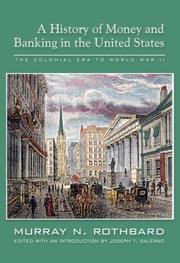
US money from colonial paper to the Fed, read as bank-and-state booms and busts.

The Fed from 1913 to 1951, told from its own minutes and internal memos.

The US money stock from 1867 to 1960, and how changes in it drove prices and income.

Where it sits in the reference 1
Topics