Updates

  1. Person pages list letters, writing, profiles and links as sortable tables with filters, and show each person's companies as links; Fund letters show each letter's description in its own column.
  2. Experts show a checked job title and a short description of each person; 30 more people have photographs.
  3. Every company, fund, university and publication the experts work for has a page listing the people there.
  4. Fund letters show each letter's thesis and filter by it; 225 person pages list the essays, columns and newsletter issues the person wrote.
  5. Person pages list every essay and newsletter issue a person wrote, and their own books as a table in List view.
  6. Recommends shows the five largest kinds of book and the rest under More; browse pictures load sooner.
  7. Podcasts and talks link the original episode, filter by Audio and video or Press, and list each publisher once.
  8. Pages are wider, Recommends has List and Grid, and a filter clicked again turns off.
  9. Book cards sit in a ruled grid with Open Library and Goodreads links and each book's one-line note.
  10. Funds is now Investors; each investor's styles are buttons that filter the table.
  11. Podcasts and talks on a person's page filter by year and publisher and show as a list or a grid of pictures.
  12. Quotes show only people's own words: 472 summaries written by list sites are gone.
  13. Country pages open from Browse again, and every link on the shelf lands on a page.
  14. Subject and person pages show their sections as tabs, and each book appears once on a person's page.
  15. Book cards show the quote, who said it and the source; grids show five cards to a row.
  16. On a phone, a menu holds the sections, search, Updates, Feedback and dark mode.
  17. Feedback takes a screenshot of the page with no browser prompt, opens a screenshot full size when you click it, and clears itself once sent.
  18. Book cards are centred, search names the topic each book sits in, and any text cut short shows whole on hover.
  19. Search groups its results by kind: people, companies, geographies, subjects, topics, books, funds, fund letters and papers.
  20. The Books table lists who recommended each book by name, and the browser tab names the section you are in.
  21. Feedback can take a screenshot of the page, or one you paste or choose, and opens in the corner beside Updates.
  22. Each rail button reopens its section where you left it, and Browse, Table and People show on every book and subject page.
  23. Filters grey out choices that hold nothing instead of hiding them, and Books › People filters by authors or recommenders.
  24. Feedback takes a subject line and up to three screenshots.
  25. Biographies are grouped by the person they are about: 41 new pages, from Abraham Lincoln to Lee Kuan Yew.
  26. Sport splits into 23 sports, and Religion into one topic per faith.
  27. Book lists show as cards: the cover, one recommendation quote and every recommender by name.
  28. Seventeen subjects that had two or three pages under different names now have one page each.
  29. Every page lists its Experts as authors and recommenders, with a link to them on the Experts tab.
  30. Economics, Financial history, Financial panics and Accounting are subjects of their own, with one page per financial crisis.
  31. Book, person and subject pages open inside the app, so the tabs stay in view.
  32. 996 more book covers, and photographs or logos for 227 more people and companies.
  33. Books › Browse shows every subject as cards, and the rail holds Fund letters, Papers, Experts, Books and Funds.
  34. Every topic over 150 books splits into narrower topics, each with a page of its own.

Send feedback

What is it?
Screenshots, up to 3 (optional)
or paste one with Ctrl+V

We use your email only to reply to you.

The Great Salad Oil Swindle

The Great Salad Oil Swindle

Norman C. Miller
1966
T3 258 pages · about 4h 18m to read Open Librarygoodreads

Pulitzer-winning account of the warehousing fraud that nearly broke Amex.

Summary

Miller, a Wall Street Journal reporter, covers the 1963 collapse of Anthony De Angelis's Allied Crude Vegetable Oil Refining Corporation, which had borrowed against warehouse receipts for soybean oil that did not exist.

The mechanism was simple and worked for years. American Express Field Warehousing, a subsidiary of American Express, issued receipts certifying the quantity of oil in tanks at Allied's Bayonne facility. Banks and commodity brokers lent against those receipts. The inspectors were paid by Allied, the tanks were connected by pipes so oil could be moved between them during inspection, most tanks contained water with a layer of oil floating on top, and some tanks had no oil at all. Since oil floats on water, dipping a tank showed oil at the top regardless of what was beneath. At the peak the receipts covered more soybean oil than existed in the entire United States, a fact that was checkable against Department of Agriculture statistics and that nobody checked.

The collapse bankrupted two brokerage houses, threatened the New York Stock Exchange, and exposed American Express to claims that drove its shares down sharply, which is the transaction Warren Buffett is known for, buying a large position on the judgement that the card and traveller's cheque businesses were unaffected.

The book is contemporaneous reporting and the detail is reliable. Its lesson for investors is direct: collateral that has been certified by an inspector paid by the borrower has not been verified, and an aggregate cross-check against public data would have exposed the fraud at any point.

Key takeaways 7

  1. Warehouse receipts certified by inspectors paid by the borrower are not verification, since the inspector's income depends on the relationship rather than the accuracy.
  2. The outstanding receipts covered more soybean oil than existed in the entire United States, which was checkable against public Department of Agriculture data.
  3. Oil floating on water shows oil at the top of a tank regardless of what is beneath, and the physical inspection method was defeated by a property of the commodity.
  4. Multiple lenders each relied on the same certification and none conducted independent verification, which concentrated a single point of failure across the system.
  5. An aggregate cross-check of a borrower's claimed holdings against total market supply is the cheapest available fraud test and is almost never performed.
  6. The fraud's collapse destroyed brokerage firms that had extended credit against the receipts, which shows collateral quality is a counterparty risk rather than a documentation matter.
  7. American Express's share price fell on a liability that did not affect its operating businesses, which created the opportunity Buffett acted on.

Who should read it

Investors and credit analysts who want a concrete case in how collateral verification fails and how a market-wide cross-check would have caught it.

Who recommended it 1 · 1 direct

Similar books 6

Chosen by shared topics, the entries that hold them, and the people who recommended both.
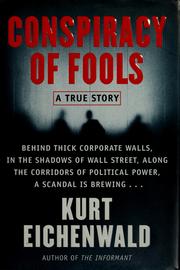
Kurt Eichenwald · 2005

Enron's collapse told scene by scene from depositions, emails and interviews.

Recommended by: Mohnish Pabrai

Frank Partnoy · 2009

How Ivar Kreuger built a 1920s match monopoly, and the forgeries found at his death.

Recommended by: Mohnish Pabrai
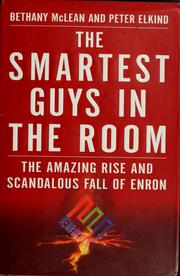
Bethany McLean, Peter Elkind · 2003

How Enron used mark-to-market accounting and hidden deals until its 2001 bankruptcy.

Tom Wright, Bradley Hope · 2018

How Jho Low diverted billions from Malaysia's 1MDB fund into parties and politics.

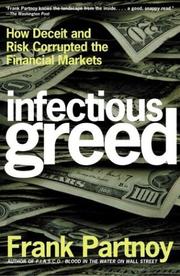
Frank Partnoy · 2003

How finance used complexity to hide risk from the 1980s through Enron.

David Enrich · 2017

The Libor rigging scandal told through the traders who ran it

“saga of global financial market manipulation, at mind-boggling scale and hiding in plain sight” — Marc Andreessen

Source: @pmarca, 'Thread: Books I've recently read and recommend'

Recommended by: Marc Andreessen

Where it sits in the reference 3

Companies
Business themes
Financial history

Topics

Financial History