Updates

  1. Person pages list letters, writing, profiles and links as sortable tables with filters, and show each person's companies as links; Fund letters show each letter's description in its own column.
  2. Experts show a checked job title and a short description of each person; 30 more people have photographs.
  3. Every company, fund, university and publication the experts work for has a page listing the people there.
  4. Fund letters show each letter's thesis and filter by it; 225 person pages list the essays, columns and newsletter issues the person wrote.
  5. Person pages list every essay and newsletter issue a person wrote, and their own books as a table in List view.
  6. Recommends shows the five largest kinds of book and the rest under More; browse pictures load sooner.
  7. Podcasts and talks link the original episode, filter by Audio and video or Press, and list each publisher once.
  8. Pages are wider, Recommends has List and Grid, and a filter clicked again turns off.
  9. Book cards sit in a ruled grid with Open Library and Goodreads links and each book's one-line note.
  10. Funds is now Investors; each investor's styles are buttons that filter the table.
  11. Podcasts and talks on a person's page filter by year and publisher and show as a list or a grid of pictures.
  12. Quotes show only people's own words: 472 summaries written by list sites are gone.
  13. Country pages open from Browse again, and every link on the shelf lands on a page.
  14. Subject and person pages show their sections as tabs, and each book appears once on a person's page.
  15. Book cards show the quote, who said it and the source; grids show five cards to a row.
  16. On a phone, a menu holds the sections, search, Updates, Feedback and dark mode.
  17. Feedback takes a screenshot of the page with no browser prompt, opens a screenshot full size when you click it, and clears itself once sent.
  18. Book cards are centred, search names the topic each book sits in, and any text cut short shows whole on hover.
  19. Search groups its results by kind: people, companies, geographies, subjects, topics, books, funds, fund letters and papers.
  20. The Books table lists who recommended each book by name, and the browser tab names the section you are in.
  21. Feedback can take a screenshot of the page, or one you paste or choose, and opens in the corner beside Updates.
  22. Each rail button reopens its section where you left it, and Browse, Table and People show on every book and subject page.
  23. Filters grey out choices that hold nothing instead of hiding them, and Books › People filters by authors or recommenders.
  24. Feedback takes a subject line and up to three screenshots.
  25. Biographies are grouped by the person they are about: 41 new pages, from Abraham Lincoln to Lee Kuan Yew.
  26. Sport splits into 23 sports, and Religion into one topic per faith.
  27. Book lists show as cards: the cover, one recommendation quote and every recommender by name.
  28. Seventeen subjects that had two or three pages under different names now have one page each.
  29. Every page lists its Experts as authors and recommenders, with a link to them on the Experts tab.
  30. Economics, Financial history, Financial panics and Accounting are subjects of their own, with one page per financial crisis.
  31. Book, person and subject pages open inside the app, so the tabs stay in view.
  32. 996 more book covers, and photographs or logos for 227 more people and companies.
  33. Books › Browse shows every subject as cards, and the rail holds Fund letters, Papers, Experts, Books and Funds.
  34. Every topic over 150 books splits into narrower topics, each with a page of its own.

Send feedback

What is it?
Screenshots, up to 3 (optional)
or paste one with Ctrl+V

We use your email only to reply to you.

The IKEA Edge

The IKEA Edge

Anders Dahlvig
2011
T3 191 pages · about 3h 11m to read Open Librarygoodreads

Insider account: the CEO from 1999-2009 on the operating model.

Summary

Dahlvig ran IKEA as chief executive from 1999 to 2009, during which revenue roughly tripled, and this is his account of how the company was managed and what he thinks makes it work.

The business substance covers IKEA's operating model: designing to a price point first and then engineering the product to meet it; flat-pack construction that transfers assembly labour and transport volume to the customer; owning the whole chain from design through range through retail so that cost decisions can be made across it rather than negotiated between parties; store formats and locations chosen for land cost rather than for footfall; and the deliberate strategy of lowering prices annually rather than raising them, funded by cost reduction that must therefore be continuous.

Dahlvig also covers the internal management: the culture derived from Ingvar Kamprad's Smaland origins, the emphasis on cost consciousness at every level including executive travel, the decentralised country management within a tightly controlled range and supply chain, and the ownership structure through a foundation that removes external shareholder pressure and permits long-horizon decisions.

The final section argues for what he calls a broader business model in which social and environmental responsibility, employee relations and community position are treated as commercial requirements rather than as constraints.

The book is a chief executive's account of his own tenure and is favourable to it. It is thin on the periods of difficulty and on the criticisms of IKEA's tax structure, supplier labour practices and environmental record. The operating model description is accurate and useful.

Key takeaways 7

  1. IKEA designs to a price point first and engineers the product to meet it, which reverses the normal sequence and constrains every subsequent decision.
  2. Flat-pack construction transfers assembly labour and shipping volume to the customer, which removes cost from the parts of the chain the company pays for.
  3. Owning design, range and retail together allows cost decisions to be optimised across the whole chain rather than negotiated between separate parties.
  4. Committing to lower prices every year forces continuous cost reduction, since the price commitment cannot be met any other way.
  5. A foundation ownership structure removes external shareholder pressure and permits investment decisions on horizons a listed company cannot use.
  6. Country management should be decentralised while range and supply chain remain tightly centralised, since the first requires local knowledge and the second requires scale.
  7. Cost consciousness must be visible at executive level or it will not be taken seriously anywhere else in the organisation.

Who should read it

Retail and consumer operators interested in vertically integrated low-cost models and the ownership structures that permit long-horizon decisions.

Similar books 6

Chosen by shared topics, the entries that hold them, and the people who recommended both.
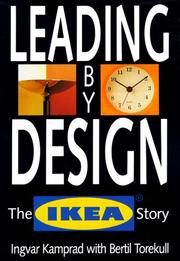
Bertil Torekull, Ingvar Kamprad · 1999

IKEA's history, with long passages in which its founder explains his methods.
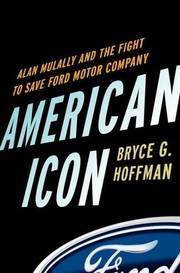
Bryce G. Hoffman · 2012

The 2006-2010 turnaround told with close management access.

Recommended by: Mohnish Pabrai
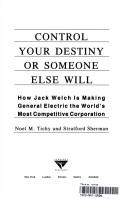
Noel M. Tichy, Stratford Sherman · 1993

The admiring contemporary account of Welch's restructuring.
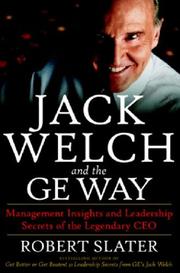
Robert Slater · 1998

Contemporary admiring account; useful as a record of what people believed.
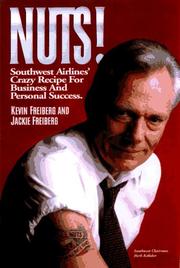
Kevin Freiberg, Jackie Freiberg · 1996

How Southwest Airlines built its low-cost model and its culture under Herb Kelleher.

Risto Siilasmaa · 2018

Nokia's chairman on selling the phone unit to Microsoft and buying Alcatel-Lucent.

Where it sits in the reference 5

Companies
Biographies
Geographies
Business themes
Business themes

Topics

Company HistoriesBusiness and ManagementLeadership