Updates

  1. Person pages list letters, writing, profiles and links as sortable tables with filters, and show each person's companies as links; Fund letters show each letter's description in its own column.
  2. Experts show a checked job title and a short description of each person; 30 more people have photographs.
  3. Every company, fund, university and publication the experts work for has a page listing the people there.
  4. Fund letters show each letter's thesis and filter by it; 225 person pages list the essays, columns and newsletter issues the person wrote.
  5. Person pages list every essay and newsletter issue a person wrote, and their own books as a table in List view.
  6. Recommends shows the five largest kinds of book and the rest under More; browse pictures load sooner.
  7. Podcasts and talks link the original episode, filter by Audio and video or Press, and list each publisher once.
  8. Pages are wider, Recommends has List and Grid, and a filter clicked again turns off.
  9. Book cards sit in a ruled grid with Open Library and Goodreads links and each book's one-line note.
  10. Funds is now Investors; each investor's styles are buttons that filter the table.
  11. Podcasts and talks on a person's page filter by year and publisher and show as a list or a grid of pictures.
  12. Quotes show only people's own words: 472 summaries written by list sites are gone.
  13. Country pages open from Browse again, and every link on the shelf lands on a page.
  14. Subject and person pages show their sections as tabs, and each book appears once on a person's page.
  15. Book cards show the quote, who said it and the source; grids show five cards to a row.
  16. On a phone, a menu holds the sections, search, Updates, Feedback and dark mode.
  17. Feedback takes a screenshot of the page with no browser prompt, opens a screenshot full size when you click it, and clears itself once sent.
  18. Book cards are centred, search names the topic each book sits in, and any text cut short shows whole on hover.
  19. Search groups its results by kind: people, companies, geographies, subjects, topics, books, funds, fund letters and papers.
  20. The Books table lists who recommended each book by name, and the browser tab names the section you are in.
  21. Feedback can take a screenshot of the page, or one you paste or choose, and opens in the corner beside Updates.
  22. Each rail button reopens its section where you left it, and Browse, Table and People show on every book and subject page.
  23. Filters grey out choices that hold nothing instead of hiding them, and Books › People filters by authors or recommenders.
  24. Feedback takes a subject line and up to three screenshots.
  25. Biographies are grouped by the person they are about: 41 new pages, from Abraham Lincoln to Lee Kuan Yew.
  26. Sport splits into 23 sports, and Religion into one topic per faith.
  27. Book lists show as cards: the cover, one recommendation quote and every recommender by name.
  28. Seventeen subjects that had two or three pages under different names now have one page each.
  29. Every page lists its Experts as authors and recommenders, with a link to them on the Experts tab.
  30. Economics, Financial history, Financial panics and Accounting are subjects of their own, with one page per financial crisis.
  31. Book, person and subject pages open inside the app, so the tabs stay in view.
  32. 996 more book covers, and photographs or logos for 227 more people and companies.
  33. Books › Browse shows every subject as cards, and the rail holds Fund letters, Papers, Experts, Books and Funds.
  34. Every topic over 150 books splits into narrower topics, each with a page of its own.

Send feedback

What is it?
Screenshots, up to 3 (optional)
or paste one with Ctrl+V

We use your email only to reply to you.

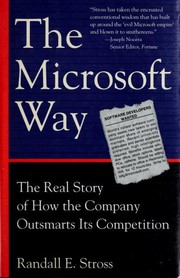
The Microsoft Way

The Microsoft Way

Randall E. Stross
1996
T3 327 pages · about 5h 27m to read Open Librarygoodreads

Sympathetic 1990s analysis of Microsoft's competitive method.

Summary

Randall Stross, a business historian, wrote this in 1996 with cooperation from Microsoft, examining what accounted for the company's dominance at a point when it appeared unassailable.

His argument concerns the company's specific practices rather than any single product. He identifies the recruitment strategy, which sought raw intelligence over experience and hired directly from universities; the retention of technical people in technical roles rather than promoting them into management; the willingness to release inadequate first versions and improve them, which he treats as a deliberate strategy rather than a failure; the practice of entering markets late and winning through persistence and resources rather than through innovation; and the maintenance of a very large cash position that allowed the company to sustain losing efforts for years.

Stross covers specific products including Windows, Word and Excel against Lotus and WordPerfect, and the multimedia and encyclopaedia efforts. Written in 1996, the book precedes the internet response, the antitrust case, the Ballmer decade and the subsequent recovery under Nadella, and its confidence about the company's invincibility reads oddly. The observations about hiring and about the strategy of persistent iteration against established competitors have held up better than the specific product analysis.

Key takeaways 7

  1. Microsoft recruited for raw intelligence directly from universities rather than for industry experience.
  2. Technical people were kept in technical roles rather than promoted into management, which retained capability the company needed.
  3. Releasing an inadequate first version and improving it across releases was a deliberate strategy rather than a quality failure.
  4. The company entered markets late and won through persistence and resources rather than through being first or best.
  5. A very large cash position allowed Microsoft to sustain losing product efforts for years until they succeeded.
  6. Stross argues that Microsoft's advantage was organisational rather than technological.
  7. The book's confidence about the company's invincibility predates the internet response and the antitrust case.

Who should read it

Readers of technology business history who want a contemporaneous account of Microsoft's methods at its point of maximum dominance.

About Randall E. Stross

Business historian and journalist, longtime professor at San Jose State University; wrote reported histories of Edison, Microsoft, Google and Y Combinator.

Each book reports one organisation from inside over a defined stretch of time: a year among Y Combinator's batch companies, Benchmark's partners through the dot-com IPO wave, Edison's Menlo Park laboratory. The result records how venture firms and inventors actually spent their days, which reads as evidence rather than retrospective summary.

San Jose State University

Similar books 6

Chosen by shared topics, the entries that hold them, and the people who recommended both.

Jennifer Edstrom, Marlin Eller · 1998

Insider account by a former Windows developer; hostile in tone.
David Bank · 2001

Microsoft's internal fights over the internet and over the antitrust case.
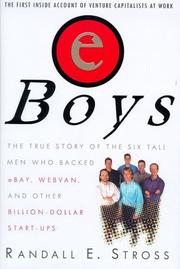
Randall E. Stross · 2000

Two years embedded inside Benchmark Capital.

James Wallace, Jim Erickson · 1992

A critical history of Bill Gates and the early Microsoft, from Lakeside School on.

Satya Nadella · 2017

Microsoft's chief executive on moving the company toward cloud and AI.

Recommended by: Bill Gates, Satya Nadella
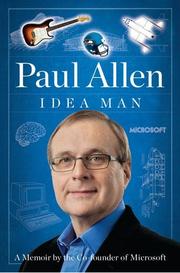
Paul Allen · 2011

A Microsoft co-founder's memoir of his ventures, successes and failures.

Recommended by: Mohnish Pabrai

Where it sits in the reference 2

Journalists
Companies

Topics

Company Histories