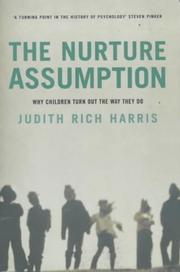
The Nurture Assumption
Why parents have less effect on how children turn out than people assume.
Challenges the evidence that parenting shapes adult outcomes
Summary
Harris argues that the nurture assumption, the belief that, apart from genes, children turn out as they do because of how their parents raise them, is a cultural myth. Looking at the lives of real children, she shows that what matters most is what they experience outside the home, among their peers. Parents do not socialise children; children socialise each other, and parents have little power to decide what sort of adults their children become.
Harris combines psychology, sociology, anthropology, primatology and evolutionary biology to explain how and why children's habit of taking cues from their peers works to their evolutionary advantage. The book unsettled the psychological establishment when it appeared in 1998, was a Pulitzer Prize finalist and a New York Times notable book, and appeared in a tenth-anniversary edition with updated material and a new introduction.
Key takeaways 4
- Apart from genes, parents have far less effect on how children turn out than commonly believed.
- Children are socialised mainly by their peers, not by their parents.
- Taking cues from peers gives children an evolutionary advantage.
- Many widely held beliefs about parenting rest on weak evidence.
Who should read it
Readers who want a careful challenge to the evidence that parenting shapes adult outcomes.
Who recommended it 1 · 1 direct
“the one thing that I found to be really interesting, and to some degree liberating, is the work of Judith Rich Harris”
Similar books 6
Chosen by shared topics, the entries that hold them, and the people who recommended both.
Explains an action by tracing its causes back from neurons to hormones to evolution.
“…books I've recommended, highlighted to death, or forced on friends.” — Andrew Wilkinson
Source: Andrew Wilkinson's Bookshelf, neverenough.com
Recommended by: Andrew Wilkinson, Vinod Khosla, Bill Gates and 5 others
Why IQ scores have risen from one generation to the next, the Flynn effect.
Recommended by: Mohnish Pabrai
What biology and behaviour research say about differences between the sexes.
Recommended by: Ryan Holiday
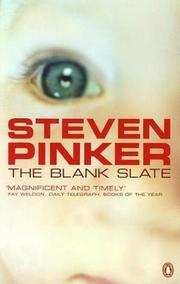
Why the mind is not a blank slate, and the moral and political stakes of that.
Recommended by: Mohnish Pabrai, Marc Andreessen and 1 other
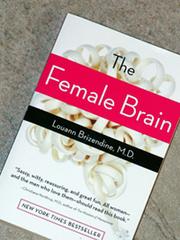
What research on women's brains shows about how they shape women's lives.
Recommended by: Brian Armstrong
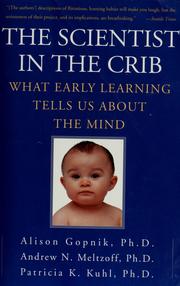
What cognitive science shows about how much babies know and learn.
Recommended by: Steve Jurvetson
Where it sits in the reference 1
Topics 5
As an Amazon Associate I earn from qualifying purchases.