Updates

  1. Fund letters lists 118 more letters, each with its own page: 44 weekly commentaries by Jeremy Siegel from 2026, 31 issues of Van Tharp's newsletter from 2018, 23 Pabrai Investment Funds letters from 2021 to Q3 2026, 13 Efficient Frontier essays by William Bernstein, Oakmark's three 3Q 2026 commentaries, two Lindsell Train reports, a John Hussman comment and Third Point's Q3 2026 letter.
  2. 2,027 more books carry a one-line description in the Books table and on their pages; 7,067 of 7,715 have one, every tier 1, 2 and 3 book among them.
  3. Fund letters lists 187 more letters from 19 firms, among them Permanent Equity, Social Capital, Lux Capital, Square Peg, Bestinver, Cobas, Sequoia Fund, Marketfield and EquityCompass; each shows on its investor's page and has a page of its own.
  4. 2,928 more books carry a one-line description in the Books table and on their pages, so every tier 1, 2 and 3 book has one; 5,040 in all.
  5. Every publication on Newsletters has its own page: its writing, its writers, its staff and who recommends it. Investor pages have a Management tab; a company's Experts tab now leaves out its own people, who list under Management. Tabs on a phone move sideways only.
  6. Every fund letter and research paper has its own page: the thesis, the PDF, the companies and books it names, and for 176 letters and 24 papers so far a summary, key insights and quotes with their page.
  7. 99 books that no page listed now sit under their topics in Books, among them Caste, American Prometheus and Pale Blue Dot.
  8. Newsletters lists every newspaper, magazine, investment newsletter, journal and blog the reference holds, 442 in all, with the people who write there. The search box keeps your last 20 searches. You can create an account.
  9. 283 books that fund managers recommend in their letters are on the shelf, each with the letter's own words and page; investor pages have a Recommends tab.
  10. Person, company, investor and show pages link their own accounts on X, Threads, Instagram, LinkedIn, YouTube and Substack: 275 people, 552 companies and organisations, 88 investors and 478 shows.
  11. 716 more book recommendations name their source: the person's own reading list, letter, blog post, speech or interview, or an article that reports it. 232 of them quote the person's own words about the book, on the book card and on the book's page.
  12. Every US-listed company has a page with its SEC filings. Company pages list their experts and their management, past and present. Fund managers sit under Investors. Each show has a page of its episodes, and an episode page names its guests and hosts. Biographies lists groups, then people. Breadcrumbs show where a page sits.
  13. Media lists every podcast episode, video, interview and talk, over 10,000, by person, company, publisher and event; each filter searches its own choices. Books opens on its table, then Browse, then Authors and Recommenders. A filter's count no longer covers its arrow.
  14. A book that no company, country or subject page lists shows its topics under Where it sits in the reference. On a phone, a page's tabs scroll sideways only. Descriptions read the same on every page. See them in the Experts tab lists every expert the page names.
  15. Every podcast episode, video and interview has its own page with a video or audio player and a link to the source. Investor pages show each company's sector and market cap; firms such as Berkshire Hathaway have one page that holds their letters and their company tabs. Letters tabs filter by company and search the theses. Companies filter by Public, Private and Defunct and link each company's website.
  16. Every tab, view and search has its own address, such as /books/table/asset or /letters/companies, so Back works and a link opens the same place. Page addresses no longer end in .html. Fund letters, Investors, Companies and Papers load about a fifth of the data they did.
  17. Fund letters has a Companies tab: every company the letters name, with its market cap, sector, country, and how many letters and investors name it. Investor pages link each investor's website. Lists in table cells end with “… and N more” at every width.
  18. 1,120 more book summaries; descriptions for 373 papers; pages for 137 more companies, each with the fund letters that discuss it; 215 official photographs; search has its own page.
  19. 411 more books have a summary; person pages list 930 more of the books they wrote; 147 people show their official photograph.
  20. Every investor has a page with its letters and the companies they discuss; company pages list the investors whose letters name them.
  21. A Companies section at the top of the rail lists every company the books, experts and fund letters name.
  22. Person pages list letters, writing, profiles and links as sortable tables with filters, and show each person's companies as links; Fund letters show each letter's description in its own column.
  23. Experts show a checked job title and a short description of each person; 30 more people have photographs.
  24. Every company, fund, university and publication the experts work for has a page listing the people there.
  25. Fund letters show each letter's thesis and filter by it; 225 person pages list the essays, columns and newsletter issues the person wrote.
  26. Person pages list every essay and newsletter issue a person wrote, and their own books as a table in List view.
  27. Recommends shows the five largest kinds of book and the rest under More; browse pictures load sooner.
  28. Podcasts and talks link the original episode, filter by Audio and video or Press, and list each publisher once.
  29. Pages are wider, Recommends has List and Grid, and a filter clicked again turns off.
  30. Book cards sit in a ruled grid with Open Library and Goodreads links and each book's one-line note.
  31. Funds is now Investors; each investor's styles are buttons that filter the table.
  32. Podcasts and talks on a person's page filter by year and publisher and show as a list or a grid of pictures.
  33. Quotes show only people's own words: 472 summaries written by list sites are gone.
  34. Country pages open from Browse again, and every link on the shelf lands on a page.
  35. Subject and person pages show their sections as tabs, and each book appears once on a person's page.
  36. Book cards show the quote, who said it and the source; grids show five cards to a row.
  37. On a phone, a menu holds the sections, search, Updates, Feedback and dark mode.
  38. Feedback takes a screenshot of the page with no browser prompt, opens a screenshot full size when you click it, and clears itself once sent.
  39. Book cards are centred, search names the topic each book sits in, and any text cut short shows whole on hover.
  40. Search groups its results by kind: people, companies, geographies, subjects, topics, books, funds, fund letters and papers.
  41. The Books table lists who recommended each book by name, and the browser tab names the section you are in.
  42. Feedback can take a screenshot of the page, or one you paste or choose, and opens in the corner beside Updates.
  43. Each rail button reopens its section where you left it, and Browse, Table and People show on every book and subject page.
  44. Filters grey out choices that hold nothing instead of hiding them, and Books › People filters by authors or recommenders.
  45. Feedback takes a subject line and up to three screenshots.
  46. Biographies are grouped by the person they are about: 41 new pages, from Abraham Lincoln to Lee Kuan Yew.
  47. Sport splits into 23 sports, and Religion into one topic per faith.
  48. Book lists show as cards: the cover, one recommendation quote and every recommender by name.
  49. Seventeen subjects that had two or three pages under different names now have one page each.
  50. Every page lists its Experts as authors and recommenders, with a link to them on the Experts tab.
  51. Economics, Financial history, Financial panics and Accounting are subjects of their own, with one page per financial crisis.
  52. Book, person and subject pages open inside the app, so the tabs stay in view.
  53. 996 more book covers, and photographs or logos for 227 more people and companies.
  54. Books › Browse shows every subject as cards, and the rail holds Fund letters, Papers, Experts, Books and Funds.
  55. Every topic over 150 books splits into narrower topics, each with a page of its own.

Send feedback

What is it?
Screenshots, up to 3 (optional)
or paste one with Ctrl+V

We use your email only to reply to you.

Behave

Behave

Explains an action by tracing its causes back from neurons to hormones to evolution.

Robert M. Sapolsky
2017
T1 795 pages · about 13h 15m to read Open LibrarygoodreadsAmazon

Biology of human behaviour across timescales, from neurons to culture

Summary

Sapolsky, a Stanford neurobiologist and primatologist, explains human behaviour by working backwards through time from any given action. He starts one second before the behaviour with the nervous system, then seconds to minutes earlier with sensory stimuli, hours to days with hormones, days to months with neural plasticity, years with adolescence and childhood, then foetal development, genes, culture, ecology and evolution. Each chapter covers one timescale.

The method is the argument. By the end Sapolsky has shown that no single level of explanation is sufficient, and that claims about the cause of a behaviour, whether genetic, hormonal, cultural or situational, are always partial. He is particularly good on how the same biology produces opposite behaviours depending on context, showing that testosterone amplifies whatever behaviour maintains status in a given culture rather than causing aggression, and that oxytocin increases in-group warmth and out-group hostility simultaneously.

The material on us and them distinctions, on hierarchy, on the amygdala and prefrontal cortex, and on how adolescent brain development explains risk-taking is directly relevant to anyone managing people. His treatment of implicit bias, of moral reasoning as post-hoc justification, and of how quickly and unconsciously group categorisation occurs is well documented.

The final chapters on free will and criminal justice are the most contested. Sapolsky argues that free will does not exist and that the criminal justice system should be rebuilt accordingly, which many readers find unpersuasive and which is philosophy rather than neuroscience. The book is long and technically dense, with substantial appendices on basic neuroscience and endocrinology. Some cited social psychology has replicated poorly. The multi-level framework is the durable contribution.

Key takeaways 8

  1. Any behaviour has causes operating at every timescale from milliseconds to evolutionary time, and explanations at a single level are always incomplete.
  2. Testosterone does not cause aggression, it amplifies whatever behaviour maintains status in a given culture, including generosity where that is what status requires.
  3. Oxytocin increases warmth toward the in-group and hostility toward outsiders at the same time, so it is not a prosocial hormone in any general sense.
  4. The brain categorises people into in-group and out-group within milliseconds and below conscious awareness, and the categories used are highly malleable.
  5. The prefrontal cortex is not fully developed until the mid-twenties, which explains adolescent risk-taking as a developmental fact rather than a character flaw.
  6. Moral judgments are usually made intuitively and then justified with reasoning constructed afterwards.
  7. Chronic stress damages the same brain regions responsible for regulating the stress response, which produces a self-reinforcing decline.
  8. Sapolsky argues that free will does not exist and that punishment should be reconceived accordingly, which is a philosophical position rather than an empirical finding.

Who should read it

Managers and investors who want a rigorous account of why human behaviour resists single-cause explanation, prepared for a long technical book.

Who recommended it 8 · 2 direct

“…books I've recommended, highlighted to death, or forced on friends.”

Bill Gatesreported
Keith Raboisreported

Similar books 6

Chosen by shared topics, the entries that hold them, and the people who recommended both.
Charlie Munger · 2005

Speeches making the case for a latticework of mental models from many fields.

“…books I've recommended, highlighted to death, or forced on friends.” — Andrew Wilkinson

Source: Andrew Wilkinson's Bookshelf, neverenough.com

Recommended by: Andrew Wilkinson, Charlie Munger and 26 others
Peter Bevelin · 2007

Why people misjudge, with thinking tools from Munger, Buffett, Darwin and Feynman.

“…books I've recommended, highlighted to death, or forced on friends.” — Andrew Wilkinson

Source: Andrew Wilkinson's Bookshelf, neverenough.com

Recommended by: Andrew Wilkinson, Li Lu, Nat Eliason and 7 others
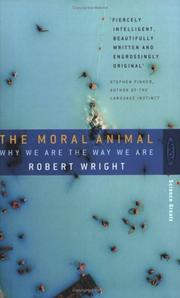
Robert Wright · 1994

Evolutionary psychology explained through Darwin's own life and behaviour.

Michael Pollan · 2018

The history and revival of psychedelic research, and the author's own trips.

“There's a good book Michael Pollan wrote recently called How to Change your Mind, and I think it is a brilliant book everybody should read.” — Naval Ravikant

Source: Naval's Recommended Reading — The Almanack of Naval Ravikant

Recommended by: Vinod Khosla, Bill Gates, Bryan Johnson and 7 others
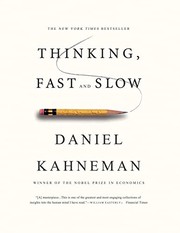
Daniel Kahneman · 2011

How fast, automatic thought and slow, deliberate thought shape judgment and error.

“…books I've recommended, highlighted to death, or forced on friends.” — Andrew Wilkinson

Source: Andrew Wilkinson's Bookshelf, neverenough.com

Recommended by: Andrew Wilkinson, Charles de Vaulx and 33 others

Judith Rich Harris · 1998

Why parents have less effect on how children turn out than people assume.

“the one thing that I found to be really interesting, and to some degree liberating, is the work of Judith Rich Harris” — Michael Mauboussin

Source: The Tim Ferriss Show #659 — official transcript

Recommended by: Michael Mauboussin

Where it sits in the reference 2

Mental models
Mental models

Topics 4

SciencePsychology and BehaviourHuman nature, evolution and personalityBrain, mind and consciousness

As an Amazon Associate I earn from qualifying purchases.