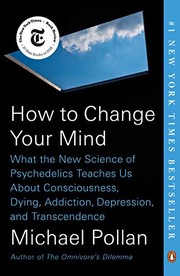
How to Change Your Mind
The history and revival of psychedelic research, and the author's own trips.
Summary
Pollan reports on the history and revival of psychedelic research, combining archival work with interviews with researchers and with his own supervised experiences using psilocybin, LSD and 5-MeO-DMT. The book covers the discovery of LSD by Hofmann, the 1950s and early 1960s research period when psychedelics were studied seriously for alcoholism and end-of-life distress, the collapse of that research after Leary and the cultural backlash, and the resumption of clinical trials at Johns Hopkins, NYU and Imperial College from around 2006.
The scientific material centres on the default mode network, the brain system associated with self-referential thought and with the sense of a continuous self. Imaging studies at Imperial College showed psilocybin reducing activity in this network, and Pollan connects that to the reported experience of ego dissolution and to the therapeutic results. He reports the Johns Hopkins trials on end-of-life anxiety in cancer patients, where a single supervised session produced sustained reductions in depression and death anxiety, and the smoking cessation results.
Pollan's own accounts are the part readers remember, and he is careful to describe them without claiming that the insights obtained under the drug are necessarily true.
The caveats matter. The trials are small, unblinded in practice because subjects know what they received, and conducted with intensive psychological support that the drug alone does not provide. Expectancy effects are hard to exclude. Pollan is a sympathetic reporter and gives less space to adverse outcomes, to the people harmed, and to the risks for those with predispositions to psychosis. Regulatory approval has moved slower than the book's optimism suggested.
Key takeaways 8
- Psychedelics were studied seriously in clinical research through the early 1960s, and that research ended for cultural and political reasons rather than because of scientific findings.
- Psilocybin reduces activity in the default mode network, the brain system associated with self-referential thought, which correlates with reported dissolution of the sense of self.
- Single supervised psilocybin sessions produced sustained reductions in depression and death anxiety in cancer patients in trials at Johns Hopkins and NYU.
- The therapeutic effect appears to depend on the intensity of the mystical experience reported, which is an unusual dose-response relationship for a drug.
- Set and setting, meaning the subject's mental state and the physical and social environment, determine outcomes more than dose does.
- The results depend on intensive psychological preparation and support, so the drug alone is not the treatment.
- These substances carry real risk for people with predispositions to psychosis, and the trials screen such participants out.
- Insights experienced under psychedelics feel certain and are not necessarily true, which Pollan states explicitly about his own experiences.
Who should read it
Readers wanting an evidence-led account of the psychedelic research revival, including the mechanisms proposed and the limits of the current trials.
Who recommended it 11 · 2 direct
“There's a good book Michael Pollan wrote recently called How to Change your Mind, and I think it is a brilliant book everybody should read.”
Similar books 6
Chosen by shared topics, the entries that hold them, and the people who recommended both.
Chronic stress and how it affects the quality of decisions.
“Robert M. Sapolsky, Why Zebras Don’t Get Ulcers: Un Updated Guide to Stress, Stress-Related Disease, and Coping (New York: W.H. Freeman and Company, 1994)” — Michael Mauboussin
Source: Long-Term Investing: How I Learned to Stop Worrying and Ignore Volatility, page 6
Recommended by: Jim Collins, Michael Mauboussin
A psychologist's thirty-year study of a man with almost limitless memory.
“Anyone who's interested in memory and mind and the vast differences between people might be interested in this, it's called The Mind of a Mnemonist, I think is how it's pronounced, like mnemonic device, M-N-E-M-O-N-I-S-T, a little book about a vast memory.” — Tim Ferriss
Recommended by: Tim Ferriss
Psychedelics for spiritual, therapeutic and problem-solving use.
Recommended by: Nat Eliason, Naval Ravikant
Explains an action by tracing its causes back from neurons to hormones to evolution.
“…books I've recommended, highlighted to death, or forced on friends.” — Andrew Wilkinson
Source: Andrew Wilkinson's Bookshelf, neverenough.com
Recommended by: Andrew Wilkinson, Vinod Khosla, Bill Gates and 5 others
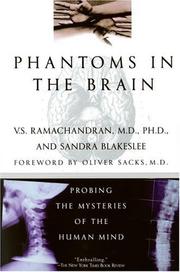
What patients with odd neurological disorders reveal about the brain and the self.
Recommended by: Tom Bilyeu
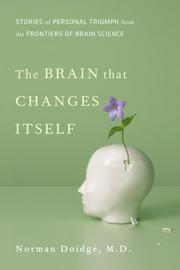
Scientists and patients who show that the brain can change its own structure.
Recommended by: Tom Bilyeu
Where it sits in the reference 5
As an Amazon Associate I earn from qualifying purchases.