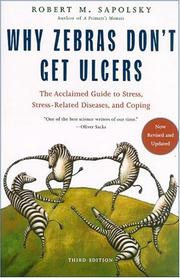
Why Zebras Don't Get Ulcers
Chronic stress and how it affects the quality of decisions.
Sapolsky on chronic stress and its effect on decision quality
Summary
The reference has not verified this book in detail; the summary states only what the title, author and subject establish.
Sapolsky explains how stress makes people ill. Most people do not lie awake fearing leprosy or malaria; the diseases that now afflict them, such as heart disease and cancer, come from the slow accumulation of damage. When people worry or feel stressed, their bodies switch on the same physiological responses as an animal's, but people do not resolve the conflict the way an animal does, by fighting or fleeing.
Over time this repeated activation of the stress response makes people sick. The third edition adds chapters on how stress affects sleep and addiction, new material on anxiety and personality disorders, and a discussion of how spirituality can help people manage stress.
Key takeaways 4
- Modern illnesses such as heart disease come largely from slowly accumulated damage.
- The human body responds to worry with the same stress response animals use for physical danger.
- Animals end the stress response by fighting or fleeing; people often keep it running.
- Chronic activation of the stress response causes disease.
Who should read it
Investors and executives under chronic pressure who want to understand what sustained stress does to the body and to judgement.
Who recommended it 2 · 2 direct
“Robert M. Sapolsky, Why Zebras Don’t Get Ulcers: Un Updated Guide to Stress, Stress-Related Disease, and Coping (New York: W.H. Freeman and Company, 1994)”
Similar books 6
Chosen by shared topics, the entries that hold them, and the people who recommended both.
The history and revival of psychedelic research, and the author's own trips.
“There's a good book Michael Pollan wrote recently called How to Change your Mind, and I think it is a brilliant book everybody should read.” — Naval Ravikant
Source: Naval's Recommended Reading — The Almanack of Naval Ravikant
Recommended by: Jim Collins, Vinod Khosla, Bill Gates and 8 others
What patients with odd neurological disorders reveal about the brain and the self.
Recommended by: Tom Bilyeu
Scientists and patients who show that the brain can change its own structure.
Recommended by: Tom Bilyeu
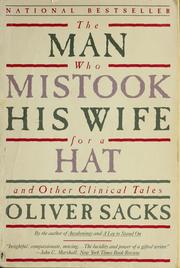
Case histories of patients with strange neurological disorders.
Recommended by: Eric Weinstein
A psychologist's thirty-year study of a man with almost limitless memory.
“Anyone who's interested in memory and mind and the vast differences between people might be interested in this, it's called The Mind of a Mnemonist, I think is how it's pronounced, like mnemonic device, M-N-E-M-O-N-I-S-T, a little book about a vast memory.” — Tim Ferriss
Recommended by: Tim Ferriss
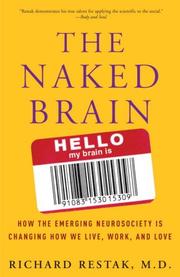
How brain science is changing the way we live, work and love.
Recommended by: Simon Sinek