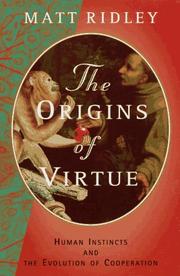
The Origins of Virtue
How cooperation and morality evolved from self-interest, via the prisoner's dilemma.
Cooperation as an evolved strategy; reciprocity and the prisoner's dilemma
Summary
Ridley argues that human cooperation and moral behaviour evolved from self-interest rather than despite it, and assembles the evidence from evolutionary biology, game theory and anthropology. The theoretical foundation is the prisoner's dilemma and the iterated version, in which Axelrod's tournaments found that tit for tat, meaning cooperate first and then copy the opponent's previous move, outperformed more complex strategies. Ridley uses this to argue that cooperation is stable where interactions repeat and defection can be detected and punished, which explains why humans cooperate with strangers under some conditions and not others.
He covers kin selection and Hamilton's rule; reciprocal altruism including the vampire bat blood-sharing evidence; the human capacity for detecting cheaters, which experimental work suggests is a specialised rather than general reasoning ability; the role of reputation as a mechanism that makes cooperation with strangers possible; and the specific human adaptations for division of labour and exchange, which he argues distinguish humans from other cooperative species.
His political conclusion is that trust and cooperation emerge from voluntary exchange and from local institutions, and that centralised state intervention frequently destroys the conditions that produce them. He supports this with Elinor Ostrom's work on common resource management, which found that communities regularly solve tragedy of the commons problems through local institutions without either privatisation or state control.
The political argument goes further than the biology supports, which is the standard criticism. The Ostrom material is used selectively, since her findings identify conditions under which local management works rather than establishing that it always does. The reciprocity and reputation material is well grounded.
Key takeaways 8
- Cooperation evolved from self-interest rather than despite it, which means moral behaviour requires no explanation outside evolutionary logic.
- Cooperation is stable where interactions repeat and defection can be detected and punished, and unstable where either condition fails.
- A strategy of cooperating first and then copying the opponent's previous move outperformed more complex approaches in repeated tournaments.
- Humans have a specialised capacity for detecting cheaters that operates better than their general logical reasoning on identical problems.
- Reputation makes cooperation with strangers possible, since it converts a single interaction into a repeated one from the participant's perspective.
- Division of labour and exchange with non-relatives are human adaptations that other cooperative species do not have.
- Communities regularly solve common resource problems through local institutions without either privatisation or state control.
- Ridley's political conclusion goes further than the biological evidence supports, which is the standard objection to the book.
Who should read it
Readers who want the evolutionary and game-theoretic account of cooperation, with the political conclusions treated as a separate argument.
About Matt Ridley
British science writer and member of the House of Lords, former chairman of Northern Rock, writing on evolution, genomics, trade and innovation.
The Rational Optimist argues that exchange and specialisation, not individual intelligence, drive rising living standards, and assembles the long-run price and productivity evidence behind the claim. How Innovation Works applies the same method to case histories, showing invention as incremental, collective and largely detached from formal research spending.
Who recommended it 3 · 3 direct
“I really highly, highly recommend picking up Genome, The Red Queen, Origins of Virtue, The Rational Optimist, and The Evolution of Everything.”
Similar books 6
Chosen by shared topics, the entries that hold them, and the people who recommended both.
Twenty-three chapters, one per chromosome, each using a gene to open a subject.
“I highly recommend Genome as well, to figure out the rational basis behind ethics and the origin of virtue.” — Naval Ravikant
Source: Nav.al — 'Matt Ridley: How Innovation Works, Part 2' (Naval's podcast, edited transcript)
Recommended by: Charlie Munger, Mohnish Pabrai and 2 others
Sex evolved as a defence against parasites, and that shapes human mating.
“I really highly, highly recommend picking up Genome, The Red Queen, Origins of Virtue, The Rational Optimist, and The Evolution of Everything.” — Naval Ravikant
Source: The Tim Ferriss Show — Naval Ravikant Q&A, full transcript
Recommended by: Mohnish Pabrai, Naval Ravikant, Seth Klarman and 1 other
Selection acts on genes; bodies are vehicles that genes build to copy themselves.
“About evolution and the theory of natural selection, proposing the idea that it's not creatures that are looking to replicate, but individual genes.” — Derek Sivers
Source: Derek Sivers book notes (primary, rated list) · Rating: 5/10
Recommended by: Balaji S. Srinivasan, Bob Metcalfe and 13 others
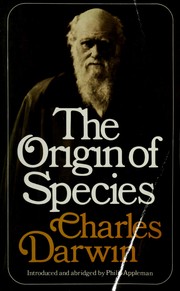
Species change over time as natural selection favours heritable variations.
“So begins paragraph three of “On the Origin of Species by Means of Natural Selection” by Charles Darwin, the bicentenary of whose birth falls this year.” — Nick Sleep
Source: Nomad Investment Partnership - Letters to Partners, complete collection 2001-2013, page 157
Recommended by: Jim Collins, Mohnish Pabrai, Naval Ravikant and 6 others
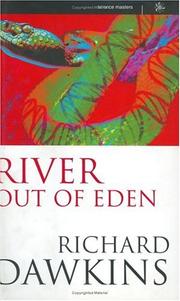
Genes as a river of digital information, and how life began and spreads.
“Biologist describes how evolution works, everything maximized for the gene’s survival. Includes related insights and analogies. I like his writing style.” — Derek Sivers
Source: Derek Sivers book notes (primary, rated list) · Rating: 6/10
Recommended by: Derek Sivers, Ray Dalio
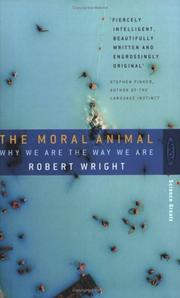
Evolutionary psychology explained through Darwin's own life and behaviour.
Recommended by: Mohnish Pabrai, Ryan Holiday, Morgan Housel and 2 others
Where it sits in the reference 3
Topics 4
As an Amazon Associate I earn from qualifying purchases.