Updates

  1. Person pages list letters, writing, profiles and links as sortable tables with filters, and show each person's companies as links; Fund letters show each letter's description in its own column.
  2. Experts show a checked job title and a short description of each person; 30 more people have photographs.
  3. Every company, fund, university and publication the experts work for has a page listing the people there.
  4. Fund letters show each letter's thesis and filter by it; 225 person pages list the essays, columns and newsletter issues the person wrote.
  5. Person pages list every essay and newsletter issue a person wrote, and their own books as a table in List view.
  6. Recommends shows the five largest kinds of book and the rest under More; browse pictures load sooner.
  7. Podcasts and talks link the original episode, filter by Audio and video or Press, and list each publisher once.
  8. Pages are wider, Recommends has List and Grid, and a filter clicked again turns off.
  9. Book cards sit in a ruled grid with Open Library and Goodreads links and each book's one-line note.
  10. Funds is now Investors; each investor's styles are buttons that filter the table.
  11. Podcasts and talks on a person's page filter by year and publisher and show as a list or a grid of pictures.
  12. Quotes show only people's own words: 472 summaries written by list sites are gone.
  13. Country pages open from Browse again, and every link on the shelf lands on a page.
  14. Subject and person pages show their sections as tabs, and each book appears once on a person's page.
  15. Book cards show the quote, who said it and the source; grids show five cards to a row.
  16. On a phone, a menu holds the sections, search, Updates, Feedback and dark mode.
  17. Feedback takes a screenshot of the page with no browser prompt, opens a screenshot full size when you click it, and clears itself once sent.
  18. Book cards are centred, search names the topic each book sits in, and any text cut short shows whole on hover.
  19. Search groups its results by kind: people, companies, geographies, subjects, topics, books, funds, fund letters and papers.
  20. The Books table lists who recommended each book by name, and the browser tab names the section you are in.
  21. Feedback can take a screenshot of the page, or one you paste or choose, and opens in the corner beside Updates.
  22. Each rail button reopens its section where you left it, and Browse, Table and People show on every book and subject page.
  23. Filters grey out choices that hold nothing instead of hiding them, and Books › People filters by authors or recommenders.
  24. Feedback takes a subject line and up to three screenshots.
  25. Biographies are grouped by the person they are about: 41 new pages, from Abraham Lincoln to Lee Kuan Yew.
  26. Sport splits into 23 sports, and Religion into one topic per faith.
  27. Book lists show as cards: the cover, one recommendation quote and every recommender by name.
  28. Seventeen subjects that had two or three pages under different names now have one page each.
  29. Every page lists its Experts as authors and recommenders, with a link to them on the Experts tab.
  30. Economics, Financial history, Financial panics and Accounting are subjects of their own, with one page per financial crisis.
  31. Book, person and subject pages open inside the app, so the tabs stay in view.
  32. 996 more book covers, and photographs or logos for 227 more people and companies.
  33. Books › Browse shows every subject as cards, and the rail holds Fund letters, Papers, Experts, Books and Funds.
  34. Every topic over 150 books splits into narrower topics, each with a page of its own.

Send feedback

What is it?
Screenshots, up to 3 (optional)
or paste one with Ctrl+V

We use your email only to reply to you.

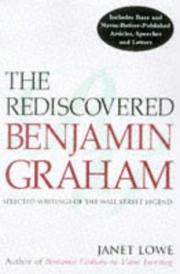
The Rediscovered Benjamin Graham: Selected W

The Rediscovered Benjamin Graham: Selected Writings of the Wall Street Legend

Janet Lowe
1999
T3 304 pages · about 5h 4m to read Open Librarygoodreads

Summary

Lowe assembled writings and talks by Benjamin Graham that were out of print or hard to find, including lectures, magazine articles, congressional testimony and interviews given late in his life. The material spans from the 1930s to the mid-1970s.

The collection is useful for three things. First, it shows Graham writing about subjects outside security analysis, including his commodity reserve currency proposal, his views on inflation, and his testimony to Congress on securities regulation. Second, it contains the late interviews in which Graham said that detailed security analysis was no longer worth the effort for most investors given how much the profession had grown, and that a simple set of mechanical rules on price to earnings and debt would serve as well. That position is often quoted and rarely read in context. Third, it includes autobiographical material about his early career, the losses of 1929 to 1932 and his teaching at Columbia.

Lowe provides connecting commentary and biographical framing.

The book is a compilation, so it has no argument of its own and the pieces vary in quality and relevance. Graham's original books, particularly Security Analysis and The Intelligent Investor, remain the primary sources, and his memoir covers the life. This collection matters mainly for the late-career revisions and for the non-investing writing, which is not available elsewhere in accessible form.

Key takeaways 7

  1. Graham concluded late in life that detailed individual security analysis was no longer worthwhile for most investors.
  2. He proposed that simple mechanical rules on price, earnings and debt would capture most of the available return.
  3. Graham advocated a commodity-backed reserve currency as a solution to both commodity price instability and monetary instability.
  4. His experience of 1929 to 1932 shaped the margin of safety concept more than any theoretical consideration.
  5. Graham supported securities regulation and testified in favour of disclosure requirements that the industry opposed.
  6. He argued that the growth of professional analysis reduced the returns available to analysis.
  7. Graham treated the distinction between investment and speculation as the foundational question, and defined it by the analysis behind the purchase rather than by the instrument.

Who should read it

Investors already familiar with Graham's main works who want his late revisions and his writing outside security analysis.

About Janet Lowe

American financial journalist and biographer of Charlie Munger, Benjamin Graham, Warren Buffett and Bill Miller.

Damn Right! is the standard full-length life of Charlie Munger, built from interviews with Munger, his family and his partners, and the Graham volumes put writings and lectures that had gone out of print back in circulation. The books supply the biographical record behind quotations that circulate everywhere else without sources.

Who recommended it 1 · 1 direct

Similar books 6

Chosen by shared topics, the entries that hold them, and the people who recommended both.
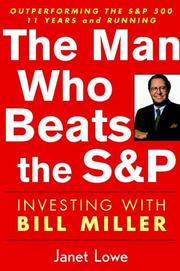
Janet Lowe · 1994

Part life, part method; based on interviews with his circle.

Recommended by: Mohnish Pabrai
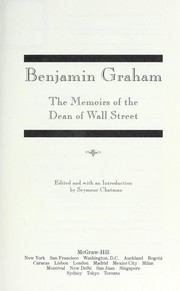
Benjamin Graham · 1996

Published posthumously; edited by Seymour Chatman.

Recommended by: Mohnish Pabrai
Benjamin Graham, David L. Dodd · 1934

How to read financial statements sceptically and value bonds and stocks.

“I've spent more time with all of the editions of Benjamin Graham and David Dodd's Security Analysis than with any other book” — Christopher Bloomstran

Source: Semper Augustus 2024 Letter to Clients, 'Books and Tunes for Walking', p. 95

Recommended by: Christopher Bloomstran, Howard Marks and 11 others
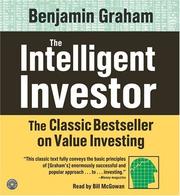
Benjamin Graham, Jason Zweig · 1949

Treat stocks as parts of businesses and buy only with a margin of safety.

“I have been accused of telling all my secrets. I have written a number of books, and I reveal them all in these books.” — Benjamin Graham

Source: Graham on revealing everything he knows in his books

Recommended by: Benjamin Graham, Christopher Bloomstran and 27 others

Where it sits in the reference 3

Journalists
Investment styles
Biographies

Topics

InvestingBiography and MemoirInvestors, Traders and Gamblers