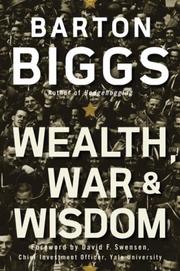
Wealth, War and Wisdom
Whether stock markets foresaw the turning points of the Second World War.
Summary
Barton Biggs spent his career at Morgan Stanley and wrote this after retiring to run a hedge fund. It combines two subjects: whether stock markets identified the turning points of the Second World War before contemporaries did, and how wealth was preserved or destroyed through the catastrophe.
The market argument is the more original. Biggs examines the major indices around the war's decisive moments and finds that they turned close to the actual inflection points: the British market bottomed around the time of Dunkirk and the Battle of Britain, the American market around the time of Midway, and the German market peaked around the point of maximum German advance. He treats this as evidence of collective wisdom in markets that no individual commentator displayed at the time. The evidence is suggestive rather than conclusive, and readers should note that the sample is small and the turning points were identified with hindsight.
The wealth preservation material is practical and grim. Biggs examines what happened to different asset classes and holdings across the countries involved: equities generally survived better than bonds, which were destroyed by inflation everywhere; property survived where it was not destroyed or confiscated; gold and jewellery held value but could be taken; foreign holdings survived if the owner reached them; and the people who fared best had diversified across countries and asset types in advance. He argues explicitly for holding assets in multiple jurisdictions and for owning a farm. The book is discursive and the two subjects sit awkwardly together, but the historical material on wealth destruction is not available in this form elsewhere.
Key takeaways 7
- Major stock markets turned close to the actual military inflection points of the Second World War, ahead of contemporary commentary.
- Biggs treats this as evidence of collective market wisdom that no individual observer displayed at the time.
- Bonds were destroyed by inflation in every country involved, while equities generally preserved some real value.
- Property survived where it was not physically destroyed or confiscated, which varied entirely by location.
- Gold and portable valuables held value and could be confiscated, which makes them useful only if the holder can move them.
- Holdings in multiple jurisdictions were what preserved wealth for the people who fared best.
- The market timing evidence rests on a small sample with turning points identified in hindsight.
Who should read it
Investors thinking about wealth preservation through political catastrophe, and anyone interested in whether markets aggregate information about events.
About Barton Biggs
Chief global strategist, Morgan Stanley 1973-2003; co-founder, Traxis Partners (1932-2012)
Thirty years of Morgan Stanley global strategy plus Hedgehogging, still the most candid insider account of how hedge fund managers actually behave.
Who recommended it 1
Similar books 6
Chosen by shared topics, the entries that hold them, and the people who recommended both.
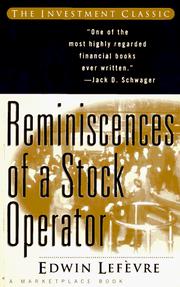
A speculator modelled on Jesse Livermore learns to read and trade the market.
“For a long time, I used to read Reminiscences of a Stock Operator almost every year.” — Bill Miller
Source: Bill Miller 2Q 2020 Market Letter
Recommended by: Barton Biggs, Bill Miller, Colm O'Shea and 7 others
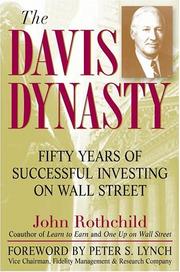
Three generations of Davises, who built a fortune from insurance stocks.
Recommended by: Mohnish Pabrai, Peter Bernstein and 2 others
A value investor's memoir from the 1950s to the dot-com crash, on market psychology.
Recommended by: Chris Mittleman, Li Lu
Why Wall Street grows rich on fees while its clients' results stay ordinary.
“First published in 1940, this is the funniest book ever written about investing - and one of the wisest. Schwed, a veteran of Wall Street who survived the Crash of 1929, knew exactly how the markets worked back then. Nothing has changed.” — Jason Zweig
Source: Best Books for Investors: A Short Shelf — jasonzweig.com
Recommended by: Jason Zweig, John C. Bogle, Mohnish Pabrai and 6 others
Short sketches of one hundred people who shaped American financial markets.
Recommended by: The Barefoot Investor
What markets looked like at the US stock bottoms of 1921, 1932, 1949 and 1982.
Where it sits in the reference 2
Topics 3
As an Amazon Associate I earn from qualifying purchases.