Updates

  1. Person pages list letters, writing, profiles and links as sortable tables with filters, and show each person's companies as links; Fund letters show each letter's description in its own column.
  2. Experts show a checked job title and a short description of each person; 30 more people have photographs.
  3. Every company, fund, university and publication the experts work for has a page listing the people there.
  4. Fund letters show each letter's thesis and filter by it; 225 person pages list the essays, columns and newsletter issues the person wrote.
  5. Person pages list every essay and newsletter issue a person wrote, and their own books as a table in List view.
  6. Recommends shows the five largest kinds of book and the rest under More; browse pictures load sooner.
  7. Podcasts and talks link the original episode, filter by Audio and video or Press, and list each publisher once.
  8. Pages are wider, Recommends has List and Grid, and a filter clicked again turns off.
  9. Book cards sit in a ruled grid with Open Library and Goodreads links and each book's one-line note.
  10. Funds is now Investors; each investor's styles are buttons that filter the table.
  11. Podcasts and talks on a person's page filter by year and publisher and show as a list or a grid of pictures.
  12. Quotes show only people's own words: 472 summaries written by list sites are gone.
  13. Country pages open from Browse again, and every link on the shelf lands on a page.
  14. Subject and person pages show their sections as tabs, and each book appears once on a person's page.
  15. Book cards show the quote, who said it and the source; grids show five cards to a row.
  16. On a phone, a menu holds the sections, search, Updates, Feedback and dark mode.
  17. Feedback takes a screenshot of the page with no browser prompt, opens a screenshot full size when you click it, and clears itself once sent.
  18. Book cards are centred, search names the topic each book sits in, and any text cut short shows whole on hover.
  19. Search groups its results by kind: people, companies, geographies, subjects, topics, books, funds, fund letters and papers.
  20. The Books table lists who recommended each book by name, and the browser tab names the section you are in.
  21. Feedback can take a screenshot of the page, or one you paste or choose, and opens in the corner beside Updates.
  22. Each rail button reopens its section where you left it, and Browse, Table and People show on every book and subject page.
  23. Filters grey out choices that hold nothing instead of hiding them, and Books › People filters by authors or recommenders.
  24. Feedback takes a subject line and up to three screenshots.
  25. Biographies are grouped by the person they are about: 41 new pages, from Abraham Lincoln to Lee Kuan Yew.
  26. Sport splits into 23 sports, and Religion into one topic per faith.
  27. Book lists show as cards: the cover, one recommendation quote and every recommender by name.
  28. Seventeen subjects that had two or three pages under different names now have one page each.
  29. Every page lists its Experts as authors and recommenders, with a link to them on the Experts tab.
  30. Economics, Financial history, Financial panics and Accounting are subjects of their own, with one page per financial crisis.
  31. Book, person and subject pages open inside the app, so the tabs stay in view.
  32. 996 more book covers, and photographs or logos for 227 more people and companies.
  33. Books › Browse shows every subject as cards, and the rail holds Fund letters, Papers, Experts, Books and Funds.
  34. Every topic over 150 books splits into narrower topics, each with a page of its own.

Send feedback

What is it?
Screenshots, up to 3 (optional)
or paste one with Ctrl+V

We use your email only to reply to you.

When Money Destroys Nations: How Hyperinflat

When Money Destroys Nations: How Hyperinflation Ruined Zimbabwe

Philip Haslam, Russell Lamberti
2014
T3 199 pages · about 3h 19m to read Open Librarygoodreads

First-hand accounts of trading, saving and pricing through the collapse; the modern companion to Fergusson.

Summary

Philip Haslam and Russell Lamberti wrote this account of the Zimbabwean hyperinflation, which peaked in 2008 and is among the most severe on record, based substantially on interviews with Zimbabweans who lived through it.

The economic account covers the sequence: the land seizures from 2000 that destroyed agricultural output and the export earnings it produced, the resulting fiscal deficit as revenue collapsed while spending did not, the central bank's financing of that deficit and of quasi-fiscal operations, the price controls that produced shortages, the successive currency redenominations, and the eventual abandonment of the currency in favour of the American dollar in 2009.

The first-hand material is the book's distinctive content. The interviews describe what people actually did: the speed at which wages became worthless, the substitution into foreign currency and into barter, the informal markets and the arbitrage between official and parallel exchange rates, the collapse of the banking system as deposits became worthless, the emigration, and the specific adaptations including holding goods rather than money. The authors write from an Austrian economics perspective and use the case to argue general propositions about monetary expansion, which readers should weigh, since Zimbabwe's circumstances included a productive collapse that most inflation episodes do not. The interview material is valuable regardless of the framing.

Key takeaways 7

  1. Zimbabwe's hyperinflation followed the destruction of agricultural output and the export revenue that had funded the state.
  2. Central bank financing of the deficit and of quasi-fiscal operations was the mechanism, and the fiscal collapse was the cause.
  3. Price controls produced shortages and drove transactions into parallel markets rather than restraining prices.
  4. Wages became worthless within days of payment, which forced immediate conversion into goods or foreign currency.
  5. The banking system collapsed as deposits lost value, which destroyed savings and the payment system together.
  6. Abandoning the currency in favour of the American dollar ended the inflation immediately, which shows the problem was monetary at the end.
  7. The authors write from an Austrian perspective and generalise from a case that included a productive collapse most inflations do not.

Who should read it

Readers wanting first-hand accounts of what people actually do during a hyperinflation, with the authors' theoretical framing weighed separately.

Similar books 6

Chosen by shared topics, the entries that hold them, and the people who recommended both.

Ben S. Bernanke · 2022

Insider account of the Fed from Burns through the QE era.

Charles P. Kindleberger · 1984

European finance from the Middle Ages on: money, banking, markets and public debt.
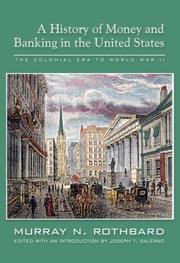
Murray N. Rothbard · 2002

US money from colonial paper to the Fed, read as bank-and-state booms and busts.

Allan H. Meltzer · 2003

The Fed from 1913 to 1951, told from its own minutes and internal memos.

Milton Friedman, Anna Jacobson Schwartz · 1963

The US money stock from 1867 to 1960, and how changes in it drove prices and income.

Where it sits in the reference 2

Geographies
Financial history

Topics

Financial HistoryEconomics