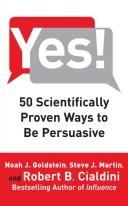
Yes!: 50 Scientifically Proven Ways to Be Persuasive
Fifty experimental findings on persuasion, and how to apply each.
Cialdini's persuasion research condensed into fifty applied findings
Summary
Goldstein, Martin and Cialdini present fifty short chapters, each describing a specific experimental finding about influence and its practical application. The structure follows Cialdini's six principles: reciprocity, scarcity, authority, consistency, liking and social proof.
The applied findings include that hotel towel reuse messages work better when they cite what other guests in the same room did than when they appeal to environmental values; that describing what most people do is persuasive while describing widespread undesirable behaviour normalises it and backfires; that a small gift given before a request produces compliance because of reciprocity; that making a commitment active, public and written increases follow-through; that adding a small cost or a minor drawback to a description increases credibility; that too many options reduce purchase rather than increase it; and that naming the specific person responsible increases compliance where a general appeal does not.
The book is practical, each chapter is two or three pages, and it is directly usable in marketing, fundraising, negotiation and management. The problems are significant. Many of the studies cited are small single experiments from the pre-replication-crisis social psychology literature, and several specific findings in this area, including some priming and social proof effects, have failed to replicate or shrunk substantially under better methods. Cialdini's core principles have held up better than the individual studies illustrating them. Read the principles as durable patterns and the fifty specific tactics as hypotheses to test in your own context rather than as established effects.
Key takeaways 7
- Describing what most people actually do changes behaviour more than appealing to values, and the closer the reference group is to the audience the stronger the effect.
- Publicising that an undesirable behaviour is common normalises it and increases it, which reverses the intent of most awareness campaigns.
- An unexpected gift given before a request creates an obligation that produces compliance independently of whether the gift was wanted.
- Commitments that are active, public and written are followed through far more often than commitments that are passive or private.
- Mentioning a minor drawback alongside a claim increases the credibility of the claim as a whole.
- Offering too many options reduces the rate at which people choose anything, so restricting choice can increase sales.
- Naming a specific person as responsible produces action where a request addressed to a group produces none, because diffusion of responsibility eliminates individual obligation.
Who should read it
Marketers, fundraisers and managers who want applicable influence tactics, treated as hypotheses to test given the replication problems in the underlying literature.
About Robert B. Cialdini
Regents' professor emeritus of psychology and marketing at Arizona State University who studies compliance and influence.
Influence organises the persuasion research into six principles - reciprocity, commitment and consistency, social proof, authority, liking, scarcity - each tested experimentally and observed in the field among salespeople, fundraisers and negotiators. Pre-Suasion adds the timing question: what an audience attends to immediately before a request changes how they answer it.
Who recommended it 2 · 1 direct
Similar books 6
Chosen by shared topics, the entries that hold them, and the people who recommended both.
Techniques for handling people, being liked and winning others to your view.
“If you want to learn what people want, read Dale Carnegie's How to Win Friends and Influence People.” — Paul Graham
Source: Why Smart People Have Bad Ideas
Recommended by: Mohnish Pabrai, Patrick Collison and 14 others
Where you direct attention just before a message shapes how it is received.
“An interesting look at a single topic: what someone encounters beforehand greatly affects the influence of what comes after. Priming.” — Derek Sivers
Source: Derek Sivers book notes (primary, rated list) · Rating: 6/10
Recommended by: Derek Sivers, Michael Mauboussin and 1 other
Six principles of compliance, from reciprocity to scarcity, and how sellers use them.
“…books I've recommended, highlighted to death, or forced on friends.” — Andrew Wilkinson
Source: Andrew Wilkinson's Bookshelf, neverenough.com
Recommended by: Andrew Wilkinson, Charlie Munger and 31 others
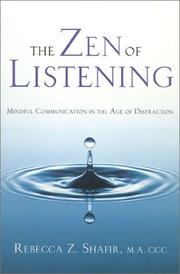
How to listen with full attention in an age of distraction.
Recommended by: Mohnish Pabrai
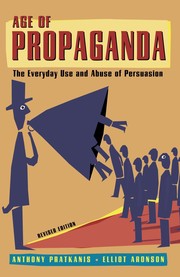
How persuasion and propaganda work through advertising, television and opinion.
Recommended by: Ramit Sethi, Tim Ferriss
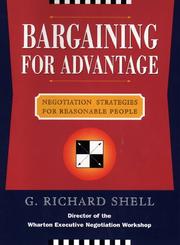
A step-by-step approach to business negotiation from Wharton's negotiation workshop.
Where it sits in the reference 2
Topics 3
As an Amazon Associate I earn from qualifying purchases.