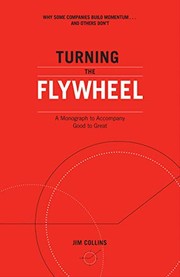
Turning the Flywheel
Monograph companion to Good to Great; not machine-verified.
Summary
Jim Collins expanded the flywheel concept from Good to Great into this short monograph. The idea is that durable organisational momentum comes from a set of activities arranged in a loop, where each step drives the next and the loop returns to reinforce the first.
Collins argues that the flywheel is specific to an organisation rather than generic, that it must be discovered from what has actually worked rather than designed in advance, and that identifying it correctly is the strategic question. He works through examples: Amazon's loop, in which lower prices draw customers, which draws sellers, which improves selection, which draws more customers, which produces scale, which lowers cost structure, which permits lower prices; Vanguard's, in which mutual ownership permits lower fees, which produces better returns, which builds client loyalty and assets, which lowers cost per unit further; and several others including Intel, Amgen and a school system.
His practical instruction is to identify the loop from the organisation's own history by listing what it has done that worked and what failed, then finding the sequence that connects the successes. He warns against doom loops, in which organisations react to disappointing results by changing direction repeatedly and never accumulate momentum. The monograph is short and the concept is genuinely useful for articulating a business model as a self-reinforcing sequence. Collins's method throughout his work, of selecting successful companies and identifying common features, has the selection problem that his critics have consistently raised.
Key takeaways 7
- Durable momentum comes from a set of activities arranged in a loop where each step drives the next and returns to reinforce the first.
- An organisation's flywheel is specific to it and must be discovered from what has actually worked rather than designed in advance.
- Amazon's loop connects lower prices, customer traffic, third-party sellers, selection, scale and cost structure back to lower prices.
- Vanguard's loop runs from mutual ownership through lower fees to better returns to asset growth and back to lower unit costs.
- Doom loops occur when organisations react to disappointing results by changing direction before momentum can accumulate.
- Identifying the loop correctly is the strategic question, since every subsequent decision either reinforces it or does not.
- Collins's method of selecting successful companies and finding common features carries the selection problem his critics identify.
Who should read it
Executives and founders who want a way to articulate their business model as a self-reinforcing sequence rather than as a list of initiatives.
About Jim Collins
Management researcher; Stanford Graduate School of Business faculty 1988-1995, since then an independent researcher running a management laboratory in Boulder, Colorado
Built to Last and Good to Great are the primary research sources the enduring-company literature builds on and argues with.
Where it sits in the reference 2
Similar books 6
Chosen by shared topics, the entries that hold them, and the people who recommended both.