Media and Entertainment

Hit-driven economics, library value and repeated technological resets; the ownership question is always who controls distribution.

35 books · 9 people behind it · 2 reading lists

Start here

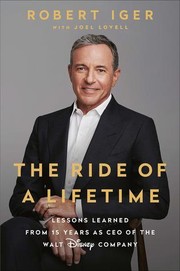
  1. The Ride of a LifetimeRobert Iger, 2019
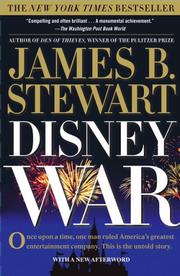
  2. DisneyWarJames B. Stewart, 2005
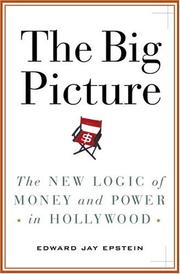
  3. The Big PictureEdward Jay Epstein, 2005

The people behind it 9

Each person holds a book in this entry or names it in their own tags.

Investors 1

WN
William N. Thorndike Jr.named in their tags

Founders 1

EC
Ed Catmull1 book here

Executives 1

EC
Ed Catmull1 book here

Academics 1

BG
Bruce Greenwaldnamed in their tags

Journalists 5

RG
Robert Greene1 book here
CA
Chris Andersonnamed in their tags
CB
Connie Brucknamed in their tags
WN
William N. Thorndike Jr.named in their tags
RH
Ryan Holidaynamed in their tags

Reading list — Essential Filmmaking reading list · Superbook

11 books, in the order the list argues for

The books on this list move from structure to execution. McKee and Snyder map the grammar of screen story from opposite ends of the tradition — McKee rigorously academic, Snyder brutally commercial — and the tension between their approaches is itself instructive. Mamet and Lumet then bring it to the floor: Mamet through a series of lectures that reduces directing to its irreducible logic, Lumet through the memoir of

Sources: Walter Murch on In the Blink of an Eye (Academy of Achievement) · Sidney Lumet: Making Movies (Random House) · Robert Rodriguez on Rebel Without a Crew (SXSW keynote transcript) · David Mamet's On Directing Film (Penguin)

Reading list — Essential Making music reading list · Superbook

11 books, in the order the list argues for

The books on this list were chosen to address music-making at three levels simultaneously: the scientific (how does sound actually work, and why does the brain respond to it the way it does), the philosophical (what does creative process mean when you're working with time-based art), and the practical (how do sessions run, how do records get made, how do you survive a career in music without burning out or selling ou

Sources: Rick Rubin on the Tim Ferriss Show (ep. 625, 2023) · Ableton: Making Music (free PDF) · Victor Wooten: Music as a Language (TED talk) · David Byrne: How Music Works (website)
Books 35

Katharine Graham · 1997 · Washington Post publisher's Pulitzer-winning memoir of running a company
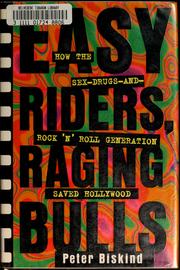
Peter Biskind · 1998 · How the 1970s directors' era gave way to the blockbuster system.
James B. Stewart · 2005 · The Eisner years and the boardroom fight that ended them.
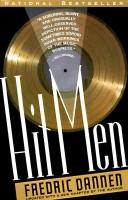
Fredric Dannen · 1990 · The record business, independent promotion and payola.
Edward Jay Epstein · 2005 · Where studio money actually comes from, line by line.
Michael Ovitz · 2018 · CAA's founder on building the agency that repriced Hollywood talent
James Andrew Miller · 2016 · Oral history of CAA and the agency model.
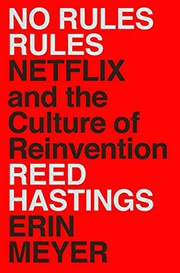
Reed Hastings, Erin Meyer · 2020 · Insider account of Netflix's culture by its co-founder.
Barry Diller · 2024 · Media executive's memoir spanning Paramount, Fox and IAC
William Goldman · Goldman wrote Butch Cassidy, All the President's Men, and The Princess Bride, and this book is his frank account of what it is actually like to write for Hollywood. His central claim — that nobody knows anything — is an important corrective to every book on this list that treats filmmaking as a solved problem.
Mason Currey · Mason Currey's portraits of how artists actually structure their days — Beethoven counting exactly sixty coffee beans, Glenn Gould's nocturnal sessions, Stravinsky's requirement for a daily constitutional before composing. More useful than it sounds: the book normalizes idiosyncratic work patterns and illustrates that there is no single formula for sustained creative output.
Kenny Werner · The jazz pianist Werner addresses the anxiety and self-judgment that freezes musicians at the moment of performance or creation. His meditation-inflected method for reaching a state of ease at the instrument is not mysticism — it is practical psychology applied to a real problem that many technically capable musicians never solve. Pairs directly with Wooten.
Steven Katz · The most visual book here: a systematic breakdown of how storyboards translate to coverage, how sequences are built from individual shots, and how the visual grammar of cinema works at the level of the individual setup. Best read with a film you know playing in the background.
David Byrne · Byrne argues that music is not created in a vacuum but is shaped by the spaces it's designed to fill — a cathedral's reverb, a club's noise floor, an iPod earbud. Part memoir, part cultural history, part production theory. The chapter on how CBGB's acoustics shaped Talking Heads's sound alone is worth the cover price.
Walter Murch · The best book on editing, and also a philosophy of attention. Murch's theory of the 'blink' — that cuts work because they mimic the rhythm of human thought — reframes editing not as a technical choice but as an act of empathy with the audience.
Sidney Lumet · Lumet worked for fifty years across every genre, budget, and format. This is his account of how a film actually comes together — from the first read of a script through the final mix — told with the specificity of someone who had solved each problem many times.
Dennis DeSantis · Where Rubin is intuitive, DeSantis is surgical. Originally published by Ableton, this is a structured taxonomy of creative blocks and how to break them — starting too late, finishing too early, overcomplicating arrangements. Aimed at electronic producers but the strategies transfer to any compositional context. The best practical companion to the more philosophical books on this list.
Robert Greene · Robert Greene's synthesis of mastery across domains applies directly to the musician's developmental arc: apprenticeship under someone further along, the creative-active phase of experimentation, and the intuitive mastery that eventually emerges. The profiles of Mozart and Coltrane anchor the abstract framework in musical specifics.
David Mamet · A short, combative transcript of Mamet's directing lectures at Columbia. His central argument — that the director's job is to find the simplest images that carry the story — cuts through most of what film school teaches and is worth disagreeing with as much as agreeing with.
Stephen King · King's memoir of craft applies as directly to screenwriting as to fiction. His argument that story comes before plot — that you discover what a story is about by following characters rather than outlining — sits in productive tension with the structural approaches of McKee and Snyder.
Greg Milner · A history of recorded sound from the cylinder to Pro Tools, told as a philosophical argument about whether recordings should capture reality or improve on it. Essential for anyone who has ever wrestled with whether a mix sounds 'too produced.' Milner traces how every era's answer to that question changed what musicians tried to do in the room.
Robert Rodriguez · The production diary of El Mariachi, made for $7,000. Rodriguez's account of using limitation as a forcing function has become a practical manual for low-budget filmmaking, but the deeper lesson is about the relationship between constraint and creative invention.
Blake Snyder · The most commercial book on this list, and the most widely used. Snyder's beat sheet is a blunt instrument, but understanding it is necessary — both to apply it and to understand what mainstream studio films are doing structurally, whether you intend to follow the template or subvert it.
Andrei Tarkovsky · Tarkovsky's account of his own filmmaking is genuinely difficult, but it offers a theory of the image — as a vessel of time rather than a carrier of information — that no other book on this list attempts. Reading it alongside Murch shows how differently two master editors can conceive of what a film is.
Robert McKee · The canonical architecture course for screen narrative. Dense and demanding, but the chapters on scene construction and subtext are the most practically useful pages written about how drama actually generates meaning from moment to moment.
Rick Rubin · Not a how-to book. Rubin's meditations on creativity are deliberately non-prescriptive — he is describing a posture toward work rather than a process. For musicians, the sections on surrender, on listening to the work rather than imposing on it, and on the difference between taste and judgment are particularly sharp. Best read slowly, one or two fragments at a time.
Joseph Mascelli · Camera angles, continuity, cutting, close-ups, composition — the five fundamentals that Mascelli lays out with methodical clarity. Technical rather than artistic, but these are the rules that underlie every visual choice; understanding them makes the more theoretical books legible.
Victor Wooten · A Socratic novel in which Wooten's mysterious teacher reframes every assumption a competent musician holds about what it means to practice, what it means to make a mistake, and what music is actually for. The central argument — that music is a language and you learn languages through immersion and play, not through drilling grammar — is liberating for trained musicians who have practiced themselves into rigidity.
Steven Pressfield · Pressfield's book on resistance applies with particular force to musicians, where the gap between technical facility and creative output is often enormous. The concept of 'turning pro' — treating creative work as a practice with professional discipline regardless of whether it pays — is the mental shift that separates hobbyists from people who actually finish records.
Daniel J. Levitin · The foundational science for any serious musician. Levitin explains what the auditory cortex actually does with rhythm, timbre, and expectation — why a note landing slightly behind the beat feels groovy rather than wrong, and why tension-resolution in harmony triggers the same neurochemistry as certain drugs. Knowing the mechanics does not kill the magic; it deepens it.
Bob Boilen · NPR's Tiny Desk founder interviews musicians across genres about the single song that made them want to make music — what they heard in it, what door it opened. Less a craft book than an emotional cartography of musical influence. Reading it after the more technical books reorients the whole project: the goal is to make something that does that to someone.