The Investor's Shelf — one person

Mark Zuckerberg

Co-founder and CEO of Meta

8 biographies about them · 61 books they recommend

Biographies about them 8

No straight biography exists; the literature is company-shaped, and the best books are reported histories of Facebook with Zuckerberg at the centre.
David Kirkpatrick · 2010 · Written with Zuckerberg's cooperation; the founding account.
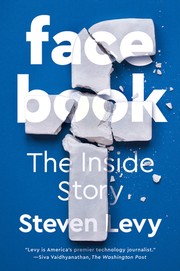
Steven Levy · 2020 · Long-access history through the Cambridge Analytica years.
Sarah Frier · 2020 · The Instagram acquisition and what Zuckerberg did to its founders.
Sheera Frenkel, Cecilia Kang · 2021 · Adversarial reporting on Zuckerberg and Sandberg's decisions.
Jeff Horwitz · 2023 · Built on the Facebook Files documents; the best-sourced critical account.
Sarah Wynn-Williams · 2025 · Insider memoir by a former Facebook policy director; Meta contested it.
Ben Mezrich · 2009 · Dramatised founding story; the basis for The Social Network.
Roger McNamee · 2019 · By an early mentor and investor who turned against the company.

Books they recommend 61

In January 2015, Zuckerberg announced a personal challenge: one new book every two weeks for the year, with each pick shared publicly on Facebook. He framed the project around a single question — how do people, institutions, and societies learn and change? — and stuck to it. The list moves from political science to behavioral economics to energy and China, subjects he said he wanted to understand better as Facebook expanded into new parts of the world. What holds the list together is an interest in systems thinking. The challenge drew enough attention that Facebook posts about each book generated hundreds of thousands of comments; Zuckerberg said the goal was to focus on in-depth learning from long-form material rather than the fragments that dominate social feeds.
A Year of Books, 2015 23

Politics and Government 3

General History 3

Yuval Noah Harari

Sociology and Culture 3

Michelle Alexander · not in an entry yet

Science 3

Economics 3

Daryl Collins, Jonathan Morduch, Stuart Rutherford, Orlanda Ruthven
Daron Acemoglu, James A. Robinson

Fiction 2

Iain M. Banks · not in an entry yet

Medicine and Biology 1

Eula Biss · not in an entry yet

Business and Management 1

Technology and Computing 1

Peter W. Huber · not in an entry yet

Environment and Energy 1

Religion and Spirituality 1

Company Histories 1

Book recommendations listed on their Good Books profile 23

Fiction 6

Cixin Liu · not in an entry yet aggregator only
Orson Scott Card · not in an entry yet aggregator only
Graham Moore · not in an entry yet aggregator only
Virgil · not in an entry yet aggregator only
Shel Silverstein · not in an entry yet aggregator only
Virgil · not in an entry yet aggregator only

Business and Management 2

Ed Catmull aggregator only

Biography of Scientists 2

Richard P. Feynman · not in an entry yet aggregator only
Walter Isaacson aggregator only

Science 2

Vaclav Smil · not in an entry yet aggregator only
Michio Kaku · not in an entry yet aggregator only

Biography and Memoir 2

Jay-Z · not in an entry yet aggregator only
Jon Meacham · not in an entry yet aggregator only

Politics and Government 2

Henry Kissinger aggregator only
Henry M. Paulson Jr., Michael K. Carroll aggregator only

Technology and Computing 2

James Gleick · not in an entry yet aggregator only
Peter Huber · not in an entry yet aggregator only

Sport 1

Andre Agassi · not in an entry yet aggregator only

Philosophy 1

Plato · not in an entry yet aggregator only

Company Histories 1

Jon Gertner aggregator only

General History 1

Ibn Khaldun aggregator only

Financial History 1

Niall Ferguson · not in an entry yet aggregator only

Superbook reading list 15

Not yet given a topic 3

Moisés Naím
“Zuckerberg's opening pick for the year and the book that set the list's tone. Naím argues that power in every domain — political, corporate, military — is becoming easier to acquire, harder to use, and easier to lose. Zuckerberg cited it as foundational for thinking about how large institutions stay relevant.”
Michelle Alexander · not in an entry yet
“Michelle Alexander's account of mass incarceration in the US as a system of racialized social control. Zuckerberg included it in a cluster of books about structural inequality — later that year he posted that it had changed how he thought about the US criminal justice system.”
Eula Biss · not in an entry yet
“A lyric essay examining the cultural and historical roots of vaccine anxiety. Zuckerberg posted it during a period of measles outbreaks linked to declining vaccination rates, and framed it as a book about how scientific consensus struggles against narrative and fear.”

General History 3

Steven Pinker
“Pinker's data-heavy argument that human violence has declined across centuries. Zuckerberg picked it to stress-test an optimistic view of human progress — the kind of long arc thinking he returns to repeatedly when discussing why connecting the world matters.”
Yuval Noah Harari · not in an entry yet
“Harari's sweep through 70,000 years of human history, focusing on how shared myths let large groups cooperate. Zuckerberg noted that understanding how social structures scale was directly relevant to what Facebook was trying to build.”
Ibn Khaldun
“A 14th-century introduction to world history that Zuckerberg described as 'an early look at what caused the rise and fall of civilizations.' Ibn Khaldun's theory of group solidarity (asabiyyah) as the engine of historical change is remarkably contemporary in its sociological framing.”

Economics 3

Matt Ridley · not in an entry yet
“Ridley's case that trade and exchange have been the primary engine of human improvement. Zuckerberg paired it with Pinker as a second pillar of his optimistic priors — not uncritical cheerleading but an empirical account of how specialization and exchange reduce poverty.”
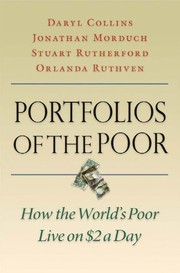
Daryl Collins, Jonathan Morduch, Stuart Rutherford, Orlanda Ruthven
“Researchers tracked the daily financial lives of families living on under two dollars a day across Bangladesh, India, and South Africa. Zuckerberg called it one of the most important books on understanding poverty — the data shows poor households manage money with sophisticated strategies under severe constraints.”
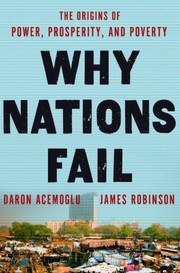
Daron Acemoglu, James A. Robinson · not in an entry yet
“Acemoglu and Robinson's argument that inclusive economic and political institutions — not geography, culture, or luck — determine whether countries prosper. One of several picks on the list about why good societal structures are hard to build and easy to undermine.”

Sociology and Culture 2

Sudhir Venkatesh
“A sociologist embeds with a Chicago housing-project gang for years and documents how informal economies work inside communities the formal economy has abandoned. Zuckerberg included it as a ground-level counterweight to the macro-level poverty books on the same list.”
Michael Chwe
“A short, dense book arguing that public rituals and ceremonies create 'common knowledge' — everyone knows that everyone knows something — which is what enables coordination. Zuckerberg described it as important for understanding why social platforms work at a fundamental level.”

Politics and Government 1

Henry M. Paulson Jr.
“The former Treasury Secretary's account of four decades of economic diplomacy with China, based on over a hundred trips and direct relationships with senior Chinese leaders. Zuckerberg was actively trying to enter the Chinese market at the time and cited the book as essential context.”

Company Histories 1

Ed Catmull, Amy Wallace · not in an entry yet
“Ed Catmull's account of building and sustaining Pixar's creative culture. The only pick explicitly about running a company, chosen for what Catmull learned about candor, trust, and preserving creativity after early success — problems Zuckerberg was thinking through as Facebook scaled past a billion users.”

Science 1

Thomas S. Kuhn
“Kuhn's argument that science advances through periodic paradigm shifts rather than smooth accumulation. Zuckerberg picked it for the meta-insight about how communities of experts resist new frameworks — relevant both to building new products and to understanding why incumbents struggle to adapt.”

Religion and Spirituality 1

William James · not in an entry yet
“William James's 1902 lectures on the psychology and phenomenology of religious experience, treating it empirically rather than theologically. Zuckerberg picked it as part of a thread on how people form deep beliefs and commitments — the same psychological substrate that makes social movements possible.”

Where they publish 6