
Andy Grove
Full-scale biography by a Harvard business historian.
Summary
Tedlow, a Harvard business historian, wrote a biography of Andrew Grove covering his survival of the Nazi occupation and the Soviet suppression in Hungary, his escape in 1956, his education in New York, his work at Fairchild, and his career at Intel from its founding through his chairmanship.
The management content is substantial. Tedlow covers Grove's construction of Intel's operating discipline, including the objectives and key results system, the confrontational meeting culture Grove called constructive confrontation, and the insistence on data over hierarchy. He covers the strategic inflection point concept and the decision it produced: Intel's exit from memory chips in 1985 despite memory being the business the company was founded on and still identified with, in favour of microprocessors. Grove's account of that decision, in which he asked what a new management brought in from outside would do and then did it, is the most cited management story of the period.
He also covers the Pentium floating point error in 1994, which Grove initially handled by disputing the significance of the defect and which became a case in how a technically correct position can be commercially disastrous, and the relationship with Microsoft.
Tedlow is admiring and had Grove's cooperation. The book is stronger on the personal history and the decisions than on Intel's competitive position or on the failures of Grove's later years. Grove's own High Output Management and Only the Paranoid Survive state his methods directly.
Key takeaways 7
- Intel exited memory chips in 1985 despite that being the business it was founded on, because the competitive position had deteriorated beyond recovery.
- Asking what a new management brought in from outside would do, and then doing it, is a method for escaping commitment to a position you built.
- A strategic inflection point is a change in an industry's fundamentals large enough that continuing the existing strategy guarantees failure.
- Constructive confrontation, meaning disagreement expressed directly and without regard to hierarchy, was the mechanism Grove used to get accurate information.
- Data rather than seniority should determine decisions, which requires a culture where a junior person can contradict a senior one with evidence.
- The Pentium floating point error demonstrated that a technically correct position about a defect's significance can be commercially disastrous.
- Grove's formation under Nazi occupation and Soviet rule shaped a management posture that treated survival as never assured.
Who should read it
Executives interested in strategic inflection points, exit decisions and confrontational management culture, with Grove's own books as the direct sources.
Who recommended it 2 · 1 direct
Similar books 6
Chosen by shared topics, the entries that hold them, and the people who recommended both.

A Jewish boy survives the war and Soviet rule in Hungary and escapes to America.
Recommended by: Ben Horowitz, Keith Rabois, Patrick Collison
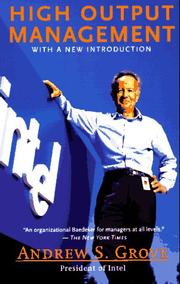
Management as production: a manager's output is the output of the team they lead.
Recommended by: Nat Eliason, Tim Ferriss, Andrew Chen and 24 others

How to spot a strategic inflection point, when a tenfold force changes a business.
“On my Top Ten List. Great Book. Grove was CEO of Intel.” — Mohnish Pabrai
Source: Mohnish's Bookshelf — Books on Entrepreneurship, Management and Leadership, entry 174
Recommended by: Charlie Munger, Mohnish Pabrai and 11 others
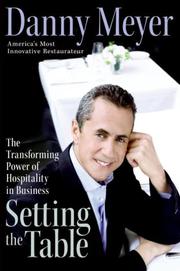
Enlightened hospitality: put employees first, then guests, community and investors.
Recommended by: Patrick Collison, Fred Wilson, Niki Scevak and 2 others

Where it sits in the reference 4
Topics