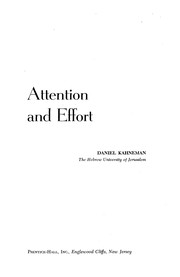
Attention and Effort
How the mind allocates its limited mental resources in attention and effort.
About Daniel Kahneman
Eugene Higgins Professor of Psychology Emeritus, Princeton University; Nobel laureate in economics 2002
Prospect theory and the heuristics-and-biases programme are the primary psychological foundation the whole of behavioral finance builds on.
Similar books 6
Chosen by shared topics, the entries that hold them, and the people who recommended both.

Papers on how people choose under risk, from prospect theory to framing.
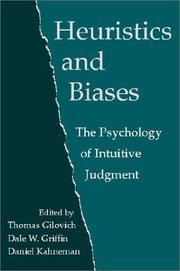
The research on intuitive judgement and its biases, collected.
“Paul Slovic, Melissa Finucane, Ellen Peters, and Donald G. MacGregor, “The Affect Heuristic,” in Heuristics and Biases: The Psychology of Intuitive Judgment, ed. Thomas Gilovich, Dale Griffin, and Daniel Kahneman (Cambridge: Cambridge University Press, 2002), 397-420” — Michael Mauboussin
Source: Interdisciplinary Perspectives on Risk, page 5
Recommended by: Michael Mauboussin
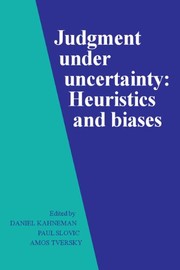
Thirty-five papers on judgmental heuristics and the biases they produce.
“Research regarding this problem was originally presented in Amos Tversky and Daniel Kahneman, “Evidential Impact of Base Rates,” in Daniel Kahneman, Paul Slovic, and Amos Tversky (eds.) Judgment under Uncertainty: Heuristics and Biases (Cambridge, UK: Cambridge University Press, 1982), 153-160” — Michael Mauboussin
Source: Cultivating Your Judgment Skills: A Framework for Improving the Quality of Decisions, page 13
Recommended by: Michael Mauboussin, Adam Robinson
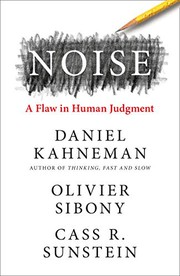
Unwanted variation in judgements that should match, and why organisations ignore it.
“Daniel Kahneman, Olivier Sibony, and Cass R. Sunstein, Noise: A Flaw in Human Judgment (New York: Little, Brown Spark, 2021), 156-158” — Michael Mauboussin
Source: The Impact of Intangibles on Base Rates, page 10
Recommended by: Michael Mauboussin
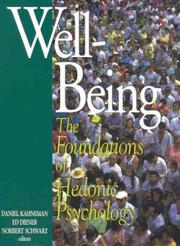
Leading researchers on the science of well-being and happiness.
Recommended by: Ray Dalio
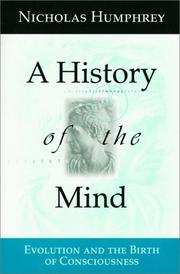
How consciousness and the senses evolved, and the history of the mind.
Recommended by: Mohnish Pabrai, Nassim Nicholas Taleb