Updates

  1. Person pages list letters, writing, profiles and links as sortable tables with filters, and show each person's companies as links; Fund letters show each letter's description in its own column.
  2. Experts show a checked job title and a short description of each person; 30 more people have photographs.
  3. Every company, fund, university and publication the experts work for has a page listing the people there.
  4. Fund letters show each letter's thesis and filter by it; 225 person pages list the essays, columns and newsletter issues the person wrote.
  5. Person pages list every essay and newsletter issue a person wrote, and their own books as a table in List view.
  6. Recommends shows the five largest kinds of book and the rest under More; browse pictures load sooner.
  7. Podcasts and talks link the original episode, filter by Audio and video or Press, and list each publisher once.
  8. Pages are wider, Recommends has List and Grid, and a filter clicked again turns off.
  9. Book cards sit in a ruled grid with Open Library and Goodreads links and each book's one-line note.
  10. Funds is now Investors; each investor's styles are buttons that filter the table.
  11. Podcasts and talks on a person's page filter by year and publisher and show as a list or a grid of pictures.
  12. Quotes show only people's own words: 472 summaries written by list sites are gone.
  13. Country pages open from Browse again, and every link on the shelf lands on a page.
  14. Subject and person pages show their sections as tabs, and each book appears once on a person's page.
  15. Book cards show the quote, who said it and the source; grids show five cards to a row.
  16. On a phone, a menu holds the sections, search, Updates, Feedback and dark mode.
  17. Feedback takes a screenshot of the page with no browser prompt, opens a screenshot full size when you click it, and clears itself once sent.
  18. Book cards are centred, search names the topic each book sits in, and any text cut short shows whole on hover.
  19. Search groups its results by kind: people, companies, geographies, subjects, topics, books, funds, fund letters and papers.
  20. The Books table lists who recommended each book by name, and the browser tab names the section you are in.
  21. Feedback can take a screenshot of the page, or one you paste or choose, and opens in the corner beside Updates.
  22. Each rail button reopens its section where you left it, and Browse, Table and People show on every book and subject page.
  23. Filters grey out choices that hold nothing instead of hiding them, and Books › People filters by authors or recommenders.
  24. Feedback takes a subject line and up to three screenshots.
  25. Biographies are grouped by the person they are about: 41 new pages, from Abraham Lincoln to Lee Kuan Yew.
  26. Sport splits into 23 sports, and Religion into one topic per faith.
  27. Book lists show as cards: the cover, one recommendation quote and every recommender by name.
  28. Seventeen subjects that had two or three pages under different names now have one page each.
  29. Every page lists its Experts as authors and recommenders, with a link to them on the Experts tab.
  30. Economics, Financial history, Financial panics and Accounting are subjects of their own, with one page per financial crisis.
  31. Book, person and subject pages open inside the app, so the tabs stay in view.
  32. 996 more book covers, and photographs or logos for 227 more people and companies.
  33. Books › Browse shows every subject as cards, and the rail holds Fund letters, Papers, Experts, Books and Funds.
  34. Every topic over 150 books splits into narrower topics, each with a page of its own.

Send feedback

What is it?
Screenshots, up to 3 (optional)
or paste one with Ctrl+V

We use your email only to reply to you.

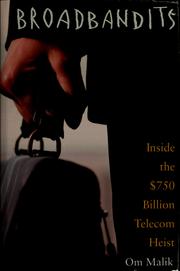
Broadbandits

Broadbandits

Om Malik
2003
T3 334 pages · about 5h 34m to read Open Librarygoodreads

The telecom capex bubble, with Ebbers and WorldCom at its centre.

Summary

Malik, a technology journalist, covers the telecommunications bubble of the late 1990s and its collapse, which destroyed several hundred billion dollars of capital and produced the largest bankruptcies of the period.

The central mechanism was a supply forecast that was wrong by orders of magnitude. The industry operated on a claim, repeated by executives and by government officials, that internet traffic was doubling every three months. That figure originated with WorldCom and was never verified. Actual traffic growth was substantial but far lower. On the strength of the forecast, carriers including Global Crossing, Level 3, Qwest, WorldCom and dozens of others raised enormous debt and laid fibre optic capacity across oceans and continents, most of which was never lit.

Malik covers the accounting that sustained it, particularly the capacity swap transactions in which carriers sold each other equivalent amounts of capacity and each booked the sale as revenue while capitalising the purchase, which inflated reported growth across the industry simultaneously. He covers the individual executives, the banking relationships, the analyst conflicts and the specific frauds that produced criminal convictions.

The book is contemporaneous journalism written shortly after the collapse and it is angry. It is not a technical account of the industry and the reference has not verified all its specific figures. Its value is as a documented case of an entire industry raising and destroying capital on a single unverified statistic, and of the accounting technique that made the resulting revenue growth appear real.

Key takeaways 7

  1. The industry's capital allocation rested on a claim that internet traffic was doubling every three months, which originated with WorldCom and was never verified.
  2. Actual traffic growth was substantial but far below the figure that justified the capacity built, and most fibre laid was never lit.
  3. Capacity swap transactions, in which carriers sold each other equivalent capacity and each booked revenue while capitalising the purchase, inflated reported growth industry-wide.
  4. An entire industry can raise and destroy capital on a single unverified statistic when no participant has an incentive to check it.
  5. Debt-financed infrastructure build-out is catastrophic when demand disappoints, because the fixed obligation remains while the revenue does not.
  6. Analysts and banks that earned fees from the financings supplied the research that justified them.
  7. The capacity built was eventually used, which means the physical investment was not wasted even though the capital that funded it was destroyed.

Who should read it

Investors in infrastructure and capital-intensive technology who want a documented case of industry-wide capital destruction from a single unchecked forecast.

Who recommended it 1 · 1 direct

Similar books 6

Chosen by shared topics, the entries that hold them, and the people who recommended both.
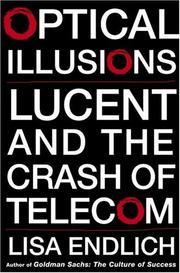
Lisa Endlich · 2004

How Lucent went from industry leader to junk credit rating in two years.

George Gilder · 2000

Bandwidth-abundance thesis; useful as a period document of the bubble.

Jon Gertner · 2012

How Bell Labs turned research into the transistor, the laser and information theory.

Tim Wu · 2010

Every US information industry moved from an open era to control by one firm.

Recommended by: Patrick Collison, Andrew Chen

Lynne W. Jeter · 2003

How deceit and betrayal inside WorldCom brought down a one-time telecom giant.

Cynthia Cooper · 2007

How WorldCom's internal audit chief uncovered its accounting fraud.

Where it sits in the reference 2

Companies
Industries

Topics

Company HistoriesTechnology and ComputingTech strategy and platform economics