Updates

  1. Person pages list letters, writing, profiles and links as sortable tables with filters, and show each person's companies as links; Fund letters show each letter's description in its own column.
  2. Experts show a checked job title and a short description of each person; 30 more people have photographs.
  3. Every company, fund, university and publication the experts work for has a page listing the people there.
  4. Fund letters show each letter's thesis and filter by it; 225 person pages list the essays, columns and newsletter issues the person wrote.
  5. Person pages list every essay and newsletter issue a person wrote, and their own books as a table in List view.
  6. Recommends shows the five largest kinds of book and the rest under More; browse pictures load sooner.
  7. Podcasts and talks link the original episode, filter by Audio and video or Press, and list each publisher once.
  8. Pages are wider, Recommends has List and Grid, and a filter clicked again turns off.
  9. Book cards sit in a ruled grid with Open Library and Goodreads links and each book's one-line note.
  10. Funds is now Investors; each investor's styles are buttons that filter the table.
  11. Podcasts and talks on a person's page filter by year and publisher and show as a list or a grid of pictures.
  12. Quotes show only people's own words: 472 summaries written by list sites are gone.
  13. Country pages open from Browse again, and every link on the shelf lands on a page.
  14. Subject and person pages show their sections as tabs, and each book appears once on a person's page.
  15. Book cards show the quote, who said it and the source; grids show five cards to a row.
  16. On a phone, a menu holds the sections, search, Updates, Feedback and dark mode.
  17. Feedback takes a screenshot of the page with no browser prompt, opens a screenshot full size when you click it, and clears itself once sent.
  18. Book cards are centred, search names the topic each book sits in, and any text cut short shows whole on hover.
  19. Search groups its results by kind: people, companies, geographies, subjects, topics, books, funds, fund letters and papers.
  20. The Books table lists who recommended each book by name, and the browser tab names the section you are in.
  21. Feedback can take a screenshot of the page, or one you paste or choose, and opens in the corner beside Updates.
  22. Each rail button reopens its section where you left it, and Browse, Table and People show on every book and subject page.
  23. Filters grey out choices that hold nothing instead of hiding them, and Books › People filters by authors or recommenders.
  24. Feedback takes a subject line and up to three screenshots.
  25. Biographies are grouped by the person they are about: 41 new pages, from Abraham Lincoln to Lee Kuan Yew.
  26. Sport splits into 23 sports, and Religion into one topic per faith.
  27. Book lists show as cards: the cover, one recommendation quote and every recommender by name.
  28. Seventeen subjects that had two or three pages under different names now have one page each.
  29. Every page lists its Experts as authors and recommenders, with a link to them on the Experts tab.
  30. Economics, Financial history, Financial panics and Accounting are subjects of their own, with one page per financial crisis.
  31. Book, person and subject pages open inside the app, so the tabs stay in view.
  32. 996 more book covers, and photographs or logos for 227 more people and companies.
  33. Books › Browse shows every subject as cards, and the rail holds Fund letters, Papers, Experts, Books and Funds.
  34. Every topic over 150 books splits into narrower topics, each with a page of its own.

Send feedback

What is it?
Screenshots, up to 3 (optional)
or paste one with Ctrl+V

We use your email only to reply to you.

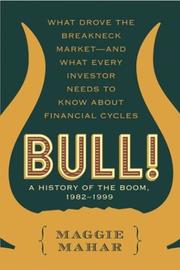
Bull! A History of the Boom, 1982-1999

Bull! A History of the Boom, 1982-1999

Maggie Mahar
2003
T2 512 pages · about 8h 32m to read Open Librarygoodreads

The seventeen-year bull market as one continuous argument.

Summary

Mahar, a financial journalist, wrote a history of the American bull market from its August 1982 beginning to the peak, working from contemporaneous sources and from interviews.

The narrative traces the changes that produced the market and the beliefs that sustained it. She covers the shift from defined benefit to defined contribution retirement plans, which put tens of millions of people into equities through payroll deduction and created a continuous flow of buying that was insensitive to price. She covers the growth of mutual funds and the marketing that accompanied it, the emergence of financial media as entertainment, the analysts whose compensation depended on investment banking, and the arrival of discount brokerage and then online trading.

The intellectual history is the more interesting part. Mahar traces the beliefs that became consensus: that stocks always outperform over the long run and therefore that time removes risk, which she shows rests on a misreading of the historical record; that price to earnings ratios could permanently reoccupy a higher range because of low inflation and improved productivity; that a new economy had changed the rules; and that any decline was a buying opportunity. She documents the small number of professionals who dissented and what happened to their careers and their assets under management.

Her general argument is that the bull market changed the way Americans understood investing, converting it from something done by professionals for the wealthy into a mass activity, and that the beliefs required to sustain participation were manufactured rather than discovered.

The book was published in 2003 after the collapse and is written with the outcome known, which shapes the selection. It is a history rather than an analysis and does not engage with the finance literature on valuation. The account of how professional dissent was punished by client withdrawals is the most useful part for practitioners.

Key takeaways 7

  1. The shift to defined contribution retirement plans created continuous equity buying insensitive to price.
  2. Belief that time removes equity risk rests on a misreading of the historical record and became consensus during this period.
  3. Financial media developed as entertainment, which changed what information reached investors and how it was framed.
  4. Analysts' compensation depended on investment banking revenue, which determined what their research said.
  5. Professionals who dissented from the consensus lost clients and assets, which is why dissent was rare rather than because it was absent.
  6. The belief that valuation multiples could permanently occupy a higher range was constructed to justify prices already reached.
  7. Investing became a mass activity during this period, and the beliefs required to sustain mass participation were manufactured.

Who should read it

Investors who want the documented history of how a market's supporting beliefs are constructed and what happens to professionals who dissent.

Who recommended it 1

Similar books 6

Chosen by shared topics, the entries that hold them, and the people who recommended both.

Robert J. Shiller · 2000

How psychology, not fundamentals, drove the stock and housing booms of 2000 and 2005.

John Cassidy · 2002

The internet stock bubble from Netscape's 1995 listing to the crash.

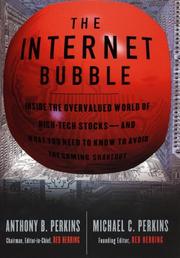
Anthony B. Perkins, Michael C. Perkins · 1999

Written before the crash, naming Yahoo among the overvalued.
Frank K. Martin · 2006

Client letters through the dot-com bubble; value discipline written contemporaneously

“What a unique opportunity to traverse the Bubble and post-Bubble years with Frank Martin, exactly as he described them to his clients in real time. Speculative Contagion is sure to enlighten…” — Seth Klarman

Source: Klarman on traversing the bubble years with Martin

Recommended by: Mohnish Pabrai, Seth Klarman, Warren Buffett

Where it sits in the reference 1

Financial panics

Topics

Financial HistoryInvesting