Updates

  1. Person pages list letters, writing, profiles and links as sortable tables with filters, and show each person's companies as links; Fund letters show each letter's description in its own column.
  2. Experts show a checked job title and a short description of each person; 30 more people have photographs.
  3. Every company, fund, university and publication the experts work for has a page listing the people there.
  4. Fund letters show each letter's thesis and filter by it; 225 person pages list the essays, columns and newsletter issues the person wrote.
  5. Person pages list every essay and newsletter issue a person wrote, and their own books as a table in List view.
  6. Recommends shows the five largest kinds of book and the rest under More; browse pictures load sooner.
  7. Podcasts and talks link the original episode, filter by Audio and video or Press, and list each publisher once.
  8. Pages are wider, Recommends has List and Grid, and a filter clicked again turns off.
  9. Book cards sit in a ruled grid with Open Library and Goodreads links and each book's one-line note.
  10. Funds is now Investors; each investor's styles are buttons that filter the table.
  11. Podcasts and talks on a person's page filter by year and publisher and show as a list or a grid of pictures.
  12. Quotes show only people's own words: 472 summaries written by list sites are gone.
  13. Country pages open from Browse again, and every link on the shelf lands on a page.
  14. Subject and person pages show their sections as tabs, and each book appears once on a person's page.
  15. Book cards show the quote, who said it and the source; grids show five cards to a row.
  16. On a phone, a menu holds the sections, search, Updates, Feedback and dark mode.
  17. Feedback takes a screenshot of the page with no browser prompt, opens a screenshot full size when you click it, and clears itself once sent.
  18. Book cards are centred, search names the topic each book sits in, and any text cut short shows whole on hover.
  19. Search groups its results by kind: people, companies, geographies, subjects, topics, books, funds, fund letters and papers.
  20. The Books table lists who recommended each book by name, and the browser tab names the section you are in.
  21. Feedback can take a screenshot of the page, or one you paste or choose, and opens in the corner beside Updates.
  22. Each rail button reopens its section where you left it, and Browse, Table and People show on every book and subject page.
  23. Filters grey out choices that hold nothing instead of hiding them, and Books › People filters by authors or recommenders.
  24. Feedback takes a subject line and up to three screenshots.
  25. Biographies are grouped by the person they are about: 41 new pages, from Abraham Lincoln to Lee Kuan Yew.
  26. Sport splits into 23 sports, and Religion into one topic per faith.
  27. Book lists show as cards: the cover, one recommendation quote and every recommender by name.
  28. Seventeen subjects that had two or three pages under different names now have one page each.
  29. Every page lists its Experts as authors and recommenders, with a link to them on the Experts tab.
  30. Economics, Financial history, Financial panics and Accounting are subjects of their own, with one page per financial crisis.
  31. Book, person and subject pages open inside the app, so the tabs stay in view.
  32. 996 more book covers, and photographs or logos for 227 more people and companies.
  33. Books › Browse shows every subject as cards, and the rail holds Fund letters, Papers, Experts, Books and Funds.
  34. Every topic over 150 books splits into narrower topics, each with a page of its own.

Send feedback

What is it?
Screenshots, up to 3 (optional)
or paste one with Ctrl+V

We use your email only to reply to you.

Irrational Exuberance

Irrational Exuberance

Robert J. Shiller
2000
T1 312 pages · about 5h 12m to read Open Librarygoodreads

Third edition 2015 added a bond-market chapter.

Summary

Shiller published the first edition in 2000, timed almost exactly to the technology peak, and argued that stock prices were driven by psychological and structural factors rather than by fundamentals. The second edition in 2005 added housing and warned about that market before its collapse. Shiller received the Nobel Prize in economics in 2013.

His empirical foundation is the cyclically adjusted price to earnings ratio, which averages inflation-adjusted earnings over ten years to remove cycle effects, and which he shows has been a useful indicator of long-run subsequent returns while providing no timing information. His earlier work on excess volatility showed that stock prices move far more than the present value of subsequent dividends could justify, which is the finding that established his position against efficient markets.

His explanatory framework covers structural factors including the growth of defined contribution retirement plans, the expansion of financial media, and the reduction in trading costs; cultural factors including the amplification of narratives; and psychological factors including anchoring, overconfidence and herding. He also addresses the feedback loop mechanism, in which price increases generate the stories that justify further increases, which is his account of how a bubble sustains itself without any participant behaving irrationally in isolation.

The book is academic in register and the data chapters require attention. Shiller is explicit that the indicator cannot time anything, which many readers ignore, and the ratio has remained elevated for long periods without producing the reversion the framework implies. His housing warning was correct and unusually early. Later editions add material on the 2008 crisis and on bond markets.

Key takeaways 8

  1. Stock prices move far more than the present value of subsequent dividends can justify, which is the excess volatility finding.
  2. The cyclically adjusted price to earnings ratio predicts long-run subsequent returns while providing no information about timing.
  3. Price increases generate the narratives that justify further increases, which is the feedback mechanism sustaining a bubble.
  4. Structural changes including defined contribution plans, financial media expansion and lower trading costs increased retail participation and amplified price movements.
  5. Housing was in a bubble by 2005, which Shiller stated publicly and documented with the long-run real price series he constructed.
  6. Real house prices had been roughly flat over a century before the run-up, which undermines the belief that housing appreciates reliably.
  7. Bubbles do not require any participant to behave irrationally in isolation, since following the trend can be individually rational.
  8. An elevated valuation indicator can remain elevated for many years, which makes it useless for anyone whose horizon is shorter than a decade.

Who should read it

Investors who want the empirical case against efficient markets and the long-run valuation data, with the timing limitations understood.

About Robert J. Shiller

Sterling Professor of Economics Emeritus, Yale University; co-creator of the Case-Shiller home price indices; Nobel laureate in economics 2013

Excess-volatility work and Irrational Exuberance are the primary sources for the empirical case that asset prices move far more than fundamentals justify.

Yale University

Who recommended it 3 · 1 direct

Similar books 6

Chosen by shared topics, the entries that hold them, and the people who recommended both.
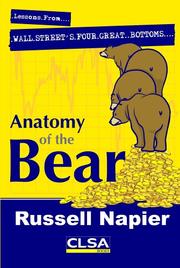
Russell Napier · 2005

What markets looked like at the US stock bottoms of 1921, 1932, 1949 and 1982.
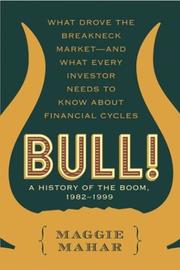
Maggie Mahar · 2003

The US bull market from August 1982 to its 1999 peak, and what changed in it.

Recommended by: Warren Buffett

Edward Chancellor · 1999

Speculation from ancient Rome and tulip mania to the 1990s, and its recurring traits.

Vitaliy N. Katsenelson · 2007

Katsenelson on buying and selling inside range-bound markets.
Adam Butler, Michael Philbrick, Rodrigo Gordillo · 2015

Rule-based momentum and volatility allocation, tested rather than asserted.

Where it sits in the reference 4

Academics
Portfolio & risk
Mental models
Financial panics

Topics

InvestingFinancial History