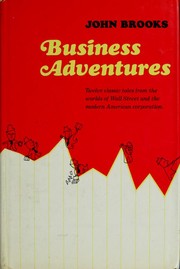
Business Adventures
Twelve New Yorker case studies; the reason Buffett lent it to Gates.
Summary
Brooks wrote these twelve pieces for the New Yorker between 1959 and 1969, and they were collected in 1969. Buffett gave his copy to Bill Gates, who has called it the best business book he has read, which is why an obscure collection returned to print in 2014.
The pieces cover the Ford Edsel's failure despite extensive market research; the 1962 market flash crash and the mechanics that produced it; the Texas Gulf Sulphur insider trading case, which established modern disclosure law; the attempted corner of Piggly Wiggly stock; Xerox's rise and the problem of what a successful company owes the public; the 1964 Wall Street rescue of Ira Haupt and Company after the salad oil scandal; the sterling defence of 1964; David Lilienthal's move from public service to business; the enforcement of employee non-compete and trade secret law through the Wohlgemuth case; the federal income tax's structure and history; and a piece on communication failure inside General Electric during a price-fixing prosecution, in which executives claimed that instructions were understood to mean their opposite.
Brooks writes about the human behaviour inside institutions rather than about strategy, and the pieces work because he reports what specific people did and said. The Edsel piece is the best case study of market research failing to predict a product's reception.
The cases are from the 1950s and 1960s and the institutional detail is obsolete. Readers looking for frameworks will find none. The value is Brooks's demonstration that the recurring problems, including communication failure, misplaced confidence in research, and the gap between stated and understood instructions, have not changed.
Key takeaways 8
- The Edsel failed despite extensive market research, because the research measured stated preferences that did not predict purchase behaviour.
- Market panics are produced by mechanical features of trading, including reporting delays that left participants acting on stale prices during the 1962 crash.
- The Texas Gulf Sulphur case established that insiders may not trade on material information before it is disclosed, which created modern disclosure practice.
- Corners in a stock can succeed technically and destroy the person who executes them, which the Piggly Wiggly episode demonstrates.
- Wall Street firms organised a private rescue of a failing member firm in 1963 to prevent a loss of confidence in the exchange itself.
- Executives at General Electric claimed that written instructions to comply with the law were understood to mean the opposite, which the book treats as a genuine communication failure rather than only as a defence.
- Non-compete and trade secret enforcement turns on whether a person can be prevented from using knowledge they carry in their head, which the Wohlgemuth case tested.
- Central bank defence of a currency, as with sterling in 1964, can succeed temporarily while leaving the underlying position unchanged.
Who should read it
Readers who want reported case studies of institutional behaviour and failure, with the understanding that the value is in the patterns rather than the details.
About John Brooks
Staff writer at The New Yorker who reported on Wall Street and corporate life for three decades; died in 1993.
Business Adventures collects twelve reported case studies - the Edsel launch, the 1962 market break, the Texas Gulf Sulphur insider-trading case - that show how judgment failed inside real firms rather than in theory. Once in Golconda and The Go-Go Years narrate the 1920s boom and the 1960s conglomerate mania from the participants' side, at the level of individual decisions.
Who recommended it 4 · 2 direct
“Business Adventures remains the best business book I've ever read.”
Similar books 6
Chosen by shared topics, the entries that hold them, and the people who recommended both.
Recommended by: Mohnish Pabrai
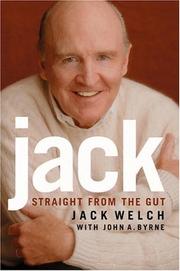
Running General Electric from 1981 to 2001, as told on retiring.
Recommended by: Mohnish Pabrai, Jamie Dimon, Warren Buffett
The decentralised structure and financial controls that ran General Motors.
Recommended by: Mohnish Pabrai, Patrick Collison and 1 other
Recommended by: Mohnish Pabrai
Recommended by: Mohnish Pabrai

Recommended by: Mohnish Pabrai
Where it sits in the reference 5
Topics