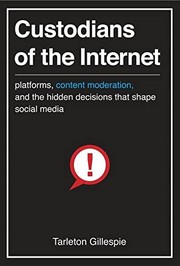
Custodians of the Internet
Why content moderation is central to what social media platforms are.
Summary
Gillespie argues that content moderation, the work of deciding what users may post, is central to what social media platforms are, and that it receives too little public scrutiny. Users want their Twitter feeds, Facebook pages and YouTube comments free of harassment and pornography, and platforms face fake news and livestreamed violence. But the same tools that curb trolling, ban hate speech and remove pornography can also silence speech people need to hear.
The book surveys how platforms moderate and explains the rationales for how, when and why their policies are enforced. Gillespie shows that these decisions shape social norms and have consequences for public discourse and cultural production. He bases the account on interviews with content moderators, creators and users. It appeared in 2018.
Key takeaways 4
- Moderation is a core part of what a platform offers, not a side function.
- Tools that remove harmful content also remove speech of value, so every moderation rule has costs.
- Platform moderation decisions set social norms while escaping public scrutiny.
- The reasons platforms give for enforcing their rules explain much of how they behave.
Who should read it
Readers who want to understand how social media companies decide what stays online and why those decisions matter for public life.
Who recommended it 1
Similar books 6
Chosen by shared topics, the entries that hold them, and the people who recommended both.
How right-wing extremists used social media to move into American politics.
Recommended by: Kara Swisher
Bandwidth, multimedia, virtual reality and the internet, explained without hype.
“Technology is transforming society as the computer moves from a business tool to a home appliance, and as the effects and implications of Being Digital, as Nicholas Negroponte’s new book has it, come to be instantiated.” — Bill Miller
Source: 1995 Q2 Market Commentary
Recommended by: Bill Miller, Mohnish Pabrai
Twenty essays on the observation that software is eating the world.
Recommended by: David Perell, Patrick O'Shaughnessy
What the data people leave online reveal about human nature.
Recommended by: Mohnish Pabrai
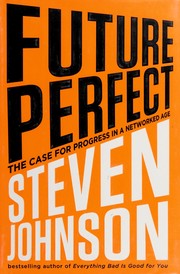
How networked thinking can transform government, research and the arts.
Recommended by: Patrick Collison, Ev Williams