Updates

  1. Person pages list letters, writing, profiles and links as sortable tables with filters, and show each person's companies as links; Fund letters show each letter's description in its own column.
  2. Experts show a checked job title and a short description of each person; 30 more people have photographs.
  3. Every company, fund, university and publication the experts work for has a page listing the people there.
  4. Fund letters show each letter's thesis and filter by it; 225 person pages list the essays, columns and newsletter issues the person wrote.
  5. Person pages list every essay and newsletter issue a person wrote, and their own books as a table in List view.
  6. Recommends shows the five largest kinds of book and the rest under More; browse pictures load sooner.
  7. Podcasts and talks link the original episode, filter by Audio and video or Press, and list each publisher once.
  8. Pages are wider, Recommends has List and Grid, and a filter clicked again turns off.
  9. Book cards sit in a ruled grid with Open Library and Goodreads links and each book's one-line note.
  10. Funds is now Investors; each investor's styles are buttons that filter the table.
  11. Podcasts and talks on a person's page filter by year and publisher and show as a list or a grid of pictures.
  12. Quotes show only people's own words: 472 summaries written by list sites are gone.
  13. Country pages open from Browse again, and every link on the shelf lands on a page.
  14. Subject and person pages show their sections as tabs, and each book appears once on a person's page.
  15. Book cards show the quote, who said it and the source; grids show five cards to a row.
  16. On a phone, a menu holds the sections, search, Updates, Feedback and dark mode.
  17. Feedback takes a screenshot of the page with no browser prompt, opens a screenshot full size when you click it, and clears itself once sent.
  18. Book cards are centred, search names the topic each book sits in, and any text cut short shows whole on hover.
  19. Search groups its results by kind: people, companies, geographies, subjects, topics, books, funds, fund letters and papers.
  20. The Books table lists who recommended each book by name, and the browser tab names the section you are in.
  21. Feedback can take a screenshot of the page, or one you paste or choose, and opens in the corner beside Updates.
  22. Each rail button reopens its section where you left it, and Browse, Table and People show on every book and subject page.
  23. Filters grey out choices that hold nothing instead of hiding them, and Books › People filters by authors or recommenders.
  24. Feedback takes a subject line and up to three screenshots.
  25. Biographies are grouped by the person they are about: 41 new pages, from Abraham Lincoln to Lee Kuan Yew.
  26. Sport splits into 23 sports, and Religion into one topic per faith.
  27. Book lists show as cards: the cover, one recommendation quote and every recommender by name.
  28. Seventeen subjects that had two or three pages under different names now have one page each.
  29. Every page lists its Experts as authors and recommenders, with a link to them on the Experts tab.
  30. Economics, Financial history, Financial panics and Accounting are subjects of their own, with one page per financial crisis.
  31. Book, person and subject pages open inside the app, so the tabs stay in view.
  32. 996 more book covers, and photographs or logos for 227 more people and companies.
  33. Books › Browse shows every subject as cards, and the rail holds Fund letters, Papers, Experts, Books and Funds.
  34. Every topic over 150 books splits into narrower topics, each with a page of its own.

Send feedback

What is it?
Screenshots, up to 3 (optional)
or paste one with Ctrl+V

We use your email only to reply to you.

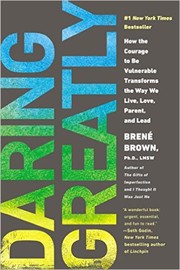
Daring Greatly

Daring Greatly

Brene Brown
2012
T4 251 pages · about 4h 11m to read Open Librarygoodreads

Summary

Brown is a research professor who spent years on qualitative studies of shame, vulnerability and connection, and this book states her argument that vulnerability, defined as uncertainty, risk and emotional exposure, is the precondition for creativity, innovation, trust and belonging rather than a weakness to be eliminated.

She distinguishes shame from guilt, holding that guilt concerns behaviour and motivates repair while shame concerns identity and produces withdrawal, aggression or concealment. Her research finds shame present in almost every organisational failure she examined and argues that a culture using shame as a management tool cannot produce the risk-taking it says it wants.

She identifies what she calls the vulnerability armour: foreboding joy, where people rehearse disaster during good moments; perfectionism, which she distinguishes from healthy striving as a way of avoiding judgment; and numbing, which she argues cannot be selective, so numbing pain also numbs positive feeling. The organisational material covers what she calls disengagement as the primary cost of shame-based cultures, the argument that feedback requires the giver to sit alongside the receiver rather than opposite them, and the distinction between fitting in and belonging.

The research is qualitative, based on coded interviews rather than on experiments, which means the findings are descriptive categories rather than tested causal claims. Brown writes in a personal register that many business readers dislike, and the book mixes research reporting with memoir. The distinction between shame and guilt is the most useful element for managers, along with the argument that a culture punishing failure at the identity level will not produce the experimentation it demands.

Key takeaways 8

  1. Vulnerability, meaning uncertainty, risk and emotional exposure, is the precondition for creativity and trust rather than a weakness.
  2. Shame concerns identity and produces withdrawal or aggression, while guilt concerns behaviour and motivates repair, which makes them different management tools with opposite effects.
  3. An organisation that uses shame as a management mechanism cannot obtain the risk-taking and innovation it says it wants.
  4. Perfectionism functions as protection against judgment rather than as a pursuit of excellence, and it prevents completion and shipping.
  5. Numbing cannot be selective, so suppressing difficult emotions also suppresses the capacity for satisfaction and connection.
  6. Rehearsing disaster during good moments, which Brown calls foreboding joy, is a common defence that removes the benefit of the good moment.
  7. Feedback works when the giver sits alongside the receiver facing the problem, rather than opposite them evaluating the person.
  8. Fitting in requires changing yourself to be accepted while belonging does not, and organisations frequently claim the second while requiring the first.

Who should read it

Leaders who want to understand why their teams conceal problems and avoid risk, prepared for qualitative research and a personal register.

Who recommended it 7 · 1 direct

Brené Brownreported
Chase Jarvisreported
Mel Robbinsreported
Tom Bilyeureported

Similar books 6

Chosen by shared topics, the entries that hold them, and the people who recommended both.
Carol S. Dweck · 2006

People who think ability grows with effort learn more than those who think it fixed.

“One of the reasons I loved Mindset is because it's solutions-oriented.” — Bill Gates

Source: Gates Notes review of Mindset

Recommended by: Bill Gates, Mohnish Pabrai, Alex and Books and 13 others

Adam Grant · 2013

Givers, takers and matchers, and why givers end up both at the bottom and the top.

Where it sits in the reference 2

Business themes
Business themes

Topics

Psychology and BehaviourLeadershipMental health, trauma and therapy