Updates

  1. Person pages list letters, writing, profiles and links as sortable tables with filters, and show each person's companies as links; Fund letters show each letter's description in its own column.
  2. Experts show a checked job title and a short description of each person; 30 more people have photographs.
  3. Every company, fund, university and publication the experts work for has a page listing the people there.
  4. Fund letters show each letter's thesis and filter by it; 225 person pages list the essays, columns and newsletter issues the person wrote.
  5. Person pages list every essay and newsletter issue a person wrote, and their own books as a table in List view.
  6. Recommends shows the five largest kinds of book and the rest under More; browse pictures load sooner.
  7. Podcasts and talks link the original episode, filter by Audio and video or Press, and list each publisher once.
  8. Pages are wider, Recommends has List and Grid, and a filter clicked again turns off.
  9. Book cards sit in a ruled grid with Open Library and Goodreads links and each book's one-line note.
  10. Funds is now Investors; each investor's styles are buttons that filter the table.
  11. Podcasts and talks on a person's page filter by year and publisher and show as a list or a grid of pictures.
  12. Quotes show only people's own words: 472 summaries written by list sites are gone.
  13. Country pages open from Browse again, and every link on the shelf lands on a page.
  14. Subject and person pages show their sections as tabs, and each book appears once on a person's page.
  15. Book cards show the quote, who said it and the source; grids show five cards to a row.
  16. On a phone, a menu holds the sections, search, Updates, Feedback and dark mode.
  17. Feedback takes a screenshot of the page with no browser prompt, opens a screenshot full size when you click it, and clears itself once sent.
  18. Book cards are centred, search names the topic each book sits in, and any text cut short shows whole on hover.
  19. Search groups its results by kind: people, companies, geographies, subjects, topics, books, funds, fund letters and papers.
  20. The Books table lists who recommended each book by name, and the browser tab names the section you are in.
  21. Feedback can take a screenshot of the page, or one you paste or choose, and opens in the corner beside Updates.
  22. Each rail button reopens its section where you left it, and Browse, Table and People show on every book and subject page.
  23. Filters grey out choices that hold nothing instead of hiding them, and Books › People filters by authors or recommenders.
  24. Feedback takes a subject line and up to three screenshots.
  25. Biographies are grouped by the person they are about: 41 new pages, from Abraham Lincoln to Lee Kuan Yew.
  26. Sport splits into 23 sports, and Religion into one topic per faith.
  27. Book lists show as cards: the cover, one recommendation quote and every recommender by name.
  28. Seventeen subjects that had two or three pages under different names now have one page each.
  29. Every page lists its Experts as authors and recommenders, with a link to them on the Experts tab.
  30. Economics, Financial history, Financial panics and Accounting are subjects of their own, with one page per financial crisis.
  31. Book, person and subject pages open inside the app, so the tabs stay in view.
  32. 996 more book covers, and photographs or logos for 227 more people and companies.
  33. Books › Browse shows every subject as cards, and the rail holds Fund letters, Papers, Experts, Books and Funds.
  34. Every topic over 150 books splits into narrower topics, each with a page of its own.

Send feedback

What is it?
Screenshots, up to 3 (optional)
or paste one with Ctrl+V

We use your email only to reply to you.

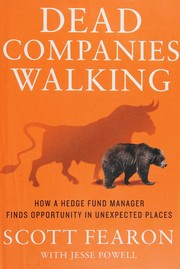
Dead Companies Walking

Dead Companies Walking

Scott Fearon, Jesse Powell
2015
T3 256 pages · about 4h 16m to read Open Librarygoodreads

A short seller on the recurring patterns of managerial self-delusion.

Summary

Fearon has run a fund that both buys stocks and sells them short for decades, and wrote this from the short side of his book. He estimates that he has visited hundreds of companies that subsequently went bankrupt.

The organising content is his catalogue of the errors that precede failure. Management learns from the past but not from the present, applying a formula that worked in earlier conditions to conditions that have changed. Management relies too heavily on a formula, meaning a single approach applied everywhere regardless of fit. Management misreads or alienates its customers. Management falls victim to a mania, entering a sector or a technology because everyone else is. Management fails to adapt to shifts in the industry. Management is physically or emotionally removed from the company's operations, which he treats as literal: he pays attention to where executives are, how they travel and whether they are present.

His method is company visits. Fearon argues that meeting management in person supplies information that filings do not, particularly about whether executives understand their own business and whether they are hearing bad news. He looks for optimism unsupported by numbers, for reluctance to discuss specifics, and for offices and behaviour disproportionate to the business.

He is also direct about the difficulty of short selling: the losses are unbounded, being right too early is indistinguishable from being wrong, and the position grows as it moves against you.

The book is anecdotal and Fearon does not present his record in verifiable form. The catalogue of management errors is useful precisely because it is behavioural rather than financial, and it complements the accounting-based approaches in Staley and Mulford, both of which are in this reference.

Key takeaways 7

  1. Management that learned a formula in earlier conditions applies it after those conditions have changed, which is the most common route to failure.
  2. Executives who are physically and emotionally removed from operations stop receiving the information that would let them respond.
  3. Entering a sector because everyone else is doing so is a recurring pattern in companies that subsequently fail.
  4. Meeting management in person supplies information about whether they understand their business that filings cannot convey.
  5. Optimism unsupported by numbers, and reluctance to discuss specifics, are behavioural signals worth acting on.
  6. Companies alienate their existing customers while pursuing new ones, and the existing customers are where the revenue is.
  7. Being right too early on a short position is indistinguishable from being wrong for as long as the position must be financed.

Who should read it

Investors and analysts who want a behavioural catalogue of pre-failure management patterns to complement accounting-based screens.

Similar books 6

Chosen by shared topics, the entries that hold them, and the people who recommended both.

Edward Chancellor · 2015

Returns follow the supply of capital: invest where it is leaving an industry.

Recommended by: Patrick O'Shaughnessy

Christine S. Richard · 2010

Bill Ackman's six-year campaign against bond insurer MBIA, from 2002 to 2008.

Recommended by: Andrew Wilkinson, Bill Ackman

Stuart C. Gilson · 2001

Harvard case studies in bankruptcy and workout situations.
David Einhorn · 2008

A six-year short of Allied Capital, and the SEC that investigated the short seller.

Edwin Lefevre · 1923

A speculator modelled on Jesse Livermore learns to read and trade the market.

“The finest trading book ever written is Reminiscences of a Stock Operator by Edwin LeFevre. It is colloquial reminiscences by a legendary speculator of the mistakes and lessons he learned over a…” — Barton Biggs

Source: Biggs calling it the finest trading book ever written

Recommended by: Barton Biggs, Bill Miller, Colm O'Shea and 5 others

Richard C. Sauer · 2010

A former SEC lawyer on naked shorting and the fights around it.

Recommended by: Mohnish Pabrai

Where it sits in the reference 2

Investment styles
Investment styles

Topics

Investing