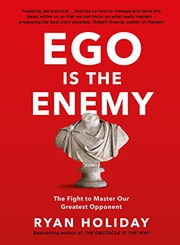
Ego Is the Enemy
Summary
Holiday organises the book into three stages, aspiration, success and failure, and argues that ego damages a person differently at each. During aspiration, ego produces talk instead of work, the desire to be recognised as good rather than to become good, and impatience with the apprentice period. During success, it produces entitlement, the belief that past results guarantee future ones, and the loss of the learning posture that produced the success. During failure, it produces blame, refusal to accept responsibility, and the inability to start again.
The material draws on Stoic sources, particularly Marcus Aurelius, Seneca and Epictetus, and on historical cases including William Tecumseh Sherman, George Marshall, Katharine Graham, Bill Walsh, Howard Hughes and Genghis Khan. Holiday's concept of the canvas strategy, meaning finding ways to make the people above you look better without seeking credit, comes from his own early career and is the most practical section.
Other arguments include that talking about a goal produces the psychological reward of having achieved it and reduces the likelihood of doing the work, that a person should remain a student permanently, that passion is overrated compared to purpose and realism, and that success should be measured against your own standards rather than against others.
The book is a collection of anecdotes selected to fit the thesis, and the historical readings are simplified to make the point. Holiday writes quickly and repeats himself across his books. There is no evidence beyond the cases. The chapters on the aspiration stage are the sharpest, particularly the argument that describing plans substitutes for executing them.
Key takeaways 8
- Talking about a goal delivers part of the psychological reward of achieving it, which reduces the likelihood that the work gets done.
- Wanting to be recognised as good and wanting to become good are different objectives, and pursuing the first prevents the second.
- Early in a career, making the people above you more effective without seeking credit builds relationships and capability that direct self-promotion does not.
- Success removes the learning posture that produced it, because a person who has been right stops testing whether they still are.
- Attaching your identity to your results makes failure unsurvivable, since there is nothing left when the results stop.
- Passion is a poor substitute for purpose combined with realism, and enthusiasm frequently produces action without direction.
- Blaming circumstances after failure removes the only mechanism available for recovering from it.
- The standard against which a person measures themselves should be their own, because a standard set by comparison to others transfers control of your judgment to them.
Who should read it
Founders and operators at any of the three stages who want a Stoic-derived argument against self-regard, treating the historical cases as illustration rather than evidence.
About Ryan Holiday
Author and media strategist; former director of marketing at American Apparel and owner of the Painted Porch bookshop in Texas.
The Obstacle Is the Way and Ego Is the Enemy convert Stoic practice - separating what is controllable from what is not, treating recognition as a threat to judgment - into working habits for people running companies, which is why the books circulate so widely among founders. Trust Me, I'm Lying and Growth Hacker Marketing document how online media incentives can be manipulated, written by someone who did it professionally.
Who recommended it 7 · 3 direct
Similar books 6
Chosen by shared topics, the entries that hold them, and the people who recommended both.
Recommended by: Cal Newport, Jordan Hughes
Recommended by: Alex Lieberman, Matej Latin
Recommended by: Ryan Holiday, James Altucher, Jordan Hughes and 3 others
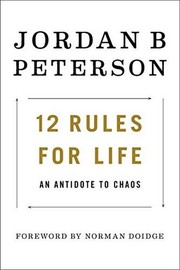
Twelve rules for living, each drawn from clinical practice, biology and myth.
Recommended by: Nat Eliason, Alex and Books, Ana Fabrega and 7 others
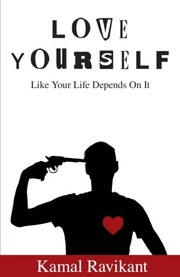
Recommended by: Nat Eliason, Naval Ravikant, Garry Tan and 1 other
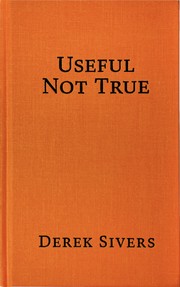
“Derek is one of my favorite writers, and his latest book is focused on a simple idea: our beliefs are often not necessarily true, but simply useful to us. That beliefs are tools, not truths.” — Andrew Wilkinson
Source: Newsletter
Recommended by: Andrew Wilkinson
Where it sits in the reference 1
Topics