Updates

  1. Person pages list letters, writing, profiles and links as sortable tables with filters, and show each person's companies as links; Fund letters show each letter's description in its own column.
  2. Experts show a checked job title and a short description of each person; 30 more people have photographs.
  3. Every company, fund, university and publication the experts work for has a page listing the people there.
  4. Fund letters show each letter's thesis and filter by it; 225 person pages list the essays, columns and newsletter issues the person wrote.
  5. Person pages list every essay and newsletter issue a person wrote, and their own books as a table in List view.
  6. Recommends shows the five largest kinds of book and the rest under More; browse pictures load sooner.
  7. Podcasts and talks link the original episode, filter by Audio and video or Press, and list each publisher once.
  8. Pages are wider, Recommends has List and Grid, and a filter clicked again turns off.
  9. Book cards sit in a ruled grid with Open Library and Goodreads links and each book's one-line note.
  10. Funds is now Investors; each investor's styles are buttons that filter the table.
  11. Podcasts and talks on a person's page filter by year and publisher and show as a list or a grid of pictures.
  12. Quotes show only people's own words: 472 summaries written by list sites are gone.
  13. Country pages open from Browse again, and every link on the shelf lands on a page.
  14. Subject and person pages show their sections as tabs, and each book appears once on a person's page.
  15. Book cards show the quote, who said it and the source; grids show five cards to a row.
  16. On a phone, a menu holds the sections, search, Updates, Feedback and dark mode.
  17. Feedback takes a screenshot of the page with no browser prompt, opens a screenshot full size when you click it, and clears itself once sent.
  18. Book cards are centred, search names the topic each book sits in, and any text cut short shows whole on hover.
  19. Search groups its results by kind: people, companies, geographies, subjects, topics, books, funds, fund letters and papers.
  20. The Books table lists who recommended each book by name, and the browser tab names the section you are in.
  21. Feedback can take a screenshot of the page, or one you paste or choose, and opens in the corner beside Updates.
  22. Each rail button reopens its section where you left it, and Browse, Table and People show on every book and subject page.
  23. Filters grey out choices that hold nothing instead of hiding them, and Books › People filters by authors or recommenders.
  24. Feedback takes a subject line and up to three screenshots.
  25. Biographies are grouped by the person they are about: 41 new pages, from Abraham Lincoln to Lee Kuan Yew.
  26. Sport splits into 23 sports, and Religion into one topic per faith.
  27. Book lists show as cards: the cover, one recommendation quote and every recommender by name.
  28. Seventeen subjects that had two or three pages under different names now have one page each.
  29. Every page lists its Experts as authors and recommenders, with a link to them on the Experts tab.
  30. Economics, Financial history, Financial panics and Accounting are subjects of their own, with one page per financial crisis.
  31. Book, person and subject pages open inside the app, so the tabs stay in view.
  32. 996 more book covers, and photographs or logos for 227 more people and companies.
  33. Books › Browse shows every subject as cards, and the rail holds Fund letters, Papers, Experts, Books and Funds.
  34. Every topic over 150 books splits into narrower topics, each with a page of its own.

Send feedback

What is it?
Screenshots, up to 3 (optional)
or paste one with Ctrl+V

We use your email only to reply to you.

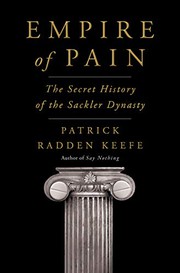
Empire of Pain: The Secret History of the Sa

Empire of Pain: The Secret History of the Sackler Dynasty

Patrick Radden Keefe
2021
T1 720 pages · about 12h to read Open Librarygoodreads

The definitive account of the family, the company and the marketing.

Summary

Keefe, a New Yorker writer, wrote a three-generation history of the Sackler family and of Purdue Pharma, working from litigation documents, depositions and interviews, with the family and the company declining to cooperate.

The first generation is Arthur Sackler, a psychiatrist who built the modern pharmaceutical marketing industry. Keefe documents his innovations: advertising prescription drugs to physicians through medical journals he also controlled, funding research that supported the products he marketed, using apparently independent medical experts as promoters, and the Valium campaign that made it the most prescribed drug in the world. These methods, developed in the 1950s and 1960s, are the direct ancestors of what Purdue later did.

The central narrative is OxyContin. Purdue launched it in 1996 with a marketing campaign asserting that the extended-release formulation made addiction rare, a claim resting on a single sentence in a letter to a medical journal that had no supporting study. The company funded pain societies and continuing medical education that promoted aggressive opioid prescribing, deployed a large sales force with volume-based incentives, and targeted high-prescribing physicians. Keefe documents that the company had internal evidence of abuse and diversion early and continued.

The legal history covers the 2007 guilty plea by the company and three executives to misbranding, the fine paid without individual imprisonment, the subsequent continuation of the same practices, the litigation by states and municipalities, the bankruptcy filing used to resolve claims, and the settlement structure that protected family members who had not filed for bankruptcy themselves.

Keefe writes with a clear position and the family disputes his account. The documentary basis is extensive. The book is the standard account of how a marketing campaign produced a public health catastrophe and of how the legal system handled it.

Key takeaways 7

  1. Arthur Sackler built the modern pharmaceutical marketing industry by advertising to physicians through journals he also controlled.
  2. Funding apparently independent medical experts and research to support a marketed product was established practice decades before OxyContin.
  3. Purdue's claim that extended release made addiction rare rested on a single unsupported sentence in a letter to a medical journal.
  4. Funding pain societies and continuing medical education shifted prescribing norms across the profession rather than persuading individual doctors.
  5. Sales incentives based on prescription volume directed effort toward the highest-prescribing physicians.
  6. The 2007 guilty plea produced fines without individual imprisonment, and the practices continued afterward.
  7. Bankruptcy was used to resolve claims in a structure that protected family members who had not themselves filed.

Who should read it

Operators and investors in regulated industries who want a documented case of how marketing, professional influence and legal strategy combined to produce and then manage a catastrophe.

Similar books 6

Chosen by shared topics, the entries that hold them, and the people who recommended both.

Gerald Posner · 2020

The US drug industry from patent medicines to the opioid epidemic and the Sacklers.

Scott Higham, Sari Horwitz · 2022

The drug distributors behind the opioid epidemic and the lawsuits against them.

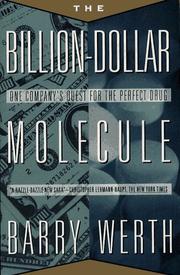
Barry Werth · 1994

Vertex from the inside; the classic account of drug discovery economics.

Recommended by: Laura Deming

Siddhartha Mukherjee · 2010

A biography of cancer, by a physician and oncologist.

Where it sits in the reference 2

Companies
Industries

Topics

Company HistoriesGeneral HistoryMedicine and BiologyEconomic and Business HistoryDoctors, drugs and health care