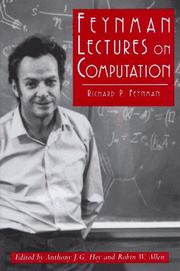
Feynman Lectures on Computation
A physicist's lectures on what computing machines can and cannot do.
Summary
From 1983 to 1986 Richard Feynman taught a course at Caltech called "Potentialities and Limitations of Computing Machines". The lectures, published in 1996, give his own overview of standard and less standard topics in computer science: computability, Turing machines (which he called "Mr. Turing's machines"), information theory and Shannon's theorem, reversible computation, the thermodynamics of computation, the quantum limits of computation and the physics of VLSI devices. Together they explore the fundamental limits of digital computers.
The publisher notes that most of the material has not dated. Feynman's approach to learning runs through the course: he urges students to play with concepts and work problems out themselves before looking up the answers. In his words, "If you keep proving stuff that others have done, getting confidence, increasing the complexities of your solutions - for the fun of it - then one day you'll turn around and discover that nobody actually did that one! And that's the way to become a computer scientist."
Key takeaways 4
- Feynman treats computing as a physical process with physical limits.
- The lectures cover Turing machines, information theory, reversible computation and quantum limits.
- The thermodynamics of computation sets bounds on what machines can do.
- Work problems out for yourself before looking up the answer.
Who should read it
Students of physics and computer science who want Feynman's view of the foundations and limits of computing.
Who recommended it 1 · 1 direct
Similar books 6
Chosen by shared topics, the entries that hold them, and the people who recommended both.
Quantum algorithms, teleportation, cryptography and error correction, from basics.
Recommended by: Patrick Collison
Lessons on doing science and engineering, and on thinking about their future.
Recommended by: Bret Victor, Patrick Collison, Keith Rabois
How very simple programs produce complexity, and what that explains in nature.
Recommended by: Mohnish Pabrai, Steve Jurvetson
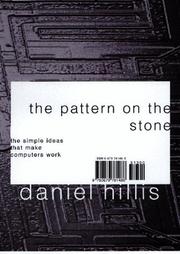
How computers work, from basic logic to programming languages, in plain terms.
Recommended by: Stewart Brand
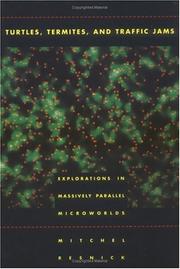
Computer tools that help people, even children, explore how complex systems work.
“The first challenge to the centralized mindset comes from a delightful book by MIT Professor Mitchel Resnick, “Turtles, Termites, and Traffic Jams.” — Michael Mauboussin
Source: The Invisible Lead Steer: New Answers to Old Questions About the Stock Market, page 3
Recommended by: Michael Mauboussin
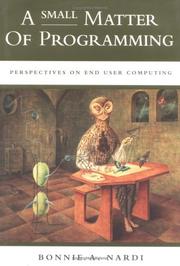
How non-programmers write their own software: end-user computing.
Recommended by: Patrick Collison