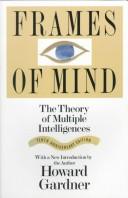
Frames of Mind
The theory of multiple intelligences.
Summary
Howard Gardner published Frames of Mind: The Theory of Multiple Intelligences in 1983, and later editions carry a new introduction by the author. It argues that human intelligence is not one general ability but several distinct modalities, such as linguistic, logical-mathematical, musical and spatial intelligence, most of which standard tests and teaching methods neglect. Gardner defined intelligence as "a biopsychological potential to process information that can be activated in a cultural setting to solve problems or create products".
From the late 1970s Gardner surveyed several disciplines and cultures worldwide to find the skills essential to human development and culture. He tested each candidate ability against eight criteria that had to be met before it could count as an intelligence, and required the intelligences to be relatively independent of one another. He was one of the early theorists to link brain systems directly to intelligence, at a time when cognitive neuroscience barely existed. The theory became popular with educators, who designed teaching to suit different strengths, but psychologists criticised it: they argue that calling these abilities intelligences stretches the term, and much research supports a single general factor of intelligence.
Key takeaways 4
- Gardner proposes several distinct intelligences instead of one general ability.
- Each candidate intelligence had to meet eight criteria drawn from many disciplines.
- Standard tests measure only a narrow part of human ability.
- The theory changed teaching practice but remains disputed among psychologists.
Who should read it
Teachers, parents and psychology readers interested in how intelligence is defined and measured.
Who recommended it 1
Similar books 6
Chosen by shared topics, the entries that hold them, and the people who recommended both.
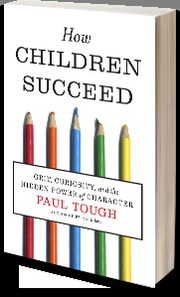
Why character, grit and curiosity matter more to children's success than test scores.
Recommended by: Mohnish Pabrai, Bill Gates
What research shows about how people learn, against common study habits.
Recommended by: Nat Eliason
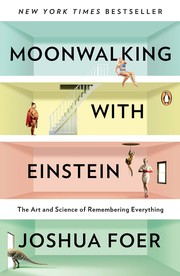
A journalist learns memory techniques and wins the US Memory Championship.
“For those fascinated with memory. Riveting page-turner about a journalist (with no particularly good memory) who went to cover a memory championship event. Intrigued and befriending some competitors, he starts practicing, and a year later wins the U.S. memory championship event himself. Inspiring dive into the subject of memorization.” — Derek Sivers
Source: Derek Sivers book notes (primary, rated list) · Rating: 8/10
Recommended by: Bill Gates, Derek Sivers, Mohnish Pabrai and 5 others
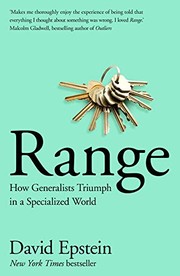
Early specialisation works only where rules are stable; elsewhere breadth wins.
“In the book Range: Why Generalists Triumph in a Specialist World2, author David Epstein argues that many fields have gone so overboard with specialization that generalists are now the more valuable problem solvers.” — Bill Nygren
Source: Bill Nygren Market Commentary | 2Q19
Recommended by: Bill Gates, Bill Nygren, Michael Mauboussin and 12 others
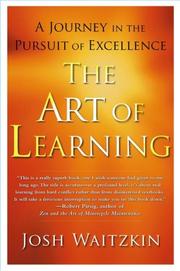
What a chess prodigy turned tai chi champion learned about learning itself.
“Chess master becomes Tai Chi master, realizes his real genius is learning, and shares his insights and stories.” — Derek Sivers
Source: Derek Sivers book notes (primary, rated list) · Rating: 7/10
Recommended by: David Perell, Derek Sivers, Nat Eliason and 6 others
Recommended by: Patrick Collison