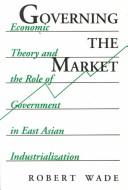
Governing the Market
The canonical study of Taiwanese industrial policy and state-led investment.
Summary
Wade, a development economist, wrote this study of Taiwan's industrialisation and produced the most rigorous statement of the case that East Asian growth was directed rather than market-driven.
His analytical contribution is the governed market theory, which he positions against two alternatives. The free market account holds that these economies grew because they got prices right and opened to trade. The simulated free market account, which the World Bank adopted, holds that intervention worked only where it approximated market outcomes. Wade argues both are wrong: the Taiwanese state deliberately set prices different from what markets would have produced, directed investment toward industries it selected, and achieved growth because of this rather than despite it.
The evidence is detailed. Wade documents the instruments: credit allocated through state-owned banks at differentiated rates, trade protection targeted by industry and phased out on schedules, control of foreign exchange and of foreign investment entry terms, public enterprises in upstream sectors supplying inputs at controlled prices, public research institutes acquiring and transferring technology, and export targets tied to continued support. He traces these across specific industries including textiles, petrochemicals, machinery and semiconductors.
His general argument is that the state produced investment in industries that private calculation would not have selected, because the returns depended on complementary investments that no individual firm would make first.
Wade is careful about the conditions that made this work: a state insulated from the interests it was directing, competent economic administration, and the discipline of export markets that provided an objective test of whether the picks were working.
The debate this book contributed to has not been settled. Critics including Porter, whose Can Japan Compete is in this reference, argue that intervention succeeded least where it was heaviest. Taiwan's semiconductor success, which followed public research institute spin-offs, is the strongest evidence for Wade's position.
Key takeaways 7
- The Taiwanese state deliberately set prices different from market outcomes and directed investment toward industries it selected.
- Credit was allocated through state banks at differentiated rates tied to industry and to export performance.
- Trade protection was targeted by industry and phased out on announced schedules rather than maintained indefinitely.
- Public research institutes acquired foreign technology and transferred it to domestic firms, and spun out the companies that led those industries.
- The state produced investment in industries where returns depended on complementary investments no individual firm would make first.
- Export markets supplied an objective test of whether the state's industry selections were working.
- State insulation from the interests it was directing was the condition that made discipline possible.
Who should read it
Anyone assessing industrial policy who wants the most rigorous statement of the case that East Asian growth was state-directed.
Similar books 6
Chosen by shared topics, the entries that hold them, and the people who recommended both.

How Taiwan moved into higher-value industries after its first industrialisation.
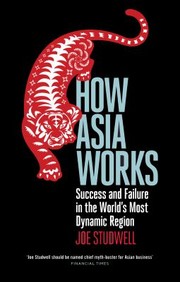
Why some Asian nations grew rich: land reform, export-led industry, directed credit.
“it's a good read for anyone who wants to understand what actually determines whether a developing economy will succeed.” — Bill Gates
Source: Gates Notes review of How Asia Works
Recommended by: Bill Gates, Mohnish Pabrai, Patrick Collison

The policies that moved Taiwan's economy from agriculture to electronics.
John Cowperthwaite, Hong Kong's Financial Secretary in the 1960s, and his policies.
Insider memoir by the architect of much of the reform programme.

The one readable overview of how the state, NGOs and business interlock.
Where it sits in the reference 2
Topics