Updates

  1. Person pages list letters, writing, profiles and links as sortable tables with filters, and show each person's companies as links; Fund letters show each letter's description in its own column.
  2. Experts show a checked job title and a short description of each person; 30 more people have photographs.
  3. Every company, fund, university and publication the experts work for has a page listing the people there.
  4. Fund letters show each letter's thesis and filter by it; 225 person pages list the essays, columns and newsletter issues the person wrote.
  5. Person pages list every essay and newsletter issue a person wrote, and their own books as a table in List view.
  6. Recommends shows the five largest kinds of book and the rest under More; browse pictures load sooner.
  7. Podcasts and talks link the original episode, filter by Audio and video or Press, and list each publisher once.
  8. Pages are wider, Recommends has List and Grid, and a filter clicked again turns off.
  9. Book cards sit in a ruled grid with Open Library and Goodreads links and each book's one-line note.
  10. Funds is now Investors; each investor's styles are buttons that filter the table.
  11. Podcasts and talks on a person's page filter by year and publisher and show as a list or a grid of pictures.
  12. Quotes show only people's own words: 472 summaries written by list sites are gone.
  13. Country pages open from Browse again, and every link on the shelf lands on a page.
  14. Subject and person pages show their sections as tabs, and each book appears once on a person's page.
  15. Book cards show the quote, who said it and the source; grids show five cards to a row.
  16. On a phone, a menu holds the sections, search, Updates, Feedback and dark mode.
  17. Feedback takes a screenshot of the page with no browser prompt, opens a screenshot full size when you click it, and clears itself once sent.
  18. Book cards are centred, search names the topic each book sits in, and any text cut short shows whole on hover.
  19. Search groups its results by kind: people, companies, geographies, subjects, topics, books, funds, fund letters and papers.
  20. The Books table lists who recommended each book by name, and the browser tab names the section you are in.
  21. Feedback can take a screenshot of the page, or one you paste or choose, and opens in the corner beside Updates.
  22. Each rail button reopens its section where you left it, and Browse, Table and People show on every book and subject page.
  23. Filters grey out choices that hold nothing instead of hiding them, and Books › People filters by authors or recommenders.
  24. Feedback takes a subject line and up to three screenshots.
  25. Biographies are grouped by the person they are about: 41 new pages, from Abraham Lincoln to Lee Kuan Yew.
  26. Sport splits into 23 sports, and Religion into one topic per faith.
  27. Book lists show as cards: the cover, one recommendation quote and every recommender by name.
  28. Seventeen subjects that had two or three pages under different names now have one page each.
  29. Every page lists its Experts as authors and recommenders, with a link to them on the Experts tab.
  30. Economics, Financial history, Financial panics and Accounting are subjects of their own, with one page per financial crisis.
  31. Book, person and subject pages open inside the app, so the tabs stay in view.
  32. 996 more book covers, and photographs or logos for 227 more people and companies.
  33. Books › Browse shows every subject as cards, and the rail holds Fund letters, Papers, Experts, Books and Funds.
  34. Every topic over 150 books splits into narrower topics, each with a page of its own.

Send feedback

What is it?
Screenshots, up to 3 (optional)
or paste one with Ctrl+V

We use your email only to reply to you.

How Buildings Learn

How Buildings Learn

Stewart Brand
1994
243 pages · about 4h 3m to read Open Librarygoodreads

Summary

Brand argues that buildings are best understood as processes rather than objects, since almost all of them are modified continuously after construction, and that architecture as a discipline ignores this because it is organised around the appearance of the finished building.

His central analytical device is the shearing layers of change, adapted from architect Frank Duffy. A building consists of site, which is eternal; structure, lasting thirty to three hundred years; skin, changing every twenty years; services, meaning wiring, plumbing and heating, changing every seven to fifteen; space plan, meaning interior layout, changing every three to thirty; and stuff, meaning furniture, changing constantly. Because these layers change at different rates, a building that binds them together, as many modern designs do, cannot be adapted without destroying it.

He distinguishes low road buildings, meaning cheap unloved structures that people modify freely and which therefore host innovation, from high road buildings, meaning well-built structures maintained over long periods, and argues that both work while designed magazine architecture does not.

His criticism of the profession is direct. He argues that architects are rewarded for photographs of new buildings, that they do not revisit their work, that innovation in form frequently produces leaking roofs and unusable spaces, and that occupant adaptation is treated as a failure of the design rather than as the normal condition. The shearing layers concept has been adopted well beyond architecture, particularly in software architecture and in organisational design. The book is illustrated heavily with before and after photographs, which carry much of the argument.

Key takeaways 8

  1. Buildings are processes rather than objects, since nearly all of them are modified continuously after construction.
  2. A building consists of layers that change at different rates, from site and structure through skin, services, space plan and contents.
  3. Binding layers together, so that changing the wiring requires opening the structure, prevents adaptation and shortens the building's useful life.
  4. Cheap unloved buildings host more innovation than designed ones, because occupants modify them freely without needing permission.
  5. Well-built structures maintained continuously over long periods also succeed, and the failures concentrate in buildings designed for appearance.
  6. Architects are rewarded for photographs of new buildings and rarely revisit their work, which removes the feedback that would improve the practice.
  7. Occupant modification is the normal condition rather than a failure of the design, and buildings should be designed to make it cheap.
  8. The shearing layers concept applies to any system with components that change at different rates, which is why software architects adopted it.

Who should read it

Anyone designing systems whose components change at different rates, including software and organisational architects as well as people commissioning buildings.

Who recommended it 6 · 1 direct

Daniel Burkareported
Jason Friedreported
Kevin Kellyreported

Similar books 6

Chosen by shared topics, the entries that hold them, and the people who recommended both.

Jane Jacobs · 1961

What makes city streets work, and how 1950s planning and slum clearance broke them.

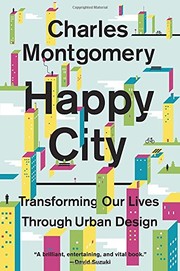
Charles Montgomery · 2013

Recommended by: Mr. Money Mustache

Rebecca Solnit · 2016

Twenty-six imaginative maps of New York City and the lives lived within it.

Recommended by: Laura R Walker

Where it sits in the reference 0

No entry holds this book yet. It reached the reference because someone recommended it.

Topics

Art and DesignSociology and CultureArchitecture, Interiors and CitiesCities and urban life