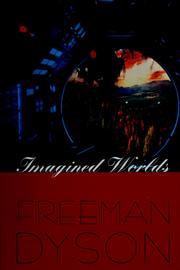
Imagined Worlds
A physicist imagines where science and technology, real and imagined, may lead.
Summary
Freeman Dyson, a hundred years after H. G. Wells's The Time Machine, uses his skills as a scientist and storyteller to imagine the future and show where science and technology, real and imagined, may lead. He asks readers to picture worlds where whole epochs pass between a telephone call and its reply, where the human race multiplies five-hundred-million-fold or evolves into new species, and where space colonisation, computer-assisted reproduction and a "Martian potato" become real.
His stories come from science, science fiction and history: "Napoleonic" against "Tolstoyan" styles of doing science, a coming era of radioneurology and radiotelepathy, writers from Aldous Huxley and William Blake to Michael Crichton, and Samuel Gompers and the American labour movement. He takes up Gaia theory, the future of nuclear weapons, the dangers of "science worship", seagoing kayaks and the Pluto Express. Above all he is concerned with ethics, with how to reduce the harm technology does and increase the good, guided by J. B. S. Haldane's belief that progress in science brings misery unless it is accompanied by progress in ethics.
Key takeaways 4
- Dyson imagines futures shaped by space colonisation and new biology.
- He contrasts grand, centralised science with small, flexible science.
- Science fiction and history both teach lessons about technology.
- Scientific progress needs matching progress in ethics.
Who should read it
Readers of popular science and futurism interested in the ethics of technology.
Who recommended it 1 · 1 direct
Similar books 6
Chosen by shared topics, the entries that hold them, and the people who recommended both.
How seeing Earth from space changed 30 astronauts' view of themselves and the world.
Recommended by: Richard Branson
Essays by 25 experts on the gravest risks to humanity this century.
Recommended by: Nat Eliason, Patrick Collison
Essays on how far technology should be used to make better humans.
Recommended by: Patrick Collison
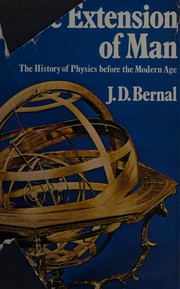
Lectures on the history of physics up to the end of the classical era.
“Bernal, The Extension of Man” — Paul Graham
Source: Rarely-Asked Questions — paulgraham.com
Recommended by: Paul Graham
Lectures on science and religion as two windows on the world, in praise of diversity.
Recommended by: Stewart Brand