Updates

  1. Person pages list letters, writing, profiles and links as sortable tables with filters, and show each person's companies as links; Fund letters show each letter's description in its own column.
  2. Experts show a checked job title and a short description of each person; 30 more people have photographs.
  3. Every company, fund, university and publication the experts work for has a page listing the people there.
  4. Fund letters show each letter's thesis and filter by it; 225 person pages list the essays, columns and newsletter issues the person wrote.
  5. Person pages list every essay and newsletter issue a person wrote, and their own books as a table in List view.
  6. Recommends shows the five largest kinds of book and the rest under More; browse pictures load sooner.
  7. Podcasts and talks link the original episode, filter by Audio and video or Press, and list each publisher once.
  8. Pages are wider, Recommends has List and Grid, and a filter clicked again turns off.
  9. Book cards sit in a ruled grid with Open Library and Goodreads links and each book's one-line note.
  10. Funds is now Investors; each investor's styles are buttons that filter the table.
  11. Podcasts and talks on a person's page filter by year and publisher and show as a list or a grid of pictures.
  12. Quotes show only people's own words: 472 summaries written by list sites are gone.
  13. Country pages open from Browse again, and every link on the shelf lands on a page.
  14. Subject and person pages show their sections as tabs, and each book appears once on a person's page.
  15. Book cards show the quote, who said it and the source; grids show five cards to a row.
  16. On a phone, a menu holds the sections, search, Updates, Feedback and dark mode.
  17. Feedback takes a screenshot of the page with no browser prompt, opens a screenshot full size when you click it, and clears itself once sent.
  18. Book cards are centred, search names the topic each book sits in, and any text cut short shows whole on hover.
  19. Search groups its results by kind: people, companies, geographies, subjects, topics, books, funds, fund letters and papers.
  20. The Books table lists who recommended each book by name, and the browser tab names the section you are in.
  21. Feedback can take a screenshot of the page, or one you paste or choose, and opens in the corner beside Updates.
  22. Each rail button reopens its section where you left it, and Browse, Table and People show on every book and subject page.
  23. Filters grey out choices that hold nothing instead of hiding them, and Books › People filters by authors or recommenders.
  24. Feedback takes a subject line and up to three screenshots.
  25. Biographies are grouped by the person they are about: 41 new pages, from Abraham Lincoln to Lee Kuan Yew.
  26. Sport splits into 23 sports, and Religion into one topic per faith.
  27. Book lists show as cards: the cover, one recommendation quote and every recommender by name.
  28. Seventeen subjects that had two or three pages under different names now have one page each.
  29. Every page lists its Experts as authors and recommenders, with a link to them on the Experts tab.
  30. Economics, Financial history, Financial panics and Accounting are subjects of their own, with one page per financial crisis.
  31. Book, person and subject pages open inside the app, so the tabs stay in view.
  32. 996 more book covers, and photographs or logos for 227 more people and companies.
  33. Books › Browse shows every subject as cards, and the rail holds Fund letters, Papers, Experts, Books and Funds.
  34. Every topic over 150 books splits into narrower topics, each with a page of its own.

Send feedback

What is it?
Screenshots, up to 3 (optional)
or paste one with Ctrl+V

We use your email only to reply to you.

Inflation Targeting

Inflation Targeting

Ben S. Bernanke, Thomas Laubach, Frederic S. Mishkin, Adam S. Posen
1999
T2 382 pages · about 6h 22m to read Open Librarygoodreads

The framework New Zealand invented in 1989, assessed against later adopters.

Summary

Ben Bernanke, Thomas Laubach, Frederic Mishkin and Adam Posen wrote this comparative assessment of inflation targeting at a point when the framework had been adopted by a handful of countries and was being debated for the United States. It combines a theoretical treatment with case studies of New Zealand, Canada, the United Kingdom, Sweden, Israel and the earlier monetary targeting of Germany and Switzerland.

The central conceptual claim is that inflation targeting is constrained discretion rather than a rule. Under it a central bank announces a numerical objective and accepts accountability for meeting it, but retains freedom to respond to shocks over the medium term. The authors argue that this framework anchors expectations, which lowers the output cost of disinflation, while avoiding the rigidity that made monetary aggregate targeting fail. They examine what happened to inflation, output and expectations in each adopting country, and conclude that the framework improved outcomes without the credibility bonus that some advocates had predicted, since disinflation still cost output.

The book was written before inflation targeting became near-universal and before the 2008 crisis raised the question of whether a framework focused on consumer prices can accommodate financial stability. Bernanke's own later experience as Federal Reserve chairman, including the adoption of an explicit two per cent target in 2012 and the later shift to flexible average inflation targeting, complicates several of the positions taken here. The case studies remain the most useful part, since they record what each central bank actually did rather than what the framework prescribed.

Key takeaways 7

  1. Inflation targeting is constrained discretion, not a mechanical rule, and its advocates should stop describing it as the latter.
  2. Announcing a numerical target anchors expectations and lowers the output cost of subsequent disinflation, though it does not eliminate that cost.
  3. Countries that adopted inflation targeting did not receive an immediate credibility bonus, and had to earn credibility through performance.
  4. Monetary aggregate targeting failed because the relationship between money and prices proved unstable, while inflation targeting fixes on the variable of interest directly.
  5. Transparency about forecasts and about policy reasoning is part of the framework rather than an optional addition to it.
  6. Central bank independence must be paired with accountability mechanisms, and an explicit target supplies the standard against which to hold the bank.
  7. The framework should target inflation over a medium-term horizon, because attempting to hit the target every quarter destabilises output.

Who should read it

Investors and analysts who need the intellectual foundations of the monetary framework most central banks still operate, stated by people who later ran one.

Similar books 6

Chosen by shared topics, the entries that hold them, and the people who recommended both.

Ben S. Bernanke · 2022

Insider account of the Fed from Burns through the QE era.

Allan H. Meltzer · 2003

The Fed from 1913 to 1951, told from its own minutes and internal memos.

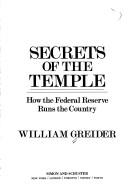
William Greider · 1987

The Volcker Fed from the inside; still the fullest political account.

Recommended by: Mohnish Pabrai
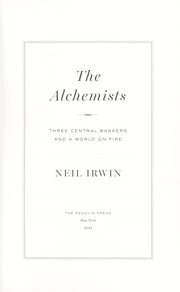
Neil Irwin · 2013

The 2007 to 2012 crises through three central bankers: Bernanke, King and Trichet.

Where it sits in the reference 2

Geographies
Financial history

Topics

EconomicsPolitics and GovernmentRegulation, central banks and public policy