
Investing for Growth
Collected Fundsmith annual letters, articles and shareholder meeting material 2010-2020.
Summary
Terry Smith founded Fundsmith in 2010 and collected his shareholder letters, newspaper columns and articles from that period into this volume. The material states one investment approach repeatedly across different market conditions.
The method has three stated rules: buy good companies, do not overpay, and do nothing. A good company is defined by high return on capital employed sustained across the cycle, by the ability to grow without proportional capital investment, by gross margins that indicate pricing power, by cash conversion close to reported profit, and by resistance to obsolescence. Smith argues these characteristics cluster in consumer staples, medical devices, software with high switching costs and information services, and he explicitly avoids banks, insurers, utilities, resources, real estate, airlines and heavily cyclical industrials, on the grounds that their returns are determined by leverage or by commodity prices rather than by the business.
His analytical arguments include several specific claims. Return on capital employed rather than earnings growth is the primary determinant of long-run shareholder returns, because a company earning above its cost of capital creates value with every reinvested pound while one earning below destroys it. Reported earnings should be checked against cash conversion, since a persistent gap indicates accounting choices. Companies should be valued on free cash flow yield rather than on price to earnings. Portfolio turnover is a cost that compounds, so the correct default action is inactivity.
Smith writes combatively and attacks investment industry practices, particularly fee structures, benchmark-hugging and the use of adjusted earnings measures.
The approach is a quality growth strategy and it performed strongly through a period of falling interest rates and rising multiples for exactly these companies. It has performed less well since 2021. The material is repetitive because it collects periodic writing, and Smith does not seriously engage the argument that the method's returns were partly a function of the rate environment.
Key takeaways 7
- Return on capital employed sustained across the cycle is the primary determinant of long-run shareholder returns.
- A company earning below its cost of capital destroys value with every pound it reinvests, regardless of reported earnings growth.
- Persistent gaps between reported profit and operating cash flow indicate accounting choices rather than timing.
- Free cash flow yield is a more reliable valuation measure than price to earnings because it is harder to manipulate.
- Entire sectors including banks, resources and utilities should be excluded because their returns come from leverage or commodity prices rather than from the business.
- Portfolio turnover is a certain cost set against an uncertain benefit, so inactivity is the correct default.
- Adjusted and underlying earnings measures published by companies systematically exclude real recurring costs.
Who should read it
Investors who want the quality growth approach stated plainly with its selection criteria, recognising that the record covered a favourable period for it.
About Terry Smith
Founder and CEO, Fundsmith LLP 2010-present; previously CEO of Collins Stewart and Tullett Prebon
Accounting for Growth outlived its news cycle as a forensic-accounting primer, and the Fundsmith annual letters are a widely read quality-growth record.
Similar books 6
Chosen by shared topics, the entries that hold them, and the people who recommended both.

The amateur's edge argument from the Magellan record.
“One book that probably made the biggest impact on my career in those early formidable years back in the day was Peter Lynch's 'One Up on Wall Street.'” — David Rolfe
Source: Rolfe on the book that most shaped his early career
Recommended by: David Rolfe, Francisco Garcia Parames and 9 others
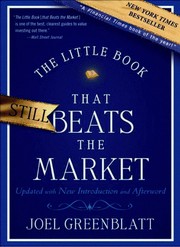
The magic formula: buy cheap stocks with high returns on capital, mechanically.
Recommended by: Mohnish Pabrai and 2 others

Buffett's method as tests of the business, its managers, its finances and price.
Recommended by: Mohnish Pabrai, Bill Ackman, Howard Marks and 1 other

Subtitled Stocks That Return 100-to-1 and How to Find Them; expanded edition 2025.
Recommended by: Mohnish Pabrai

The accounting tricks British companies used to inflate profits, firm by firm.
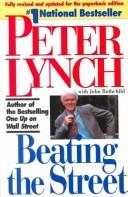
Lynch's stock-by-stock walkthrough of how he picked them.
“Peter Lynch's books have some great insights [and] would be great for anyone to read.” — Julian Robertson
Source: Robertson on Peter Lynch's books
Recommended by: Julian Robertson, Mohnish Pabrai and 3 others
Where it sits in the reference 3
Topics