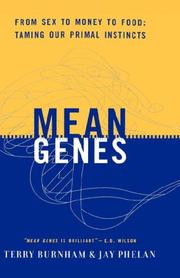
Mean Genes: From Sex to Money to Food: Taming Our Primal Instincts
Why evolved instincts push people toward bad choices on money, food and sex.
Summary
The reference has not verified this book in detail; the summary states only what the title, author and subject establish.
Terry Burnham and Jay Phelan ask why people want, and do, so many things that are bad for them, and answer with Charles Darwin rather than Sigmund Freud. Their argument is that efforts at self-improvement are fights against genes that helped distant ancestors survive and reproduce but are selfish and ill-suited to the modern world.
Through this evolutionary lens the authors take up body image, money, addiction, violence, friendship, love and fidelity, the subjects named in the subtitle's sex, money and food. For each, they explain the instinct behind the behaviour and offer steps for managing it so that readers lead more satisfying lives. The Open Library record files the book under evolutionary psychology and self-management. The source read here gives the scope and argument, not the specific studies or remedies.
Key takeaways 4
- Many self-defeating urges come from genes that served ancestors in a different environment.
- Burnham and Phelan explain behaviour with Darwin rather than Freud.
- Money, food, addiction and fidelity each pit modern goals against old instincts.
- Knowing the instinct's origin can help a person design ways to manage it.
Who should read it
Readers who want an evolutionary explanation of overspending, overeating and other urges, with practical advice.
Who recommended it 2 · 1 direct
Similar books 6
Chosen by shared topics, the entries that hold them, and the people who recommended both.
How psychology, which Keynes called animal spirits, drives the economy.
Recommended by: Jim Collins, Mohnish Pabrai
People have no fixed sense of value, so context and anchors set the prices they pay.
“For a good popular treatment of this topic, see William Poundstone, Priceless: The Myth of Fair Value (and How to Take Advantage of It) (New York: Hill and Wang” — Michael Mauboussin
Source: Blaming the Rat: Incentives, Motivation, and How They Interact, page 14
Recommended by: Michael Mauboussin, Mohnish Pabrai and 1 other
Chance shapes success more than people think; what that means for fairer economies.
Recommended by: Mohnish Pabrai

Why some things gain from volatility and disorder, and how to build them.
“Antifragile. Loved the first 1/3 and last 1/3 of this book.” — Andrew Chen
Source: Books I’m reading (2013)
Recommended by: Ana Fabrega, Andrew Chen, Derek Sivers and 24 others

The Minnesota study showing twins raised apart are as alike as those raised together.
Recommended by: Mohnish Pabrai
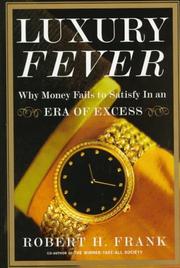
How positional spending on status goods drives American consumption.