Next: The Future Just Happened
How the internet let amateurs topple old professions such as lawyers and stock gurus.
About Michael Lewis
Financial journalist and author; former Salomon Brothers bond salesman
Liar's Poker, The Big Short and Flash Boys are the primary narrative sources later writers build on for Wall Street of the 1980s, the subprime crisis and high-frequency trading.
Who recommended it 2 · 2 direct
Similar books 6
Chosen by shared topics, the entries that hold them, and the people who recommended both.

The wide-reaching effects of the internet on how people come together.
“Like Wikinomics and Crowdsourcing, required reading if interested in harnessing the collective power of people online.” — Derek Sivers
Source: Derek Sivers book notes (primary, rated list) · Rating: 6/10
Recommended by: David Perell, Derek Sivers, Ryan Holiday and 2 others
The technology trends that will reshape daily life over the next thirty years.
“What are today's technologies inevitably going to lead to? Great predictions. Half of it was super-inspiring, painting a vision of the future that made me want to jump on it. Half felt like “well, duh, obviously!” maybe because I'm already deep in it.” — Derek Sivers
Source: Derek Sivers book notes (primary, rated list) · Rating: 7/10
Recommended by: Derek Sivers, Nat Eliason, Patrick Collison and 2 others
How right-wing extremists used social media to move into American politics.
Recommended by: Kara Swisher
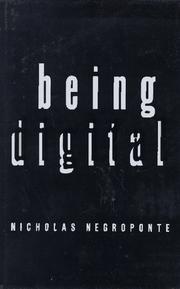
Bandwidth, multimedia, virtual reality and the internet, explained without hype.
“Technology is transforming society as the computer moves from a business tool to a home appliance, and as the effects and implications of Being Digital, as Nicholas Negroponte’s new book has it, come to be instantiated.” — Bill Miller
Source: 1995 Q2 Market Commentary
Recommended by: Bill Miller, Mohnish Pabrai
Twenty essays on the observation that software is eating the world.
Recommended by: David Perell, Patrick O'Shaughnessy