
Origins of the Crash
Summary
Lowenstein examines the American corporate and market failures from the mid-1990s through 2002, covering the technology bubble, the accounting scandals at Enron, WorldCom, Tyco and others, and the governance failures that permitted them.
His central argument concerns the unintended consequences of shareholder value reform. The 1990s effort to align management with shareholders through stock option compensation succeeded in linking executive pay to the share price and thereby created an enormous incentive to raise the share price by any means, including accounting choices that had no economic content. He traces the specific mechanisms: options were not expensed, which made them appear free to the company and led boards to grant them in quantities they would never have granted in cash; earnings guidance created a public commitment to hit a number; and the analysts, auditors and boards who should have provided a check each had a financial relationship with the company that made challenge expensive.
He covers the institutional failures in sequence: accounting firms selling consulting, investment banks whose research supported their underwriting clients, boards whose independence was nominal, and a regulatory apparatus that had been deliberately weakened, including the successful industry campaign against expensing options and the Private Securities Litigation Reform Act.
The book is compact and well argued. Its thesis that the reform created the problem is genuinely useful and applies beyond the period. Lowenstein writes from a clear position and the treatment of the participants is unsympathetic.
Key takeaways 7
- Stock option compensation aligned executives with the share price rather than with the business, which created an incentive to raise the price by any available means.
- Options were not expensed, which made them appear costless to the company and led boards to grant them in quantities they would never have granted in cash.
- Public earnings guidance creates a commitment to a specific number, which then determines accounting and operating decisions.
- Every institution positioned to provide a check, including auditors, analysts, boards and regulators, had a financial relationship that made challenge expensive.
- The industry successfully campaigned against expensing options, which was a specific lobbying victory with identifiable consequences.
- Governance reforms intended to align management with shareholders produced the incentive structure that caused the failures they were meant to prevent.
- Board independence was nominal in most of the failed companies, since directors were selected by the executives they were supposed to supervise.
Who should read it
Directors and investors who want the argument that shareholder value reforms created the incentives behind the accounting scandals.
About Roger Lowenstein
Financial journalist and author; Wall Street Journal reporter for over a decade
Buffett: The Making of an American Capitalist and When Genius Failed are the standard reference accounts of Buffett's rise and of the LTCM collapse.
Who recommended it 1 · 1 direct
Similar books 6
Chosen by shared topics, the entries that hold them, and the people who recommended both.

Bill Ackman's six-year campaign against bond insurer MBIA, from 2002 to 2008.
Recommended by: Andrew Wilkinson, Bill Ackman
A six-year short of Allied Capital, and the SEC that investigated the short seller.
Recommended by: Bill Ackman, Patrick O'Shaughnessy
Buffett's life from Omaha and Graham's class to building Berkshire Hathaway.
“…books I've recommended, highlighted to death, or forced on friends.” — Andrew Wilkinson
Source: Andrew Wilkinson's Bookshelf, neverenough.com
Recommended by: Andrew Wilkinson, Christopher Bloomstran and 12 others
Enron's collapse told scene by scene from depositions, emails and interviews.
Recommended by: Mohnish Pabrai
The 1980s insider-trading cases of Boesky, Levine, Siegel and Milken.
Recommended by: Mohnish Pabrai
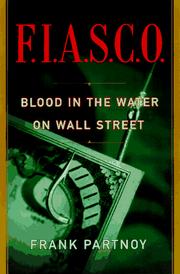
An insider's account of how Morgan Stanley built and sold derivatives in the 1990s.
“F.I.A.S.C.O.: The Inside Story of a Wall Street Trader by Frank Partnoy. Another great writer and great read.” — Christopher Bloomstran
Source: Semper Augustus 2023 Letter to Clients, 'Worldly Wisdom', p. 81
Recommended by: Charlie Munger, Christopher Bloomstran and 1 other
Where it sits in the reference 2
Topics