Rock Breaks Scissors: A Practical Guide to Outguessing and Outwitting Almost Everybody
People can't act randomly, and how to exploit that in games, tests and markets.
Summary
Poundstone examines the human inability to produce or recognise randomness, and shows how that failure can be exploited across a range of situations.
The foundational finding is that people asked to generate random sequences produce patterns: they alternate too much, avoid repetition, and under-use certain options. This is measurable and consistent, and it means that in any situation where a person must be unpredictable, they will not be.
The applications cover rock paper scissors, where inexperienced players avoid repeating a throw and experienced ones follow identifiable patterns after wins and losses; multiple choice tests, where answer positions and lengths are non-random in ways that improve guessing; football penalty kicks and tennis serves, where the professional data shows deviation from optimal mixing; lottery number selection, where choosing unpopular numbers does not raise the chance of winning but raises the payout by reducing the chance of sharing it; fake data, where Benford's law identifies fabricated figures because manufactured numbers do not follow the first-digit distribution real data does; password selection, where human choices cluster; and financial market pattern claims, where he covers the evidence for and against.
The book is a collection of applications rather than an argument, and some sections are stronger than others. Its practical value is the general point that human-generated randomness is exploitable, and the Benford's law material, which is directly usable in detecting fabricated financial data.
Key takeaways 7
- People asked to generate random sequences produce identifiable patterns, alternating too much and avoiding repetition, which makes them predictable.
- In any situation requiring unpredictability, a human participant will fail to achieve it, and the failure is consistent enough to exploit.
- Benford's law identifies fabricated data because manufactured figures do not follow the first-digit frequency distribution that real data exhibits.
- Choosing unpopular lottery numbers does not raise the chance of winning but raises the expected payout by reducing the chance of sharing a prize.
- Professional athletes deviate measurably from optimal randomisation in penalty kicks and serves, which is exploitable by opponents who track it.
- Multiple choice answer positions and lengths are non-random in ways that improve guessing above chance.
- Password choices cluster heavily around a small number of patterns, which is why cracking works far better than the key space suggests.
Who should read it
Readers interested in exploiting human non-randomness, with the Benford's law material directly usable for detecting fabricated financial data.
About William Poundstone
American science and business writer covering game theory, probability, pricing psychology and decision-making.
Fortune's Formula traces the Kelly criterion from Bell Labs information theory to Ed Thorp's blackjack and hedge-fund bet sizing, and it remains the standard entry point to position sizing under an edge. Priceless collects the experimental work on how buyers anchor and compare prices, which transfers straight into pricing decisions.
Who recommended it 1 · 1 direct
Similar books 6
Chosen by shared topics, the entries that hold them, and the people who recommended both.

Principles of observation, inference and avoiding error, from the Holmes stories.
Recommended by: Mohnish Pabrai, Patrick O'Shaughnessy and 1 other
How snap judgments work, when to trust them and when they mislead.
“Malcolm Gladwell, Blink: The Power of Thinking Without Thinking (New York: Little, Brown and Company, 2005)” — Michael Mauboussin
Source: Are You an Expert? Experts and Markets, page 9
Recommended by: Michael Mauboussin, Mohnish Pabrai and 2 others
Why luck plays a larger part in life than people admit, and how to deal with it.
Recommended by: Mohnish Pabrai
Four traps that ruin decisions, such as narrow framing, and a process to beat each.
“Interesting and insightful dive into the subject of how to make big decisions. Specific useful advice.” — Derek Sivers
Source: Derek Sivers book notes (primary, rated list) · Rating: 8/10
Recommended by: Andrew Wilkinson, Derek Sivers and 6 others

Why people mistake luck for skill, above all in markets.
“Fooled By Randomness was unquestionably the best non-fiction book I read in 2005.” — Brad Feld
Source: Book Review: Fooled By Randomness — Feld Thoughts
Recommended by: Barton Biggs, Brad Feld, Derek Sivers and 15 others
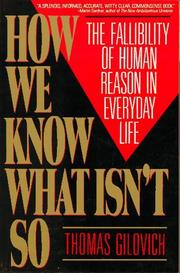
How people come to believe questionable or false things.
Recommended by: Mohnish Pabrai