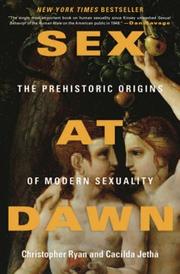
Sex at Dawn
A challenge to the standard story that monogamy comes naturally to humans.
Summary
Christopher Ryan and Cacilda Jethá challenge what they call the standard narrative of human sexual evolution, that monogamy comes naturally to the species, told since Darwin's day. Their 2010 book, subtitled The Prehistoric Origins of Modern Sexuality, argues that humans evolved in mobile, self-contained, egalitarian groups of hunter-gatherers that shared food, child care and often sexual partners.
Before agriculture brought dense populations, they contend, sex was relatively promiscuous and paternity was not a concern, a system similar to that of bonobos. Sexual relations strengthened trust within the group, and rather than causing jealousy they supported social balance and mutual obligation. The authors draw on evidence from anthropology, archaeology, primatology, anatomy and the study of sexuality to argue how far monogamy is from human nature, and they show how this promiscuous past shapes modern struggles over monogamy, sexual orientation and family life. They end with an optimistic view of human capacities for love, cooperation and generosity.
Key takeaways 4
- Ryan and Jethá argue that monogamy is not natural to humans.
- Prehistoric foragers, in their account, shared sexual partners as well as food and child care.
- The arrival of agriculture and dense populations changed human sexual norms.
- Bonobo behaviour offers a model for early human sexuality.
Who should read it
Readers interested in evolutionary psychology and debates about monogamy.
Who recommended it 2 · 1 direct
Similar books 6
Chosen by shared topics, the entries that hold them, and the people who recommended both.
The genetic basis of race and its role in human history, from genome mapping.
Recommended by: Mohnish Pabrai
How natural selection shaped the good side of human nature and society.
Recommended by: Bill Gates
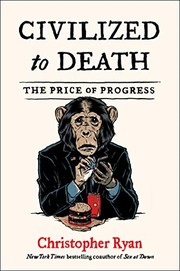
How progress has worsened the way people eat, learn, mate, parent, work and die.
Recommended by: Andrew Wilkinson, Nat Eliason, Jack Dorsey
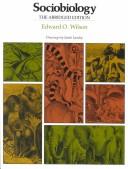
The founding text of sociobiology, the biology of social behaviour across species.
Recommended by: Mohnish Pabrai
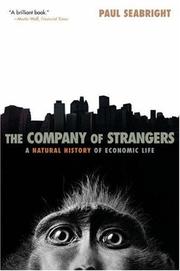
A natural history of how strangers came to cooperate in economic life.
Recommended by: Mohnish Pabrai, Patrick Collison
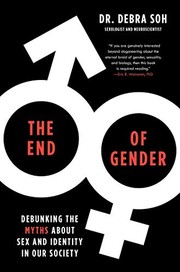
A sex researcher's case against popular myths about sex and gender identity.
Recommended by: Eric Weinstein