Updates

  1. Person pages list letters, writing, profiles and links as sortable tables with filters, and show each person's companies as links; Fund letters show each letter's description in its own column.
  2. Experts show a checked job title and a short description of each person; 30 more people have photographs.
  3. Every company, fund, university and publication the experts work for has a page listing the people there.
  4. Fund letters show each letter's thesis and filter by it; 225 person pages list the essays, columns and newsletter issues the person wrote.
  5. Person pages list every essay and newsletter issue a person wrote, and their own books as a table in List view.
  6. Recommends shows the five largest kinds of book and the rest under More; browse pictures load sooner.
  7. Podcasts and talks link the original episode, filter by Audio and video or Press, and list each publisher once.
  8. Pages are wider, Recommends has List and Grid, and a filter clicked again turns off.
  9. Book cards sit in a ruled grid with Open Library and Goodreads links and each book's one-line note.
  10. Funds is now Investors; each investor's styles are buttons that filter the table.
  11. Podcasts and talks on a person's page filter by year and publisher and show as a list or a grid of pictures.
  12. Quotes show only people's own words: 472 summaries written by list sites are gone.
  13. Country pages open from Browse again, and every link on the shelf lands on a page.
  14. Subject and person pages show their sections as tabs, and each book appears once on a person's page.
  15. Book cards show the quote, who said it and the source; grids show five cards to a row.
  16. On a phone, a menu holds the sections, search, Updates, Feedback and dark mode.
  17. Feedback takes a screenshot of the page with no browser prompt, opens a screenshot full size when you click it, and clears itself once sent.
  18. Book cards are centred, search names the topic each book sits in, and any text cut short shows whole on hover.
  19. Search groups its results by kind: people, companies, geographies, subjects, topics, books, funds, fund letters and papers.
  20. The Books table lists who recommended each book by name, and the browser tab names the section you are in.
  21. Feedback can take a screenshot of the page, or one you paste or choose, and opens in the corner beside Updates.
  22. Each rail button reopens its section where you left it, and Browse, Table and People show on every book and subject page.
  23. Filters grey out choices that hold nothing instead of hiding them, and Books › People filters by authors or recommenders.
  24. Feedback takes a subject line and up to three screenshots.
  25. Biographies are grouped by the person they are about: 41 new pages, from Abraham Lincoln to Lee Kuan Yew.
  26. Sport splits into 23 sports, and Religion into one topic per faith.
  27. Book lists show as cards: the cover, one recommendation quote and every recommender by name.
  28. Seventeen subjects that had two or three pages under different names now have one page each.
  29. Every page lists its Experts as authors and recommenders, with a link to them on the Experts tab.
  30. Economics, Financial history, Financial panics and Accounting are subjects of their own, with one page per financial crisis.
  31. Book, person and subject pages open inside the app, so the tabs stay in view.
  32. 996 more book covers, and photographs or logos for 227 more people and companies.
  33. Books › Browse shows every subject as cards, and the rail holds Fund letters, Papers, Experts, Books and Funds.
  34. Every topic over 150 books splits into narrower topics, each with a page of its own.

Send feedback

What is it?
Screenshots, up to 3 (optional)
or paste one with Ctrl+V

We use your email only to reply to you.

Shaky Ground: The Strange Saga of the U.S. M

Shaky Ground: The Strange Saga of the U.S. Mortgage Giants

Bethany McLean
2015
T4 159 pages · about 2h 39m to read Open Librarygoodreads

Summary

Bethany McLean wrote this short book on Fannie Mae and Freddie Mac after they had spent several years in government conservatorship with no resolution in sight. Her question is what these institutions are, what they were for, and why nobody has been able to decide what to do with them.

The history covers Fannie Mae's creation in 1938, its partial privatisation in 1968 to move it off the federal budget, the resulting hybrid form with private shareholders and an implicit government guarantee, the growth of the retained portfolios, the accounting scandals of the early 2000s, the affordable housing goals, and the deteriorating credit quality of the loans they bought as private-label securitisation took share. She covers the September 2008 conservatorship and the terms of the government's preferred stock investment.

The legal and political material is the book's distinctive content. In 2012 the Treasury amended the arrangement so that essentially all the companies' profits would be swept to the government rather than paid as a ten per cent dividend, which occurred just as they were returning to profitability. McLean covers the resulting litigation by hedge funds holding the junior preferred shares and the disputed question of whether the amendment was a legitimate exercise of conservatorship or an expropriation. She also explains why reform has been impossible: the thirty-year fixed rate prepayable mortgage that American borrowers expect requires someone to bear the credit and prepayment risk, and no purely private structure has been shown to do it at the same price. The book is short and remains an accurate description of an unresolved situation.

Key takeaways 7

  1. Fannie Mae was partly privatised in 1968 to move its obligations off the federal budget, which created the hybrid form that failed in 2008.
  2. An implicit government guarantee let these companies borrow at near-sovereign rates while distributing profits to private shareholders.
  3. The 2012 net worth sweep redirected essentially all profits to the Treasury just as the companies returned to profitability.
  4. Litigation over the sweep turns on whether a conservator may act for the benefit of the government rather than of the institution.
  5. The thirty-year fixed rate prepayable mortgage requires a party willing to bear prepayment and credit risk, and no private structure supplies it at the same price.
  6. McLean argues that reform has stalled because no participant can accept a system in which mortgage rates rise.
  7. Affordable housing goals were a smaller contributor to the credit deterioration than the competitive loss of share to private-label securitisation.

Who should read it

Investors in housing finance and anyone assessing government-sponsored enterprise reform who want a clear account of an unresolved structural problem.

About Bethany McLean

Investigative business journalist; Vanity Fair contributing editor, formerly Fortune

The Smartest Guys in the Room remains the definitive account of Enron and her Fortune reporting broke the story before the collapse.

Vanity Fair, Fortune

Similar books 6

Chosen by shared topics, the entries that hold them, and the people who recommended both.

Bethany McLean, Joe Nocera · 2010

The 2008 crisis traced back 25 years to mortgage bonds, Fannie Mae and subprime.
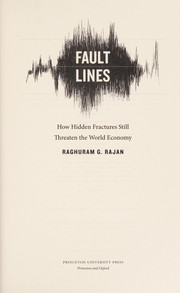
Raghuram G. Rajan · 2010

The 2008 crisis grew from political and economic imbalances, not just banker greed.

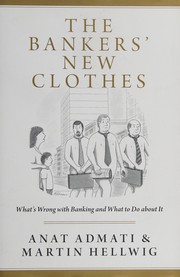
Anat Admati, Martin Hellwig · 2013

Why banks should fund themselves with far more equity, and why their objections fail.

Alan S. Blinder · 2013

The 2008 crisis, the policy response and the aftermath, for general readers.

Sheila Bair · 2012

The 2008 crisis from inside the FDIC, which closed failed banks and guarded deposits.

Recommended by: Mohnish Pabrai

Where it sits in the reference 2

Journalists
Financial panics

Topics

Finance and MarketsPolitics and GovernmentRegulation, central banks and public policy